• 2 min de lectura
• 2 min de lectura
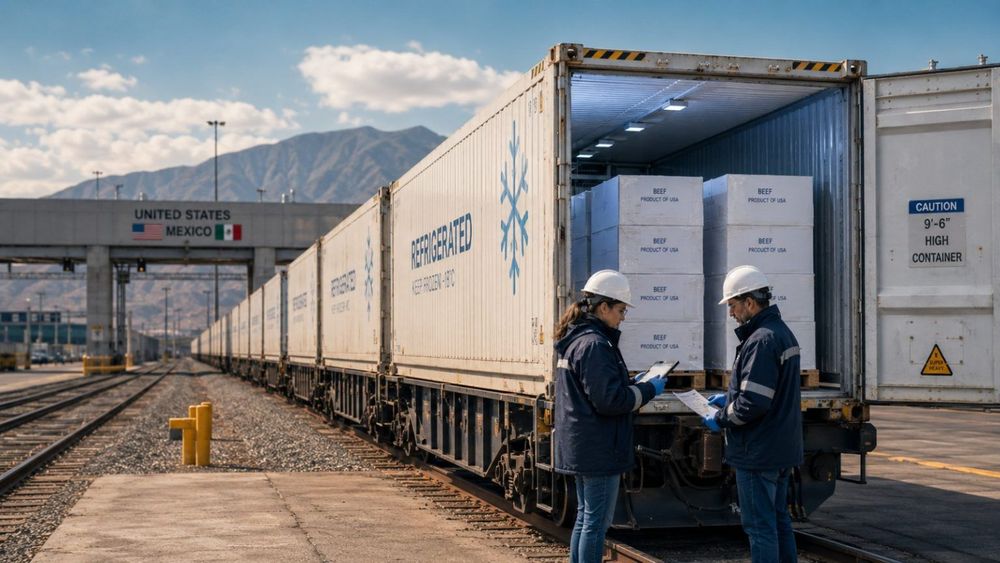
After the origin verification in the United States for the import of animal protein or meat to Mexico via rail was approved in October 2025, the Mexican government is currently seeking to carry out the export of this product using the same mode of transport.
Ximena Juárez Gómez, Director of Innovation Projects and Programs for the Quarantined Service of the National Service for Agrifood Health, Safety and Quality (Senasica), pointed out that the "intention of the railway is precisely that, for containers to return with goods destined for export."
During a meeting organized by the Mexican Intermodal Transport Association (AMTI), she added that the agency's management is also working on the handling of certain products.
She emphasized that several companies are interested in importing other low-risk goods — such as pet food or milk substitutes — under this scheme.
She also explained that they are working on an inspection program through inland customs.
"To enter a transit train, arrive at an inland customs office, or clear the product, which must be low-risk and already has certain processes or guarantees that there are no risks associated with goods like fresh vegetables or live animals. We are working on this so that we have the possibility of relieving border crossings and conducting these inspections at inland customs. We are already working on it," she stressed.
Juárez Gómez recalled that the mentioned service began through the railway company Canadian Pacific Kansas City (CPKC), with whom 84 import shipments have been made to date, although they seek to increase this movement.
Furthermore, they have already contacted other railway companies, as well as more exporters, and, with the US health authority and Senasica personnel, they intend to resolve and implement more options to access this project.
Last October, AMTI reported that Mexican and US authorities approved origin verification for the import of animal protein, which will contribute to building logistical solutions that strengthen the country's competitiveness and the sanitary safety of the supply chain.
This, Ximena Juárez recalled, involved three years of negotiation with US authorities to carry out inspections in North American territory for packaged goods such as meat products.