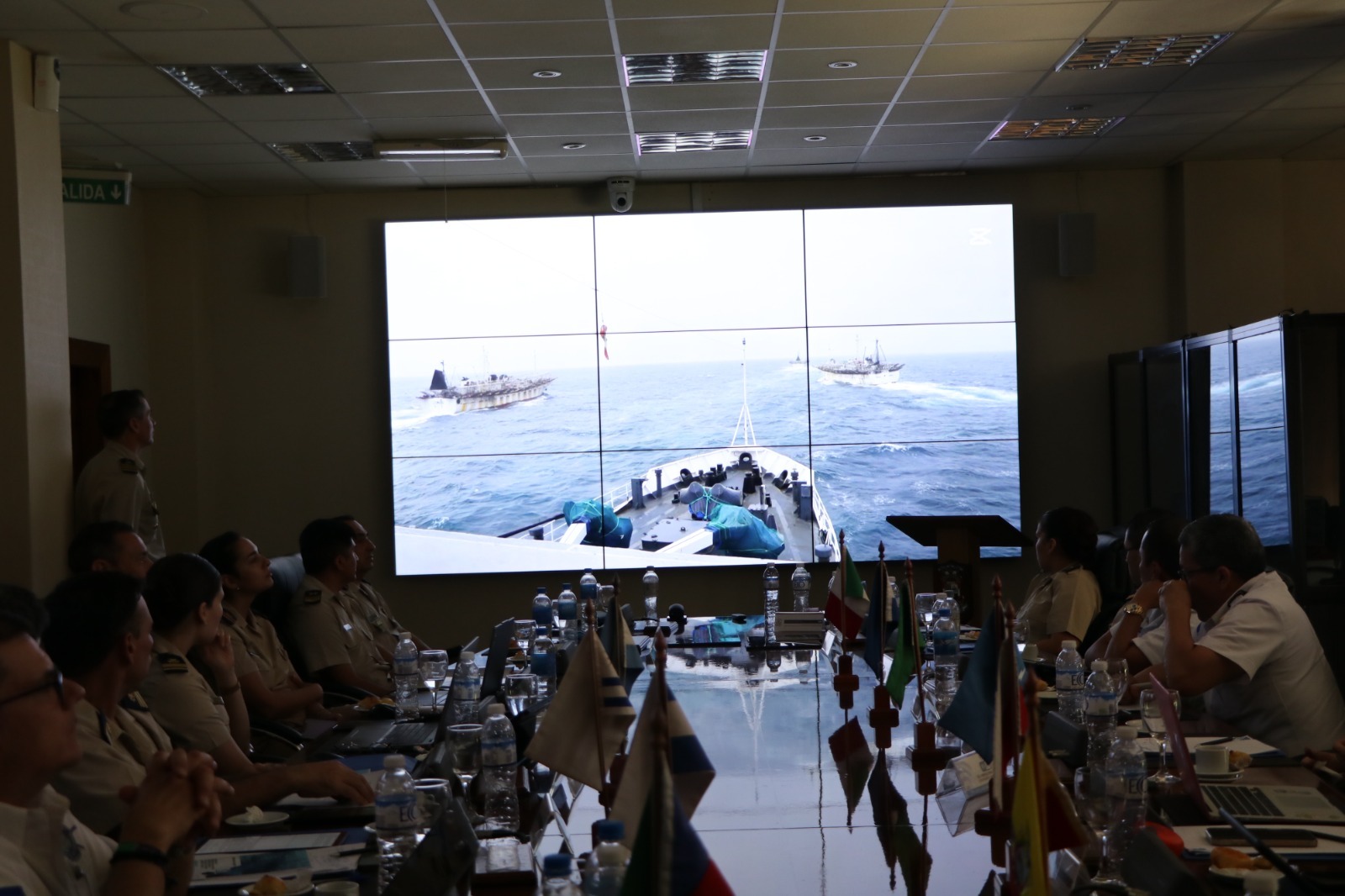
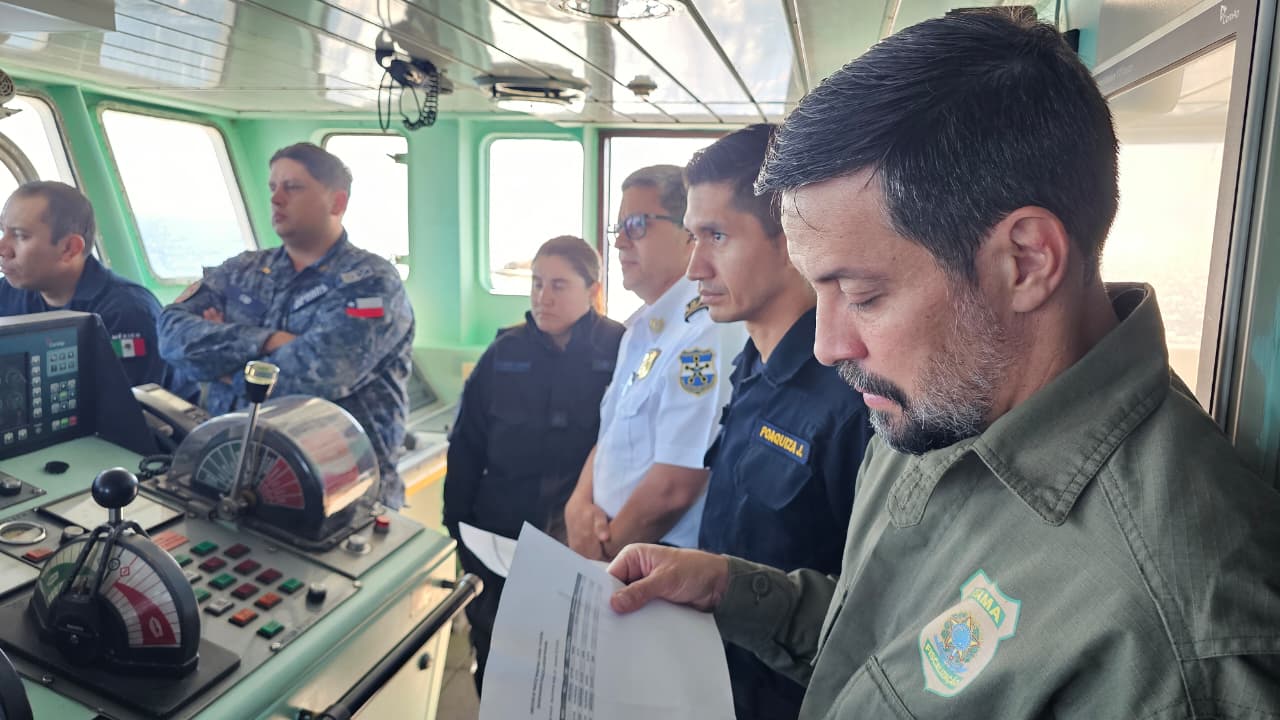
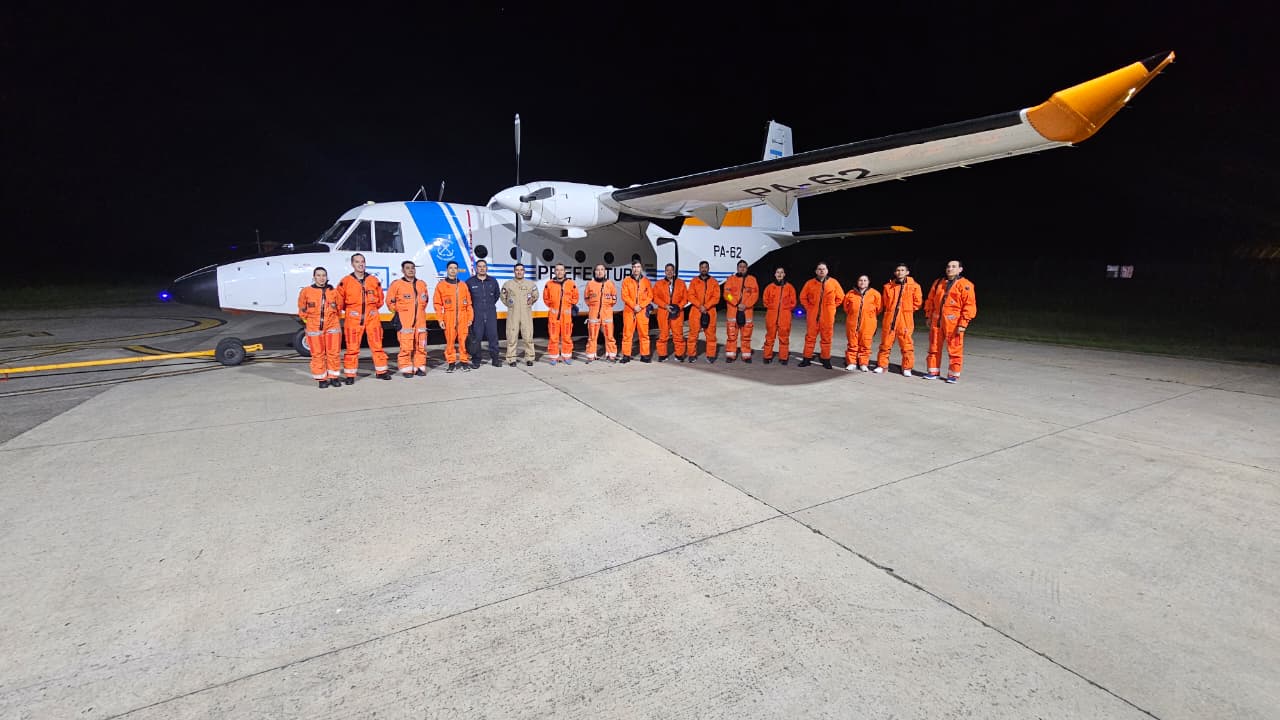
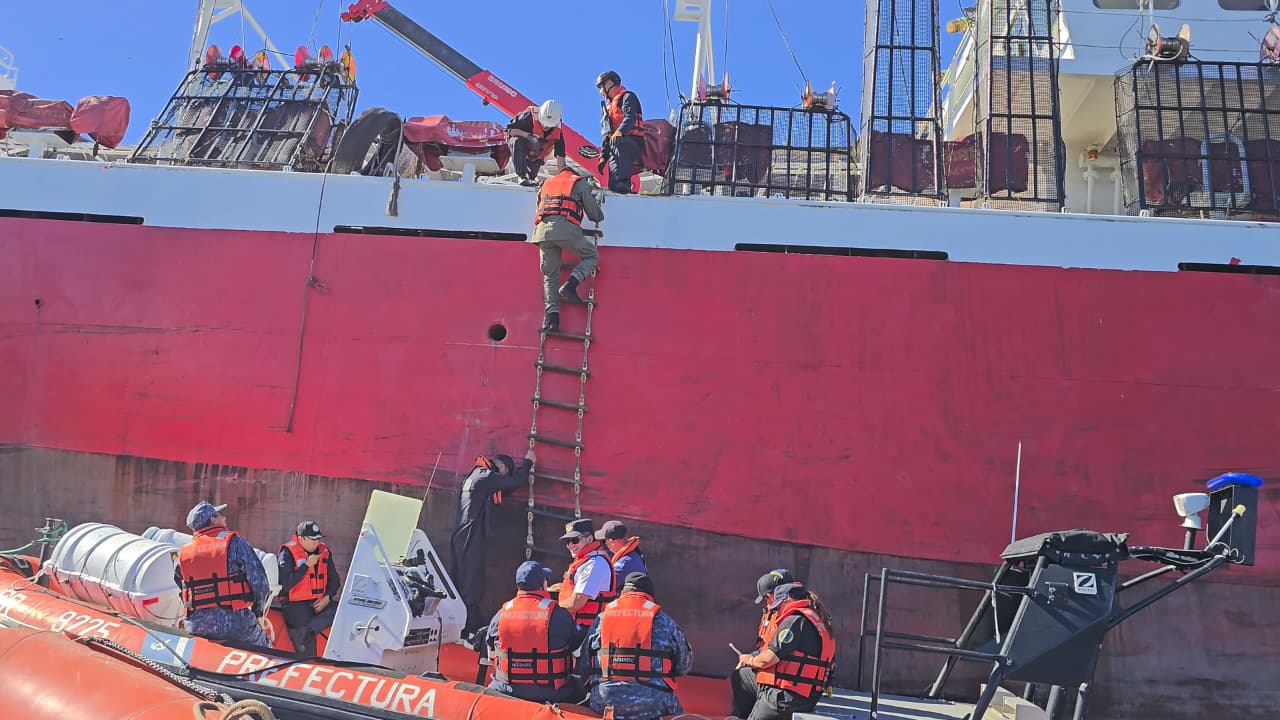
After two weeks of demanding academic preparation and operational skill displayed during navigation on the Coast Guard vessel "AZOPARDO" and overflights of fishing fleets in distant waters, the city of Mar del Plata was the scene of an emotional closing ceremony that crowned this high-level experience, where knowledge and strategies were shared to face one of the most complex challenges threatening the sustainability of sovereign resources.
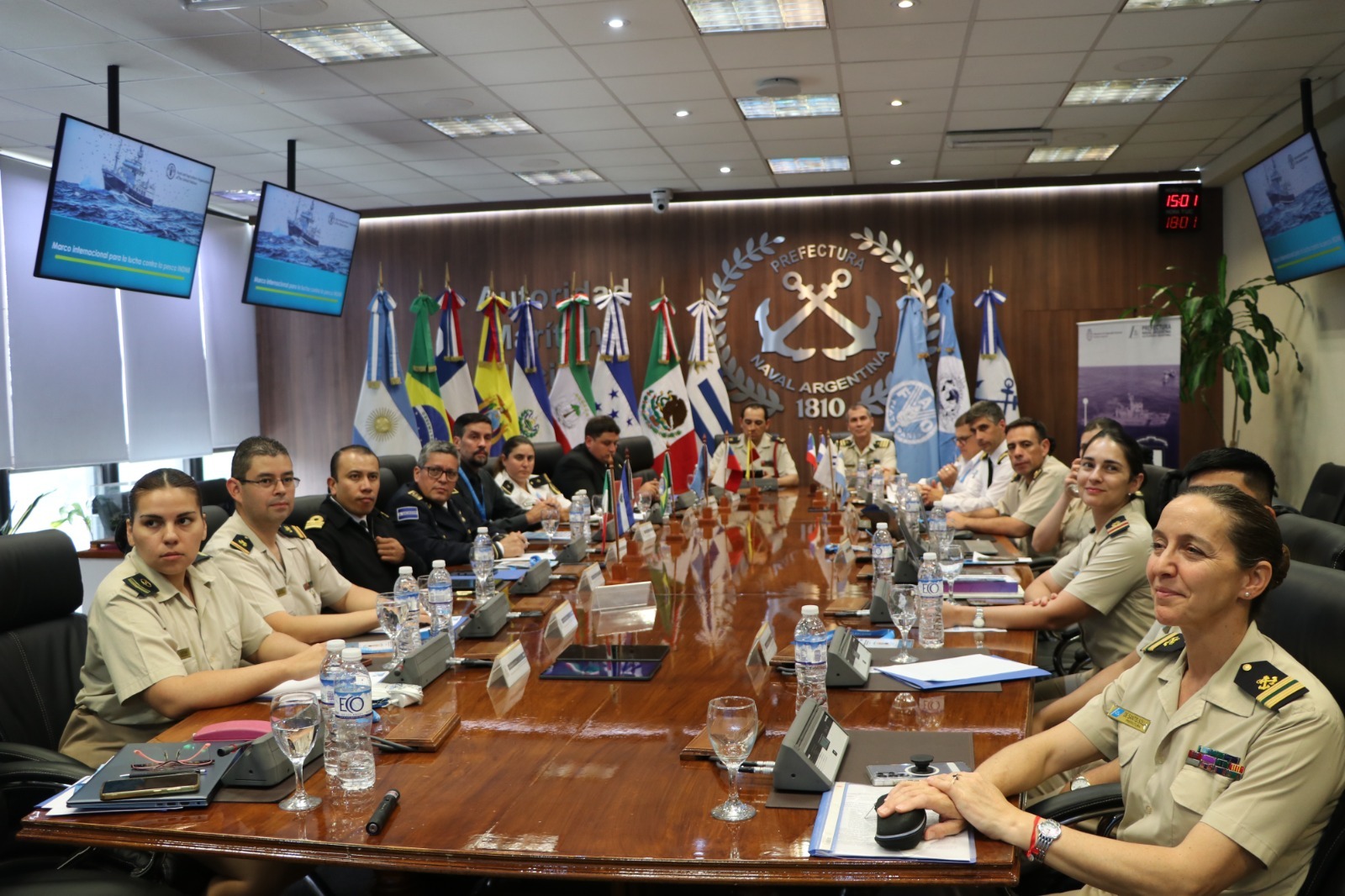
Representatives from Brazil, Chile, Ecuador, El Salvador, Equatorial Guinea, Honduras, Mexico, Uruguay, and INTERPOL, along with members of the Force itself, participated in an intensive program that combined doctrine, international legal framework, and operational intervention techniques, strengthening a cooperation network that transcends borders.
INTERPOL's presence, through its Regional Office for South America, and the Food and Agriculture Organization of the United Nations (FAO) as the depositary body of international legal instruments and tools available to prevent, deter, and eliminate IUU fishing, also provided a strategic dimension of great relevance for the training.
The training was offered by the Comprehensive Training and Improvement Center in Telecommunications and Maritime Traffic Services, in coordination with the Directorate of Maritime, Fluvial, and Lacustrine Traffic, responsible for promoting and consolidating this international educational proposal, whose director, Prefecto General Néstor Alberto Kiferling, headed the closing ceremony.
Kiferling delivered a speech in which he highlighted the importance of the training received and the need for trained and committed agents to act with firmness, professional ethics, and responsibility in the face of scourges that compromise not only regional economies but also the balance of marine ecosystems.
In this context, he reflected that "coordinated actions between nations and international organizations become an essential tool in the fight against this global problem."
In this way, the Argentine Naval Prefecture reaffirms its leadership on the international stage, backed by a recognized trajectory in its role as national maritime authority with police powers to enforce the law at sea and in the execution of successful procedures against vessels engaged in illegal fishing activities.