• 3 min de lectura
• 3 min de lectura
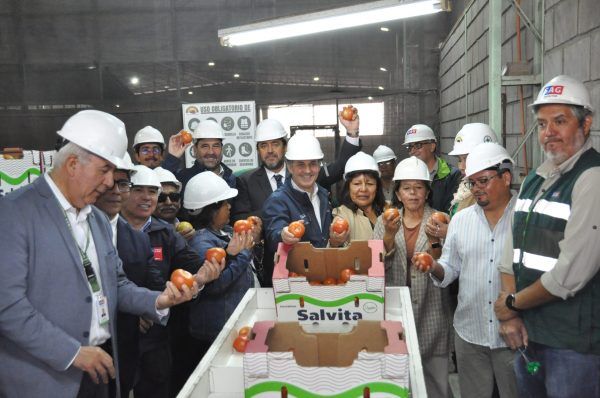
The Arica and Parinacota Region has commenced a new export season to Argentina with the shipment of over 23 tons of tomatoes.
The activity was led by the Undersecretary of Agriculture, Francesco Venezian, along with the Regional Presidential Delegate, Cristian Sayes Maldonado, and the Regional Ministerial Secretary (Seremi) of Agriculture, Jorge Heiden, marking the beginning of another cycle for one of the main crops in the area.
The shipment included 28 pallets, equivalent to 1,372 boxes and a total of 23,324 kilograms of tomatoes. This process is part of the sustained increase in regional tomato exports to Argentina, which has allowed for the expansion of commercialization destinations, strengthened the competitiveness of producers, and contributed to obtaining better prices for their harvests.
"We are with tomato producers from the region; Estela and Mario are top-level producers, not only for the quality of their tomatoes but also for their production volumes. Nowadays, it's not enough to just produce in the area. Currently, we are promoting an important export project. To date, we have already made 150 tomato shipments from Arica to Argentina, with top-quality products," explained Venezian.
The opening of the Argentine market in 2024 marked a milestone for the regional export sector, allowing for the shipment of over 5.4 million kilograms of tomatoes. During 2025, the trend increased, registering 8,530,645 kilograms exported, equivalent to 450 trucks. In this period, the SAG carried out 374 inspections at origin and issued the respective dispatch forms. Shipments are mainly made through control points in the Valparaíso and Los Lagos regions, while June and July concentrated the highest inspection volumes.
In this context, the Agricultural and Livestock Service (SAG) has provided technical support to farmers throughout the entire production process, contributing to regional agricultural development. "Arica is being recognized for the quality of its tomato production, for the durability of the product, professionalism, and high sanitary standards," added the undersecretary.
For his part, the Regional Presidential Delegate, Cristian Sayes, affirmed that "we are very happy, first, because agriculture is an axis of regional development, and it is the axis that is demonstrating that joint work, good communication between the public and private sectors, as the undersecretary well explained, reaches good ports and a good destination."
Furthermore, the delegate stated that "today we are working with farmers not only to reach the rest of Chile, but we are also reaching markets like Argentina with tomatoes from the Azapa Valley region, and possibly we can grow with farmers towards the markets of Brazil and Paraguay. So, it's a tremendous opportunity to generate quality employment in our region, and we have a projection where we believe in farmers, and it is very clear in our public community."
In this regard, Undersecretary Venezian highlighted that this is a "good experience of how the collaboration between the public and private sectors allows the region to grow, not only for farmers but also for the entire local market: transport, commerce, service providers, input sales, and productive development."
Additionally, during his deployment in the Arica and Parinacota Region, the Undersecretary of Agriculture supervised the operation of the Cuya sanitary barrier, a strategic SAG point to prevent the transfer of pests such as the fruit fly and the entry of illegal agricultural products to the south of the country.
Likewise, together with the Seremi of Agriculture, Jorge Heiden, he held a meeting with the regional directors of Minagri to address institutional guidelines and coordinate territorial work. He also visited the facilities of Corteva Agriscience, a company dedicated to seed research and production.
Source: Portal Portuario