• 2 min de lectura
• 2 min de lectura
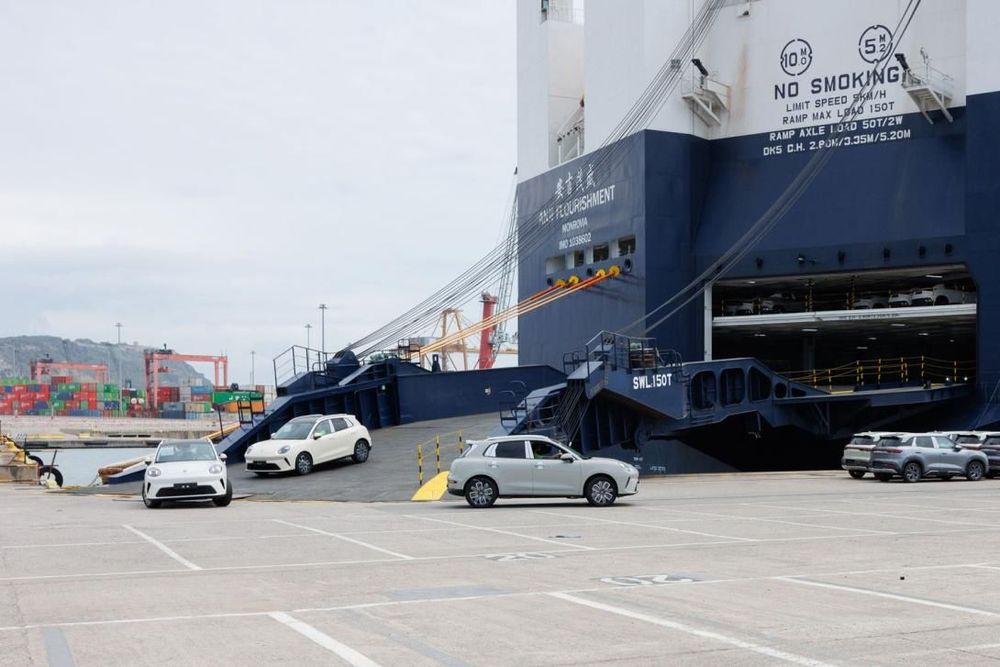
The Port of Barcelona consolidates its role as a gateway for new operators to the Spanish market with the arrival of the first vehicles from Chinese manufacturer Great Wall Motors (GWM). A total of 500 units from the Chinese brand were unloaded this week at the Setram facilities, one of the two terminals specialized in vehicle traffic at the Port.
The vehicles arrived in Barcelona aboard the Anji Flourishment, a latest-generation car-carrier with a capacity for 9,500 vehicles, coming from the port of Lianyungang (China).
With this operation, GWM joins the list of Chinese manufacturers that use the Port of Barcelona as their operational base. Its location in Southern Europe, coupled with excellent maritime connectivity with new car-carrier services and a complete intermodal offering—maritime, rail, and road—along with specific services for the automotive industry, have allowed the Port of Barcelona to consolidate its position as a gateway for Chinese vehicles into Europe.
In this regard, the advanced logistics services that the Port of Barcelona's vehicle terminals offer to car manufacturers are also key to attracting brands like GWM. Specifically, the 500 vehicles unloaded by GWM, including internal combustion, non-plug-in hybrid, and electric models, will receive final adjustments and preparations at the Setram facilities before being transferred to the corresponding dealerships.
The arrival of GWM at the Port of Barcelona strengthens this hub's strategic position in international vehicle trade. In 2025, 716,657 vehicles passed through the Port, with a 44% increase in imports, mainly from Chinese ports. This year, figures recorded in April indicate a further increase, highlighting at the same time that 17% of the vehicles arriving at the Port of Barcelona are already electric.
To meet this growing car traffic, the Port of Barcelona currently has two terminals dedicated to the transport of new vehicles, Autoterminal and Setram, which will be joined in 2027 by a third terminal already under construction by the Spanish subsidiary of the Japanese group NYK. This new terminal will incorporate Europe's first large automated vehicle silo.
With these three terminals, the Port of Barcelona will have approximately 120 hectares dedicated exclusively to this type of traffic, thus reinforcing its logistical leadership and its capacity to meet the growing demand of the automotive sector.