• 3 min de lectura
• 3 min de lectura
The Port of Barcelona will acquire a 40% stake in Terminal Intermodal de Navarra, S.A. (TIN) as part of an operation that reinforces the Port Authority's commitment to intermodality, rail freight transport, and the consolidation of more efficient and sustainable logistics corridors.
The operation will be carried out through a capital increase in TIN, a company of Hutchison Ports BEST, which will maintain a majority stake of 60%. With this alliance, the Port of Barcelona and BEST reinforce their shared commitment to the development of the Noáin terminal and its role as a key infrastructure for the competitiveness of the Navarrese economy and its connection with major international markets.
The incorporation of the Port of Barcelona into TIN represents a step forward in the port authority's strategy to expand its presence in inland railway terminals and bring port services closer to key production and consumption centers. In this case, entering the terminal's capital will strengthen the rail connection between Navarra and Barcelona, promote modal shift from road to rail, and offer Navarrese companies a more competitive, reliable, and sustainable logistics chain.
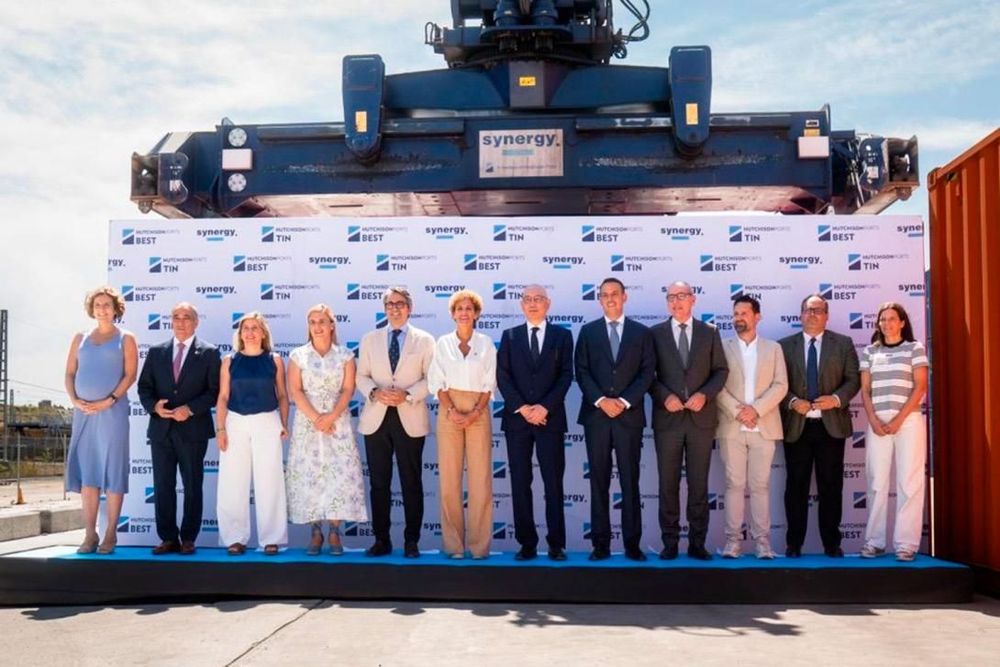
This new phase for the railway terminal coincides with the official inauguration of the new TIN, an infrastructure that has been expanded and modernized by Hutchison Ports BEST with a 10 million euro investment and support from European NextGeneration funds. The terminal has tripled its operational capacity to 42,000 square meters and incorporates two new railway tracks, each 550 meters long, as well as a new esplanade for railway operations and container storage.
Since its commissioning in 2013, the Noáin terminal has established itself as a benchmark logistics platform for intermodal transport. It currently has five weekly frequencies with the Port of Barcelona, primarily operated by Synergy, Hutchison Ports BEST's railway operator, allowing Navarrese companies to access a global network of more than 200 international ports via Barcelona.
The President of the Port of Barcelona, José Alberto Carbonell, framed the Port of Barcelona's entry into TIN's shareholding by stating that "our mission does not end at the docks. Our responsibility is to contribute to the competitiveness of companies in our hinterland, bringing international markets closer to inland production centers. That is why we are firmly committed to rail transport and a network of inland terminals that enable more integrated, efficient, and sustainable logistics."
The Port of Barcelona's participation in TIN is part of its strategy for developing rail-port services and inland terminals, with the aim of enabling companies to access international maritime services without needing to be physically located in the port area. This network helps reduce logistics costs, improve the efficiency of supply chains, and contribute to the reduction of emissions associated with freight transport.
For its part, the Noáin terminal reinforces its role as a strategic logistics hub on the Atlantic-Mediterranean axis and as a gateway for Navarrese foreign trade. Its connection with the Port of Barcelona allows for more efficient channeling of import and export flows, especially for a business fabric with a strong international vocation.
The collaboration between the Port of Barcelona and Hutchison Ports BEST in this project also strengthens a consolidated relationship around innovation, operational efficiency, and sustainability. It is an example of collaboration between administrations and companies to generate competitiveness and prosperity.