• 4 min de lectura
• 4 min de lectura
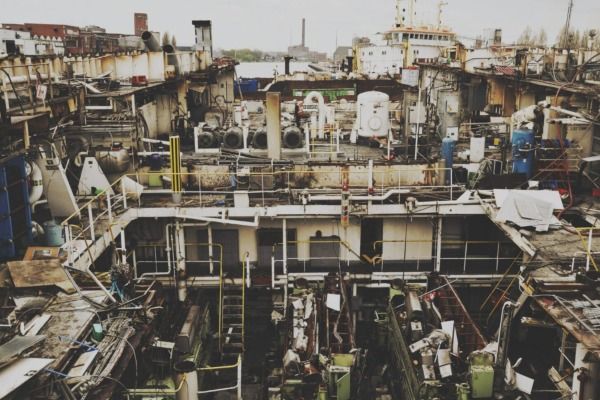
While the European Commission is currently working on revising the technical guidelines for shipbreaking facilities in third countries, NGOs Shipbreaking Platform, Eurofer, and Recycling Europe are calling for a clear ban on beaching and landing methods, as well as the guarantee of a truly level playing field for the ship recycling sector.
Following their initial joint statement urging the boosting of ship recycling capacity in the EU, they welcomed the European Commission's initiative to revise the technical guidelines for ship recycling yards located in third countries.
These guidelines, which interpret the EU Ship Recycling Regulation, are used by auditors to inspect and authorize ship recycling yards in third countries to recycle EU-flagged vessels and ensure their compliance. Their revision represents a key opportunity to correct the inherent double standard in the current application of the Ship Recycling Regulation.
Specifically, the signatories suggest several improvements to ensure a level playing field for ship recycling companies in the EU and in third countries. The first is that the guidelines should clearly prohibit beaching and landing as dismantling methods and only authorize dismantling in facilities that ensure full containment.
Furthermore, they propose that ship recycling facilities in third countries should be required to obtain the necessary authorizations and permits for inclusion in the European list, equivalent to those required in the EU, such as Environmental Impact Assessments (EIA) and operational permits that clearly define the conditions and activities of the shipyards.
Currently in Turkey, despite its high-risk profile, the shipbreaking sector is exempt from the Environmental Permits and Licenses Regulation and EIA procedures. The lack of a clear legal framework and weak control systems in third countries, compared to those applicable to ship recycling yards in Europe, lead to many of the operational problems observed on the ground and reported by EU inspectors, including poor waste management and unsafe working conditions in both Turkey and India.
A clear deadline should be established for the inclusion or exclusion of shipbreaking yards, including a procedure for the provisional suspension of yards that do not comply with regulations.
It is also requested that obligations to shipowners or states arising from other regulations, such as the Basel Convention, should be included in the guidelines.
Likewise, the Commission's assessment of third-country shipyards should also cover facilities that receive and process secondary raw materials from these shipyards, including steel processing facilities. Such sites must apply adequate emission control measures and operate with an environmental performance level considered equivalent to EU standards.
Recognizing the serious problems that constantly occur, especially in the Aliaga shipyards, Turkey, together with local civil society organizations, the organizations reiterate the request for Turkish facilities to be removed from the EU List until the necessary improvements are implemented.
This is because the current situation would not only endanger the environment and workers' health but also undermine the very objective of the List, which is to serve as a model of good practice for the shipbreaking sector. The lack of an adequate environmental permitting and control framework in the country's shipbreaking sector can no longer be ignored by EU decision-makers.
"The current situation, where authorization and control frameworks differ between EU/EFTA Member States and third countries, is why double standards persist in the shipbreaking sector. European standards on waste, wastewater, emissions, and pollution, as well as safety standards, should serve as a benchmark for evaluating all ship recycling facilities in third countries, to ensure that no EU-flagged vessel is dismantled in shipyards that do not comply with the standards," stated Ingvild Jenssen, Executive Director of the NGO Shipbreaking Platform.
"The update of the technical guidance note represents a crucial opportunity to level the playing field between third-country and EU shipyards, and to end persistent double standards. Recycling Europe urges the Commission to seize this opportunity and send a strong signal of support to the European ship recycling sector, while contributing to raising global standards in this area," commented Isabelle Radovan, Policy Advisor at Recycling Europe.
"In addition to ensuring that European and third-country plants operate under the same rules and standards, the guidance document should also strengthen the equivalence of the applicable Mede to downstream facilities, including steel rolling mills and processing plants. This approach would help ensure the consistency of EU environmental policy and live up to the ambitions of the Waste Shipment Regulation," stated Aurelio Braconi, Director of Stainless and Special Steels and Raw Materials at Eurofer.