• 3 min de lectura
• 3 min de lectura
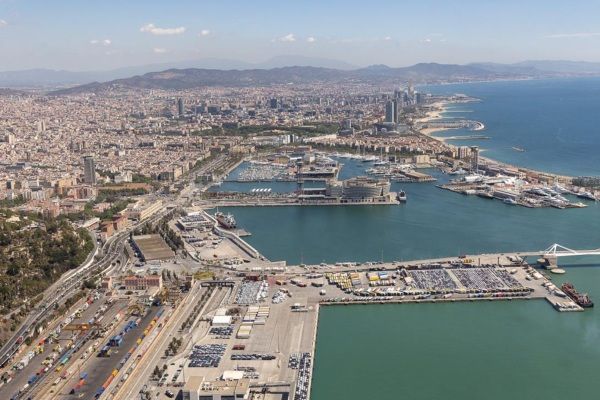
The Port of Barcelona published its "Positive Impact" 2025 Report, the annual report that analyzes the evolution of the Port Community in terms of sustainability.
This year's edition includes the participation of 157 organizations, 6% more than last year and more than 30% of those that make up the Port Community of Barcelona.
The report analyzes the sustainability of these companies at social, environmental, economic, and good governance levels.
The results reflected in the Report are the outcome of the annual survey that companies and organizations within the Port Community answer to monitor their progress in areas such as waste management, energy and water consumption, promotion of equality, employee training, and measures favoring ethics and good governance, among others.
In total, 174 indicators reflect in detail the commitment of the participating companies to sustainability.
"With 10 years of experience, the Port of Barcelona's Positive Impact Report not only serves as a thermometer for the progress that companies in the Port Community of Barcelona make in sustainability. It is a testament to their commitment to a more just, socially and environmentally conscious world," said Francesc Portada, Head of Organization and Sustainability at the Port of Barcelona.
The document aligns with the Port of Barcelona's new Strategic Plan, defining its 2030 objective as becoming a more sustainable port in all areas: environmental, social, and good governance, while prioritizing good governance measures that contribute to progress.
From these three pillars of sustainability emerge 12 operational objectives, broken down into 174 actions from which the evolution of the Port Community companies is evaluated, providing an annual monitoring tool for the Strategic Plan's objectives.
This framework, in turn, is aligned with the Sustainable Development Goals (SDGs), a key aspect that encourages the development of the Port of Barcelona to be consistent with the objectives of the 2030 Agenda defined by the United Nations.
Among the indicators analyzed in 2025, improvements in environmental matters stand out, with 72% of companies having measures for waste reduction, four points more than the previous year.
Regarding the decarbonization process, 70.2% of companies already contract energy supply from renewable sources, seven points more than in 2024, and nearly 40% generate it with photovoltaic panels, a percentage that was 25% the previous year.
In terms of social sustainability, the report highlights that 70% of companies have flexible work measures and 60% have measures to identify staff training needs and offer training programs for employees.
Finally, regarding good governance policies and measures, 67% have a written Code of Ethics and 62% approved specific measures to combat corruption.