• 2 min de lectura
• 2 min de lectura
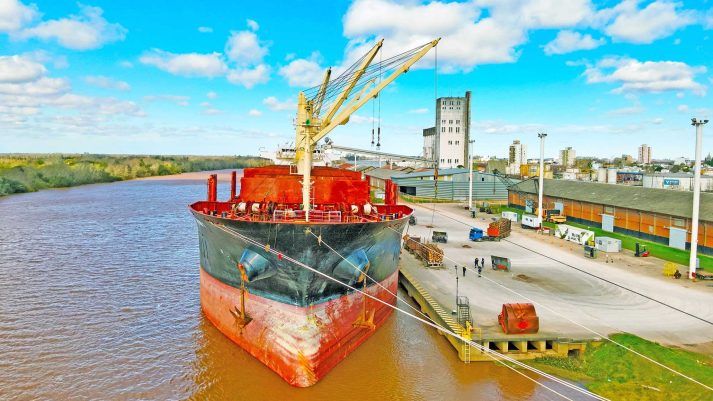
The Port of Concepción del Uruguay will add its 12th export operation so far this year with the arrival of two new vessels at the fluvial port complex in the Province of Entre Ríos.
The first shipment consisted of 20,000 tons of wood, which were loaded onto the vessel Beyond 2, coming from the Port of Abidjan, Ivory Coast. A second shipment consists of 16,000 tons of soybeans destined for the European market, while the timber product will continue its journey to India.
With these two new operations, it reached a dozen exports so far in 2026, totaling 73 vessels received in the last three years and 1.3 million tons exported from Concepción del Uruguay.
The president of the Autonomous Entity Port Concepción del Uruguay (EAPCU), Marcos Di Giuseppe, highlighted that "managing in uncertainty implies daily effort to continue exporting, protect infrastructure, and respond to the private sector in its commercial activities. This is what allows us not only to export but also to protect sources of income".
Despite the rising Uruguay River, the port continues to operate normally at its docks 14, 15, and 16, as these sites are at an elevation of 7.70 meters, almost two meters above the maximum flood peak reached in recent days in front of Concepción del Uruguay.
The company Urcel Argentina is responsible for the complete operation for this bulk shipment of pine and eucalyptus logs destined for the Port of Kandla, on the west coast of India, one of the highest cargo volume ports in that country.
This Friday, the 14th, the entry of the ultramarine vessel Windermere, under Liberian flag and arriving from the Port of Douala, Cameroon, is scheduled. In this case, 16,000 tons of non-genetically modified soybean meal will be loaded and exported to Denmark by Entre Ríos Crushing and the Argentine Cooperatives Association (ACA).
"The diversification of cargo and the addition of international markets boost port work, sustaining and strengthening a source of employment whose economic impact is directly reflected in our city's economy, as each of these shipments demands more than 400 direct jobs, to which indirect implications along the different production chains must be added," highlighted Di Giuseppe.