• 2 min de lectura
• 2 min de lectura
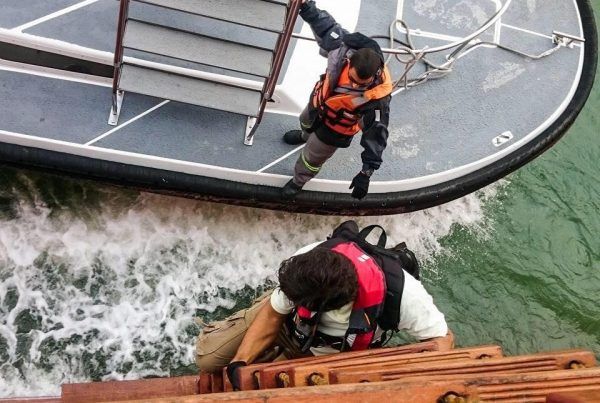
Piloting professionals in Argentina began their second day of a national strike. The strike is being carried out as a protest against the recent reform of the maritime and fluvial system – via decree – promoted by the government led by President Javier Milei. Specifically, the Casa Rosada seeks to promote deregulation of the sector, aiming to "reduce operational costs and allow direct contracting of services, in addition to enabling experienced captains to navigate without the obligation of having pilot contracts." The measure has been described by various unions as "unconstitutional" and, in response, they have decided to paralyze their activities throughout the country, affecting the country's main commercial routes such as the Main Navigable Waterway. According to official reports, at least 140 vessels have been affected as a result of the demonstrations, especially due to the blockades carried out by the workers. For its part, the Argentine Naval Prefecture made public in its latest initial bulletin a request for pilots to abandon any type of interruption in navigable routes, stating that "in any event, it is made known that failure to comply with this injunction will be subject to the disciplinary sanctions contained in Annex I of Decree N° 690/26 for being considered a serious offense to refuse to provide the service, and the judgment of their conduct in the administrative phase will be framed in the provisions of the aforementioned Annex I and Decree N° 37/2025 (REGINAVE), punishable by the sanctions provided for in articles 599.0101 and 599.0102 of the latter." Furthermore, the circular warned that "the carrying out of any action tending to facilitate a measure of force aimed at interrupting the piloting/pilotage service may be covered by the provisions of the Argentine National Criminal Code – Crimes against the safety of traffic and means of transport and communication, under the figure of Article 190, which states: 'Whoever knowingly carries out any act that endangers the safety of a vessel, floating construction or aircraft shall be punished with imprisonment of two to eight years,'" the statement concluded.