• 3 min de lectura
• 3 min de lectura
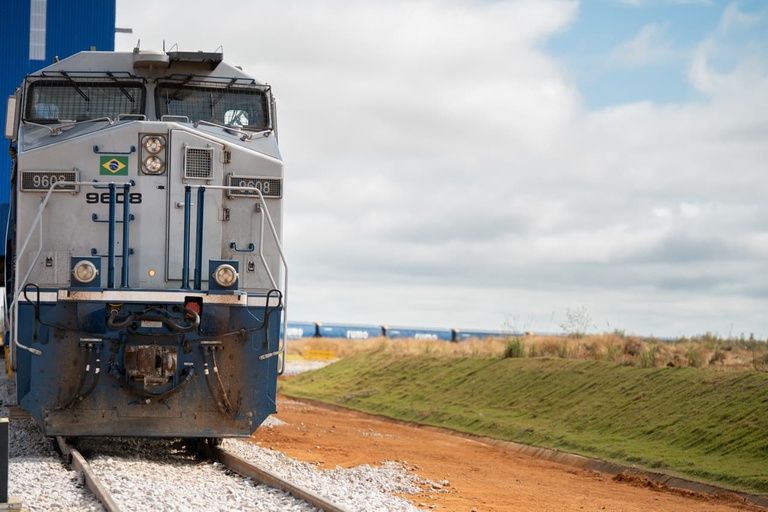
The expansion of Brazilian railway infrastructure reached a new milestone with the delivery of the first phase of the Northern Network extension and the new railway terminal on the BR-070 route, in Dom Aquino (MT).
With an extension of 160 kilometers, the project includes 130 wagons for transporting grains from the Midwest to the Port of Santos (SP).
The work mobilized more than 65 contracted companies and registered over 5,000 professionals in the sector.
"Brazil, which 70 years ago was an importer of food, is now among the three largest food producers and exporters in the world. We need to reach the ports. And to reach the ports, we need railways. With better logistics, our competitiveness will improve," emphasized the Vice President of Brazil, Geraldo Alckmin.
Developed by Rumo, the initiative is part of the Brazilian Government's New PAC (Growth Acceleration Program) and has received over USD 971.1 million in private investment in this phase. The funds were obtained through financing from the Superintendence for the Development of the Midwest Region (Sudeco) and bonds from the National Bank for Economic and Social Development (BNDES).
"Mato Grosso produces more than 150 million tons, and it is fundamental that we are prepared for the development of this production. It is essential to develop new solutions. One of them is the launch of a specific BNDES financing line, exclusively for the construction of railway lines for the acquisition of rolling stock," announced the Minister of Transport, George Santoro.
According to Santoro, this is a 40-year credit line with a grace period during the project's investment phase. "It is a change in the bank's policy to offer investors and entrepreneurs such an important solution," added the authority.
Santoro also highlighted the Ministry's work in conjunction with the National Land Transport Agency (ANTT) in structuring projects that integrate road, rail, and waterway transport modes.
The inaugurated project represents one of the main railway projects underway in the country, connecting different transport modes and contributing to the reduction of logistics costs, greater operational efficiency, and regional development.
Rumo's Director, Pedro Palma, listed a series of measures adopted involving municipal, state, and federal executive powers, as well as the legislative power, to enable the project's operation, including the creation of strategic alliances and collaborations, taking into account social and environmental impacts.
"The federal government recognized the importance of this project, not only for Mato Grosso but also for the infrastructure of the entire country, supporting it by including it in the New PAC (Growth Acceleration Program), with the investment process, as with BNDES, which is one of our main financial partners, and with the creation of this infrastructure," affirmed Palma.
The extension of the Northern Network integrates the Mato Grosso State Railway (FMT), a project that foresees an additional 743 kilometers of track between Rondonópolis (MT) and Lucas do Rio Verde (MT), with a branch to Cuiabá (MT). It crosses 16 municipalities and connects Mato Grosso's production to the national railway network.
The first phase comprises the construction of 162 kilometers of railway track on a completely new route, bringing the tracks closer to the producing regions and increasing the efficiency of freight transport in the main logistical corridor for Brazilian agribusiness.
The new BR-070 railway terminal in Dom Aquino will have the capacity to transport up to 10 million tons of grain per year. Terminal operations will begin in the commissioning phase, which includes operational tests.