• 3 min de lectura
• 3 min de lectura
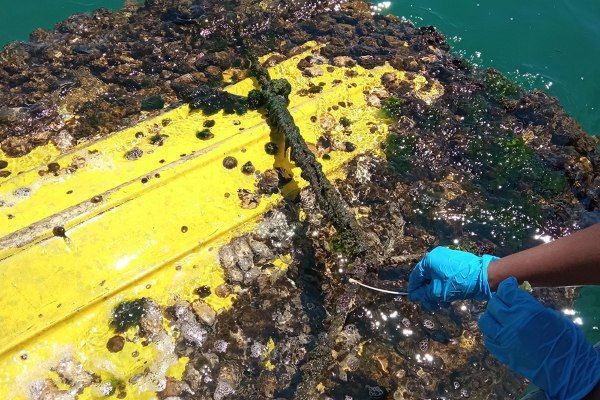
Coinciding with the celebration of World Oceans Day, focused on the protection and sustainable use of marine resources, maritime transport highlights key environmental challenges such as the increase in waste generated in ports and the impact of biofouling on vessels. This phenomenon, caused by the accumulation of marine organisms on ship hulls and other submerged structures, increases friction with water, raises fuel consumption, and elevates polluting emissions.
To address this problem, Endfouling was born, a Valencian project involving the Technological Institute of Plastics (Aimplas), along with BiotechVana, Fundación Valenciaport, and Seroil Valencia. The initiative seeks to transform organic waste generated in the port environment into new sustainable solutions capable of protecting vessels and improving the efficiency of maritime transport.
According to data from the International Maritime Organization (IMO), approximately 9% of the fuel consumed by ships is related to the effect of these marine encrustations. Furthermore, this increase in energy consumption can generate between 80 and 90 million tons of CO2 per year.
Endfouling is investigating how to leverage organic waste from port activity to obtain new biological additives that help prevent the formation of these encrustations on vessels and other marine structures.
The project is framed within the principles of the circular economy, as it proposes converting waste that usually ends up discarded into new materials with added value for the maritime sector. In addition to improving the management of this waste, the initiative seeks to reduce the environmental impact associated with both port activity and vessel maintenance.
Currently, there are different solutions to combat biofouling, although many of them have limitations or resort to chemical components. Endfouling is committed to the development of biological alternatives that can be integrated into materials used in vessels to offer more durable and sustainable protection.
To this end, the project works on developing solutions based on enzymes and microorganisms capable of hindering the appearance of marine encrustations from their earliest stages. Additionally, artificial intelligence and bioinformatics tools are used to optimize the behavior and effectiveness of these compounds.
Another line of work is the development of protection systems that allow these biological additives to be incorporated into plastic materials destined for the maritime sector without losing their activity. In this area, Aimplas contributes its experience in advanced materials and manufacturing processes.
The project also includes the design of prototypes and real-condition tests to evaluate the behavior of the developed solutions on vessels and marine structures.
Endfouling aims to contribute to more efficient and environmentally friendly maritime transport. Reducing the appearance of biofouling on vessels can not only decrease fuel consumption and polluting emissions but also improve the maintenance and lifespan of marine structures.
Furthermore, the project aligns with European strategies linked to sustainability, the circular economy, and the reduction of plastic and microplastic waste in the marine environment.
With this initiative, the participating entities seek to promote new innovative solutions that allow better use of resources generated in ports and advance towards a more sustainable maritime model.
Endfouling is a project financed by the Valencian Institute of Competitiveness and Innovation (Ivace+i) within the 2024 call for Strategic Projects in Cooperation, an initiative aimed at promoting the development of innovative and sustainable solutions in strategic sectors for the Valencian Community.
Source: portalportuario