• 2 min de lectura
• 2 min de lectura
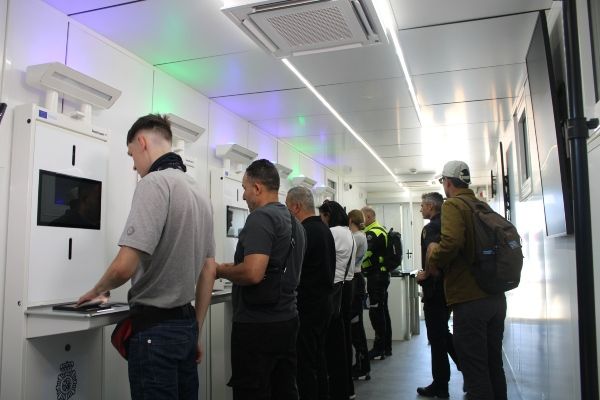
The Port of Valencia has become the first in Spain to have a border control system for passengers adapted to the European Entry/Exit System (EES). This infrastructure, promoted by the Port Authority of Valencia (APV), serves as a support point for the Ministry of Interior in managing external borders.
The new facility strengthens identity verification procedures, document control, and passenger assistance, contributing to a more agile, secure, and efficient management of migratory flows. The project is co-financed by 75% by the European Union through the European Funds for Internal Security (FESI) and has a budget of USD 1.367 million.
The new post consists of an adapted container equipped to carry out border control tasks. The infrastructure features large windows, thermal insulation, lighting, furniture, and state-of-the-art technology for passport reading and passenger assistance.
Its implementation responds to the APV's objective of actively collaborating with the Ministry of Interior and European institutions in improving the management of external borders. Furthermore, this action allows for progress in the prevention, detection, and investigation of actions related to terrorism and other serious crimes.
The EES system allows for the registration of entry and exit data, as well as denials of access for third-country nationals crossing the external borders of member states.
To facilitate these procedures, verification, supervision, and registration tablets have also been incorporated, which strengthen the work of control teams and improve efficiency in border information management.
Source: portalportuario