• 2 min de lectura
• 2 min de lectura
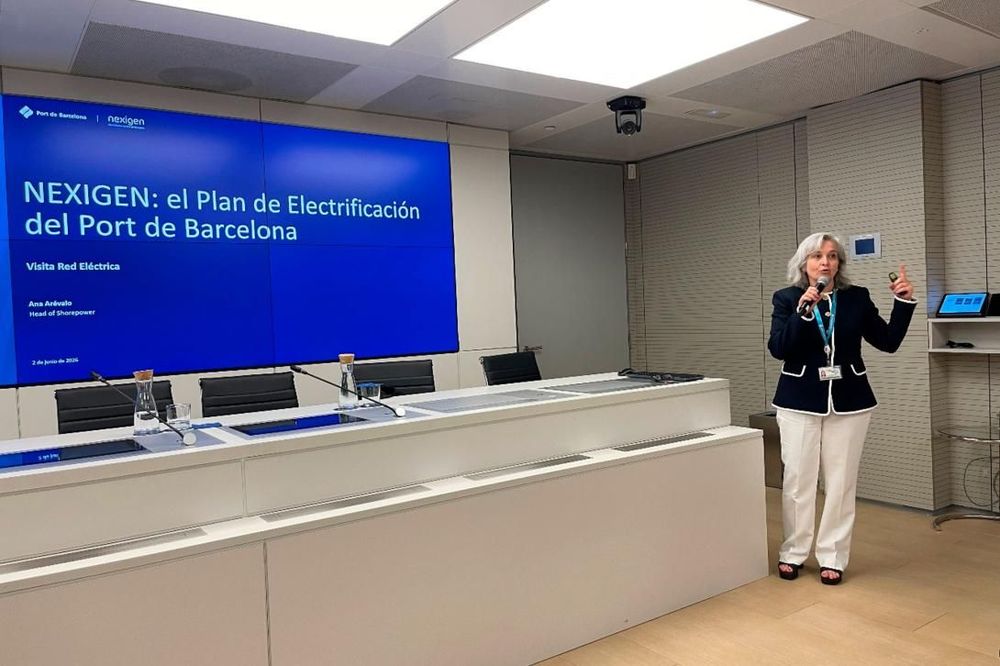
The Port of Barcelona and Red Eléctrica Española (REE) held a conference yesterday dedicated to presenting the Nexigen dock electrification project being developed by the Catalan port and discussing various related aspects. The conference, which brought together more than 50 professionals from different REE departments, was essentially technical and focused on explaining the specificities of the Nexigen project and the role that the Cerdà and Port substations, high and medium voltage connections, and Onshore Power Supply (OPS) systems will play in the different terminals.
During the conference, which included a welcome from the Deputy General Director of Port Operations and Planning of the Port of Barcelona, Quim Compte, the Head of Shorepower Department, Ana Arévalo, gave a technical introduction to the Nexigen project. Subsequently, during a maritime visit, she explained the characteristics of the different electrical infrastructures already built and in operation, as well as those currently under construction.
In her presentation, Arévalo highlighted "the importance of coordination between the Port of Barcelona and REE from the beginning of this project and especially at the current time, as we are making the connection to the Cerdà Substation, which must provide electricity for the future needs of the Port, and as work is underway on the construction of the new Port substation and the underground high-voltage line that will connect them."
Arévalo assessed the OPS already in operation at the Hutchison Ports BEST container terminal and the Grimaldi Terminal Barcelona ferry terminal. She also explained the progress of the various projects included in Nexigen, such as the underground connections between the Energia and Adossat docks, the OPS systems at Terminal H, operated by the shipping company MSC, and at the future Terminal G, which will be operated by the shipping company Royal Caribbean, among others.
Finally, the representatives of the Port and REE highlighted the leadership and important dissemination work being carried out by the Catalan port, in the Mediterranean and European spheres, in the design, construction, and commissioning of infrastructures for dock electrification. The Nexigen project, which foresees an investment of more than 200 million euros, will allow clean energy to be supplied to ships, enabling them to stop their auxiliary engines while moored. Nexigen is a pivotal piece in the Port of Barcelona's Energy Transition Plan and its objective of becoming a climatically neutral port by 2050.