• 4 min de lectura
• 4 min de lectura
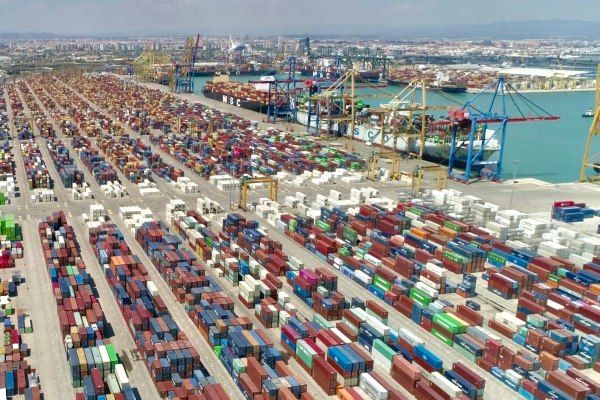
The Ministry of Transport and Sustainable Mobility of Spain, through the Governing Council of Puertos del Estado (State Ports), approved the consolidated budget project for the state-owned port system for 2027, which includes public investments worth more than $1.755 billion ($1.833.39 billion). The main investment item in Spanish maritime facilities is for infrastructure and installations to improve port capacity linked to demand evolution, amounting to $1.069.15 billion. Sustainability, with $376.51 million, is the second most important chapter, with special relevance for OPS projects (electrical connections at the docks to provide power to berthed vessels), largely linked to European funds. This figure means that 20% of total investments will have this objective, representing an increase compared to 17.5% in the 2026 budget and 13% in the 2025 fiscal year. The sustainability strategy of Puertos del Estado not only seeks to reduce CO2 emissions linked to port activity but also those of the maritime and land transport chains converging in the ports. In this regard, the port system has also approved investments of $210.25 million in 2027 (11% of the total plan) for the development of new land access, mainly railway, or improvement of existing ones, in order to increase the percentage of goods entering or leaving the ports by train. This is expected to reduce emissions linked to goods movement, as well as contribute to the decongestion of urban transport hubs. Finally, the port system's investment plan is completed by port-city actions to bring ports closer to citizens and improve their quality of life, with $78.39 million; security reinforcement, with $59.90 million; and digitalization, with $30.89 million. These figures were consolidated after the approval of the Business Plans agreed upon between Puertos del Estado and the port authorities, and will allow state-owned facilities to strengthen themselves to face challenges and continue improving their competitiveness. For the period 2026-2030, the investment plans agreed with the port authorities within the framework of the 2027 Business Plan exceed $8.190 billion at a consolidated level ($8.298.81 billion). Among the most important projects in terms of port infrastructure investment for 2027 are the new north terminal of the Port of Valencia, the development of the southern esplanade for offshore wind power in the Port of A Coruña, the extension of the Pechina dock in the Port of Almería, and the construction of new berths 34 and the expansion of the Adosado dock in the Port of Barcelona. Additionally, the second phase of the Central Breakwater and the expansion of liquid bulk facilities in Punta Ceballos in the Port of Bilbao, pier front 19 in the Port of Cartagena, the works on the coastal river dock in the south basin for offshore wind power in the Port of Castellón, and dock number 8 in the Port of Málaga, among other developments, are included. Regarding initiatives linked to sustainability, plans for OPS connections in the ports of Algeciras, Bilbao, or Valencia, among others, stand out, while in the port-city chapter, projects for the Almería waterfront or the first phase of the Levante dock in Huelva will be developed. ## Consolidated Budget 2027 The 2027 budget approved at the meeting of the Governing Council of Puertos del Estado for the entire port system foresees a net turnover of $1.681.29 billion, representing sustained growth compared to $1.580.67 billion at the close of 2025 and $1.607.58 billion in the forecast for the close of 2026. The projected profit before tax for the year included in the 2027 budget exceeds $195.39 million, which will allow the ports to maintain their economic self-sufficiency, enabling them to undertake their investment plans, as well as their operating expenses. Utilization fees, which include, among others, cargo, vessel, and passenger fees, and which represent the largest revenue item, are expected to increase to over $794.43 million next year; while occupancy and activity fees will reach $448.11 million and $204.75 million respectively.