• 4 min de lectura
• 4 min de lectura
The maritime freight market between Asia, Mexico, and South America experienced one of its most volatile periods in June, with abrupt movements in rates, imbalances in space availability, and new pressures on transit time reliability.
The EAX index, prepared by Eternity Group Mexico, closed May at $3,488 per FEU (40-foot container) on the route from Asia to the West Coast of South America (WCSA) and Mexico. However, during the first weeks of June, spot rates accelerated their upward trajectory, reaching a maximum of $6,500 per FEU.
The rebound was mainly caused by the severe supply contraction carried over from May, when the corridor registered a capacity deficit of up to 24,000 TEU (equivalent to 20-foot containers). The lack of available space strengthened the position of shipping lines and rapidly pushed transportation costs upwards.
The market behavior changed during the second half of the month. Accumulated congestions in origin ports and transshipment terminals led to a strong injection of space, shifting the balance from a deficit scenario to a surplus of 42,000 TEU.
The recovery of capacity generated a pronounced correction in rates, which fell towards the $5,000 per FEU barrier. Thus, in a matter of weeks, the market went from facing a severe space shortage to absorbing a higher volume of capacity, demonstrating the sensitivity of rates to any modification in weekly supply.
This readjustment coincided with the incorporation of new container ships into the global market. During June, vessels with a combined capacity of 183,089 TEU were delivered, which expanded global space availability and could contribute to moderating tariff pressures over the coming months.
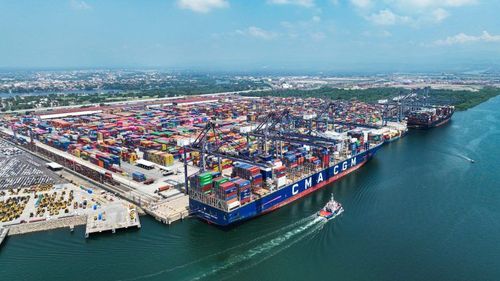
CMA CGM led the capacity contribution during the period, incorporating three vessels that together added 45,460 TEU. Meanwhile, OOCL received the individual vessel with the largest capacity of the month, a mega-container ship with space for more than 24,000 TEU.
Based on this fleet expansion, Eternity Group Mexico anticipates that July could become a period of freight stabilization, with rates close to $4,000 per FEU on the route to Mexico and the West Coast of South America. This scenario will depend, however, on supply remaining above 150,000 TEU per week.
A reduction in costs would represent a more favorable environment for importers, but it would not necessarily solve the operational problems of the corridor. The continuous modification of capacity deployed by shipping lines, along with possible climatic effects, will keep itinerary regularity under pressure and could cause significant delays in the arrival of goods.
Given this scenario, logistical planning becomes more relevant than the search for marginal reductions in rates. For critical cargo destined for production lines or commercial seasons, speculating on further cost reductions can increase the risk of not finding space or failing to meet supply schedules.
The EAX report recommends scheduling shipments three to four weeks in advance, in order to secure capacity and reduce exposure to sudden market changes. It also suggests strengthening coordination among suppliers, buyers, logistics operators, and other participants in the chain.
One of the central elements will be the accuracy of the date when the merchandise is ready to be loaded, known as Cargo Ready Date (CRD). A last-minute modification in departure conditions can lead to the loss of assigned space, a practice known as roll-over, and move the cargo to a later sailing.
While the route to Mexico and the West Coast of South America began to show signs of correction, the corridor between Asia and the East Coast of South America (ECSA) maintained a contrary trajectory. The monthly value of the EAX index in this region reached $7,229 per FEU, an increase of 71.34% compared to the previous month.
During the last two months, rates in this corridor fluctuated between $4,000 and $8,000 per FEU, a range that confirms the East Coast of South America as the most sensitive and volatile route among those analyzed by the index.
The constant adjustments made by shipping lines in the configuration of their services have deepened instability. In addition to increasing freight costs, these changes have generated operational disruptions and lower reliability in transit times from Asia, forcing importers to operate with larger anticipation margins.
June's behavior showed that the expansion of the global fleet does not automatically translate into stable capacity for each corridor. The distribution of vessels, port congestions, service adjustments, and climatic conditions will continue to determine both the level of freights and the punctuality of supply chains.