• 3 min de lectura
• 3 min de lectura
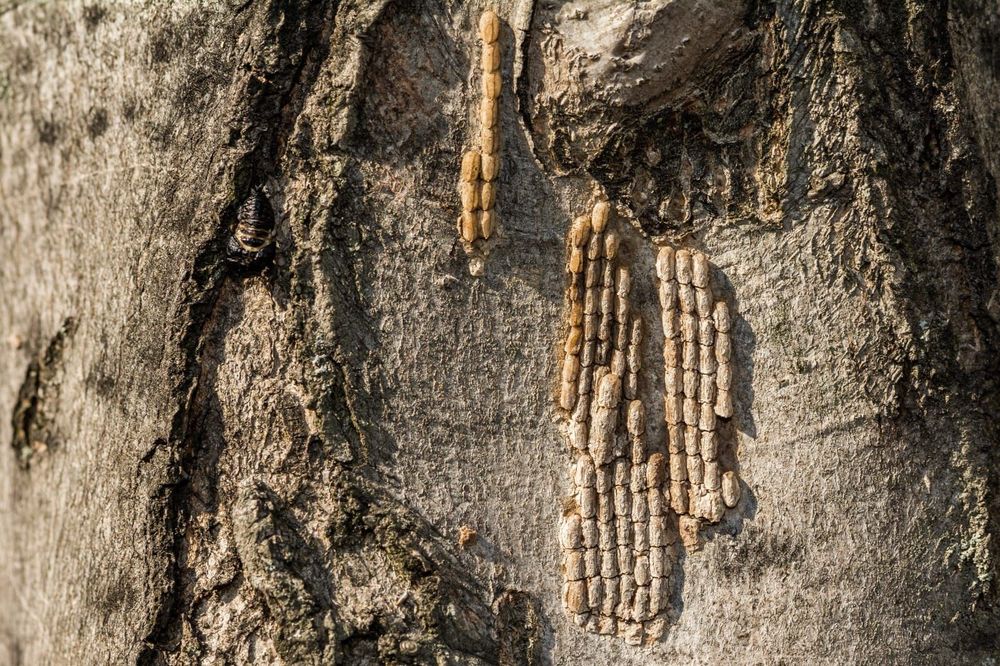
The spotted lanternfly (Lycorma delicatula) is a pest absent from Argentina that can affect a wide variety of plant species, including fruit trees such as apple, plum, cherry, pear, nectarine, peach, and grapevines, as well as various forestry species.
Given the risk of absent pests entering the country, the National Agri-Food Health and Quality Service (SENASA) develops actions aimed at early detection of their eventual presence and preventing their establishment and dispersion in the national territory.
The adult measures approximately 17 to 27 mm in length. It has gray forewings with black spots and a reticulated pattern at the tip, and red, white, and black-tipped hindwings. Its abdomen is yellow with black stripes. The egg masses are yellowish-brown, have a waxy gray coating before hatching, and are capable of surviving very low temperatures.

The spotted lanternfly causes damage by sucking sap from the stems, leaves, and bark of branches and trunks of the plant. Highly infested branches can lose vigor, wilt, and die. It is also considered a nuisance pest, as it can congregate in large numbers in and around homes and structures.
Although the insect can move on its own, by walking or flying short distances, one of the main associated risks is its ability to disperse over long distances through the transport of materials or objects that can carry its egg masses.
For this reason, paying attention to its possible presence in materials that may transport the pest and avoiding its transfer is important to reduce the risk of entry into the country.
Phytosanitary surveillance is a fundamental tool to protect agricultural production and forest heritage. SENASA collects, analyzes, and systematizes information on pests of interest to determine their phytosanitary status and support decisions on prevention and plant protection.
In this context, the participation of producers, technicians, public organizations, institutions linked to the agricultural sector, and citizens is essential to alert about findings that may be compatible with an absent pest.
The information received through the National Pest Surveillance and Monitoring System (Sinavimo) allows the Agency to evaluate suspicions and, when appropriate, proceed with the necessary actions to verify the situation.
It is important to report suspected pest detection to SENASA through the official communication channels of this health agency: Sinavimo; email: dief@senasa.gob.ar and WhatsApp for citizen guidance: 1135859810.
This notice is the step that allows the Agency to activate timely measures, keep Argentina's phytosanitary status updated, and protect the national agricultural heritage from pests and diseases, and applies to agricultural producers, researchers, and the general public.