• 2 min de lectura
• 2 min de lectura
Within the framework of the expansion of the Phytosanitary Emergency area due to the presence of the Red Palm Weevil - which includes the provinces of Entre Ríos and Buenos Aires - the National Agri-Food Health and Quality Service (SENASA) intensified its comprehensive inspection activities, monitoring one of the main palm tree nurseries in the town of Zárate, which has approximately 40 planted hectares and a stock of 13,000 adult plants of the Phoenix and Washingtonian genera.
To ensure the continuity of prevention actions in the territory and strengthen the tasks of surveillance and control of the pest in this area of the country, as stipulated in SENASA's DNPV Provision N° 2/2026, and to minimize both the economic impact and the phytosanitary damage that the pest can cause in the region.

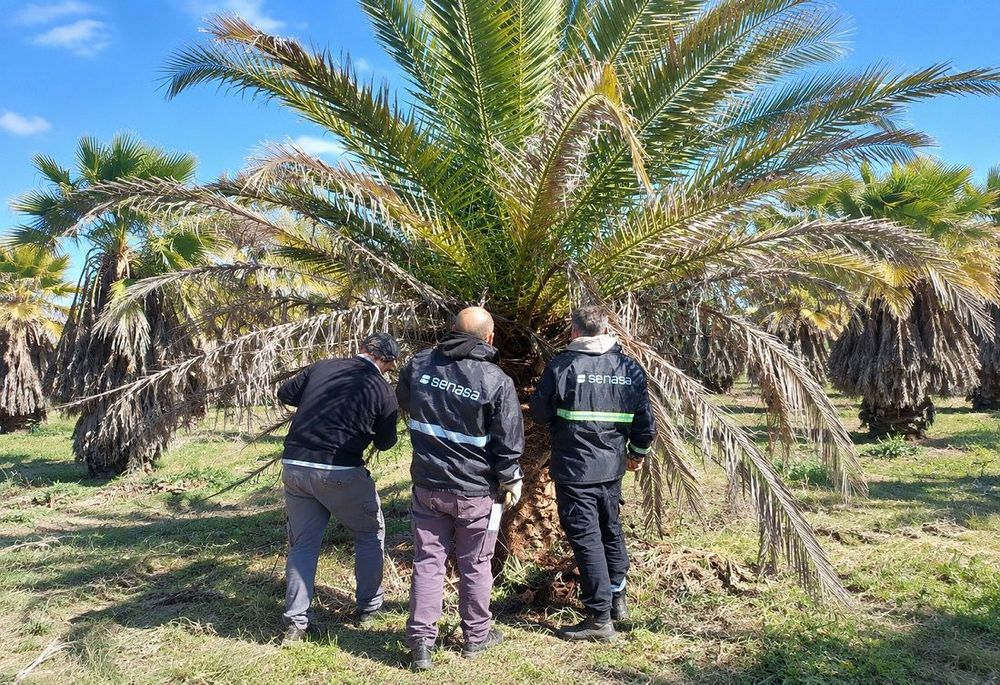
In this context, a team of specialists from the jurisdiction of the Buenos Aires North Regional Center visited the nursery, toured its facilities, and verified, through an exhaustive monitoring process, each of the productive lots.
The next step was to identify palm tree specimens with potentially suspicious symptoms, which were analyzed through a meticulous inspection process, yielding negative results for the presence of Rhynchophorus ferrugineus (Red Palm Weevil) in each case.
The application of this provision is a consequence of the recent discovery of the pest in the province of Entre Ríos, which is why it is of vital importance to strengthen each of the control procedures and reinforce measures aimed at preventing its dispersion, and in this way continue working towards the early detection of the pest, minimizing the impact or damage it may generate in production.