


Within the framework of the current Phytosanitary Emergency and as part of the implementation of the contingency plan established in Resolution 133/2026, the National Service of Agrifood Health and Quality (SENASA) maintains active operations for prevention, surveillance, and handling of complaints regarding the presence of the Red Palm Weevil (Rhynchophorus ferrugineus) in the province of Entre Ríos.
During the latest territorial interventions carried out in Larroque and Urdinarrain, all samples analyzed in the laboratory tested negative for Red Palm Weevil. The analyses confirmed, however, the presence of the Palm Borer Moth (Paysandisia archon), which can be confused in its larval stage due to its similar appearance to the red palm weevil larva. The larva is elongated, has a clearly segmented body, with a dark spot on each segment, and possesses three pairs of legs. In contrast, the red palm weevil larva is comma-shaped and lacks legs.
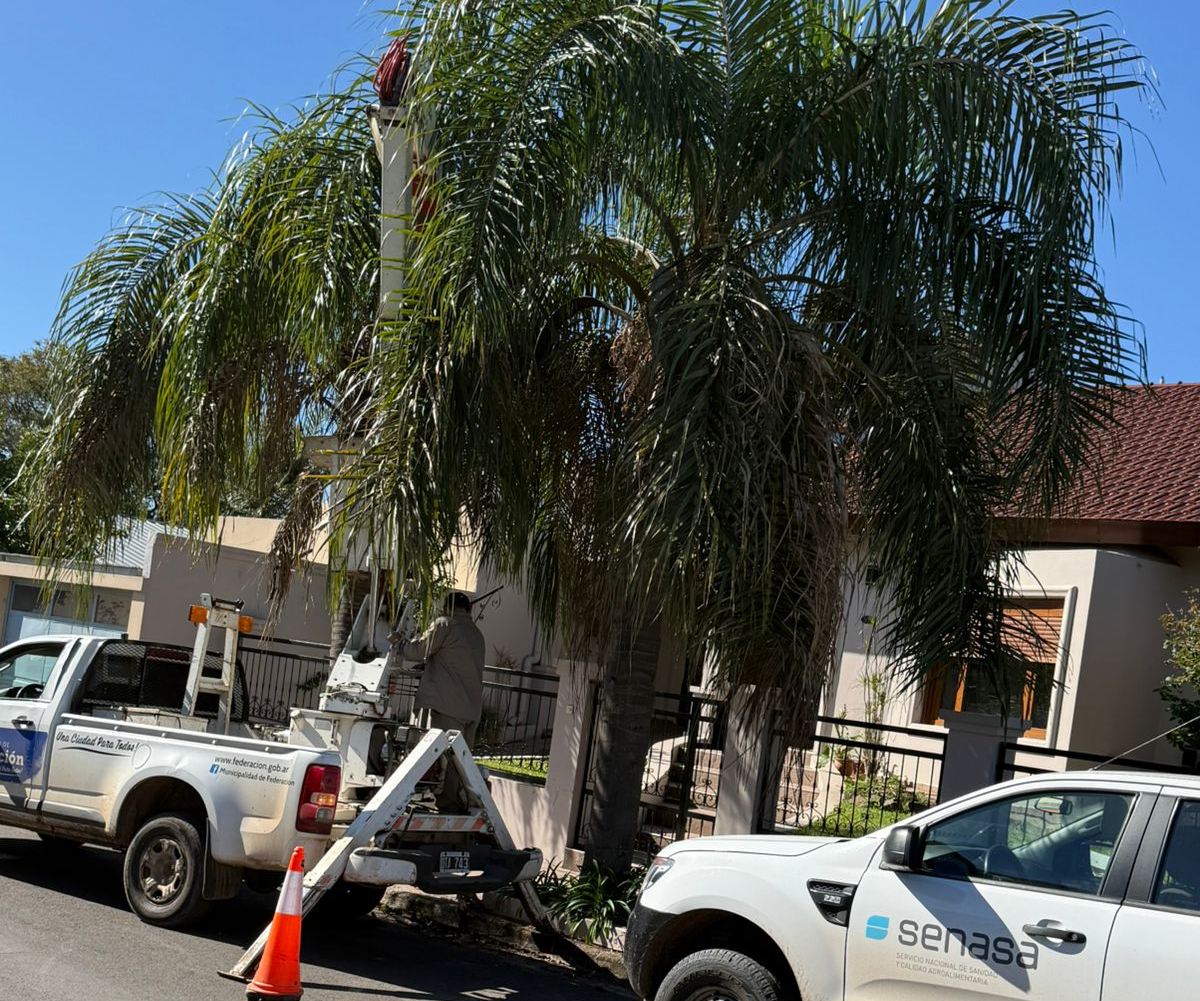
The Red Palm Weevil is an exotic beetle of Asian origin extremely destructive to palm trees, so the absence of findings in the monitored areas confirms the effectiveness of containment measures to prevent its establishment in the region. For its part, the Palm Borer Moth is an indigenous lepidopteran from South America which, although its larvae cause damage to the trunk, constitutes an endemic pest usually present in the area.
SENASA -through its Entre Ríos Regional Center- and the municipalities request the community and those responsible for public and private green spaces to periodically inspect urban specimens. Attention should be paid to the presence of holes and fiber threads in the trunk or at the base of the leaves, in addition to the accumulation of sawdust expelled by larval activity. Other characteristic signs include central leaves notched or fan-shaped perforated when unfolding, generalized decay, and premature crown drop.
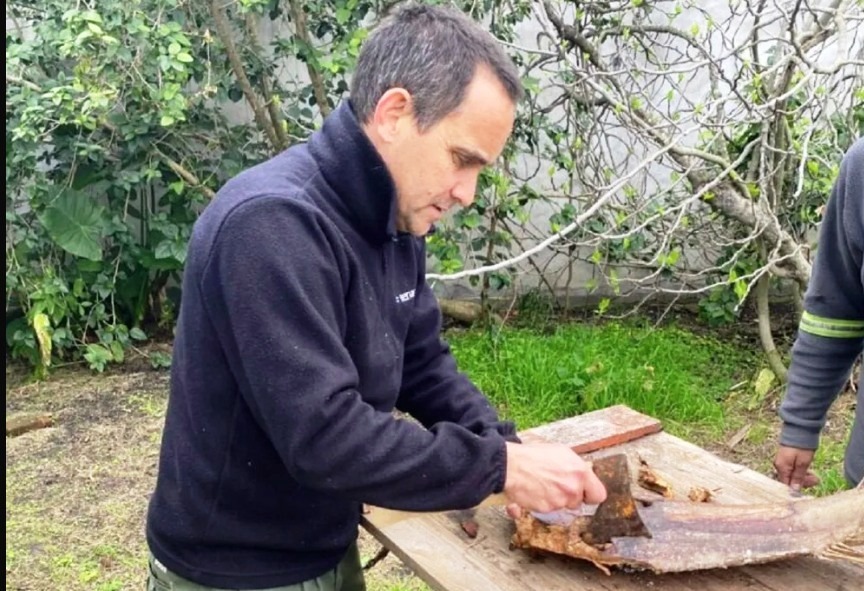
To prevent the spread of pests, it is strictly prohibited to transport suspicious insects, palm trees, or plant parts from areas where the insect's presence has been detected. If compatible symptoms or suspicious specimens are observed, please notify the local SENASA offices immediately by sending an email to dief@senasa.gob.ar or by completing the complaint form on the SINAVIMO system's web portal.

