• 3 min de lectura
• 3 min de lectura
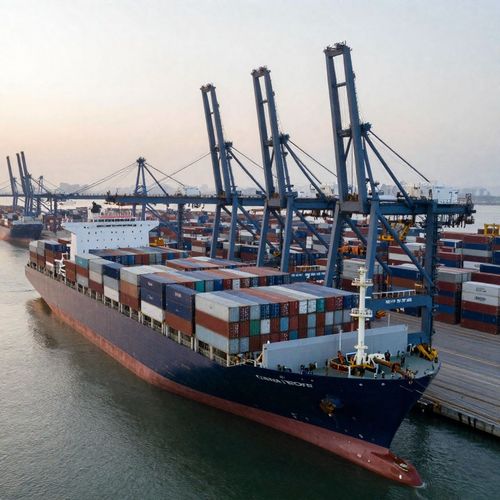
TCP, the company that manages the Paranaguá Container Terminal, has renewed its commitment to the United Nations Global Compact, an initiative that brings together companies committed to the principles of sustainability, human rights, labor, environment, and integrity. A signatory since 2016, the company focuses its actions on Sustainable Development Goals (SDGs) 9, 12, 13, and 14, related to innovation and infrastructure, responsible consumption and production, climate action, and the conservation of oceans and marine resources.
One of the main milestones of the period was obtaining ISO 50001 certification. In 2025, TCP became the first port terminal in Brazil to obtain this international certification, which recognizes the implementation of an energy management system aimed at monitoring consumption, improving energy performance, and reducing waste.
"Sustainability must be present in both long-term decisions and day-to-day choices. The evolution of this agenda at TCP demonstrates that it is possible to reconcile activity growth with increasingly responsible resource management," says Kayo Zaiats, TCP's Environmental Superintendent.
The results are already evident in operations. Between January and August 2025, TCP reduced electricity consumption by approximately 3 million kWh and diesel consumption by approximately 100,000 liters, compared to the same period in 2024, despite an increase in the volume of cargo transported.
Another advance was the consolidation of using electricity from renewable sources. In 2026, TCP received the I-REC (International Renewable Energy Certificate) for the fifth consecutive year, which certifies the renewable origin of the energy used in its operations. This measure was maintained despite the expansion of the terminal and the increase in energy demand due to the electrification of equipment and the increased number of power outlets in the refrigerated container storage yard, which is the largest in Brazil, with 5,280 outlets.
The energy transition strategy has also progressed with the electrification of three yard cranes (RTG) used in railway operations. Replacing diesel generators with electric motors in the three cranes avoids the emission of 771 tons of greenhouse gases per year. The project is part of a strategy that foresees the gradual expansion of the electrification of all RTG cranes at the terminal.
The company's progress is also reflected in the 2025 Sustainability Report, which compiles environmental, social, and governance indicators and initiatives, reinforcing TCP's transparency regarding its sustainability performance.
"The evolution of sustainability must be perceived in operations as well as in the relationship with the territory. Therefore, in addition to decarbonization, TCP has been expanding projects that involve communities and environmental preservation," highlights Zaiats.
These initiatives include the "Sustainable Communities" project, which has implemented decentralized wastewater treatment systems in schools in the island communities of Paranaguá, and the "Environmental Row." In its eighth edition, held in April 2026, the initiative brought together 110 participants and removed 1.3 tons of waste from the Itiberê River. The project also received the SESI SDG Seal 2025, in the Sustainable Partnerships category.
With the renewal of this commitment, TCP reinforces the continuity of an agenda that combines operational efficiency, energy transition, environmental conservation, and social impact, in line with the principles of the Global Compact and the objectives of the 2030 Agenda.