• 2 min de lectura
• 2 min de lectura

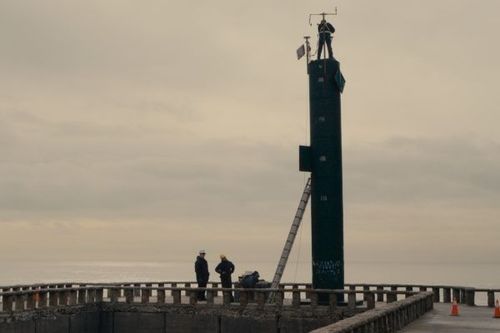
Within the framework of an agreement signed between the Municipality of San Lorenzo and the Argentine Naval Prefecture, the construction of a 75-meter high self-supporting tower is underway in the coastal area of the Municipal Sports Center. The aim is to reinforce security and control on the Paraná River.
The initiative is part of the first phase of the Technological Modernization project of the Main Navigable Waterway, promoted together with the National Agency of Ports and Navigation (ANPYN) and the General Administration of Ports (AGP).
Regarding the scope of the work and the equipment to be installed, the Mayor of the city of San Lorenzo, Santa Fe, Leonardo Raimundo, detailed that "dual-spectrum cameras, visible and thermal, will be installed there, very powerful for security control on the Paraná River, navigation control, and the fight against drug trafficking."
"Likewise, he highlighted the importance of coordination with federal forces. "This camera system will be directly monitored from the Argentine Naval Prefecture headquarters in Buenos Aires, and it is the contribution made by the municipality so that the Prefecture also has a base in San Lorenzo to fight against illegal activities on the Paraná River," he added.
The tower will house a Silent Sentinel dual-spectrum camera (medium-range refrigerated thermal) connected to a 200 Mbps bandwidth microwave link system. This link will connect the San Lorenzo Prefecture unit with that of Puerto Gaboto and the National Gendarmerie site in Rosario.
The infrastructure consists of a triangular base self-supporting tower, 6.5 meters per side, seated on an 8-meter per side concrete slab within a total assigned area of 225 square meters (15 meters per side).
The technical complex is completed with a shelter-type cabinet with forced ventilation, a P25 site for critical security communications, a 30 KVA generator set, and a rectifier system.
According to the project's environmental impact study, the installation does not generate relevant negative environmental impacts and complies with current regulations on non-ionizing radiation.