

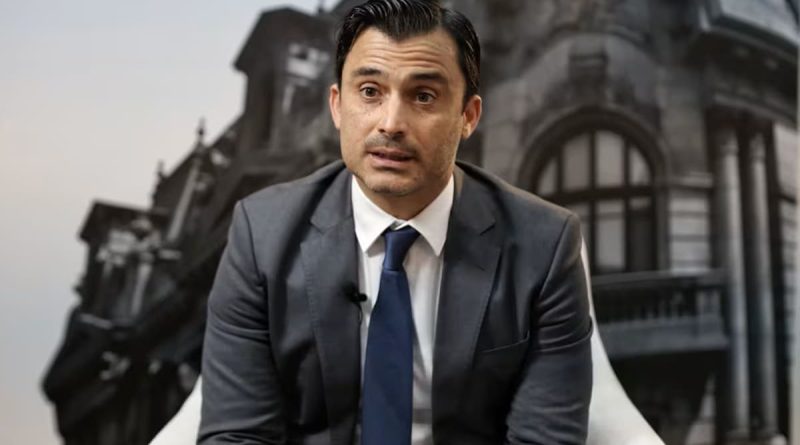
Marco Hernández, general manager of the port company, discusses investment plans until 2066 and new initiatives, such as cabotage, at Cade Ejecutivos 2026.
DP World Callao installed the tallest gantry crane in all of Latin America at the South Pier a week ago as a 'voluntary investment' within its concession contract, which expires in 2036. The company expects, however, to continue operating the terminal for another thirty years, subject to an investment of more than US$1.3 billion. We discussed this with Marco Hernández, general manager of the port company, at Cade Ejecutivos 2026.
- How is the year closing for DP World and what is coming in the following months with the challenge of the El Niño phenomenon (FEN)?
We are closing another record year in terms of volume, which is a clear demonstration that Peru continues to grow. We will move close to 2.2 million 20-foot containers, which is almost 10% more than last year. To put it in context, this volume places us among the terminals with the highest volume on the east coast of the South Pacific.
- How do you see the scenario for next year regarding the FEN?
Something important that I would like to highlight, and that we carried out with the Ministry of Transport and Communications (MTC) and the National Port Authority (APN), was the creation of the Humanitarian Maritime Port Corridor, that is, the reactivation of cabotage. We had a challenge, which was to transport the Bailey bridges from a warehouse in Lurín to Paita, where they would be needed. Doing it the conventional way, by truck, they would have been ready in February or March 2027.
- Did you manage to do it faster?
As DP World is the operator of the South Pier and also has companies that serve the ecosystem, we formed an alliance with Hapag Lloyd and carried out the cabotage at zero cost to the State. In a single vessel, we managed to transport the 26 Bailey bridges in record time, which demonstrates that logistics not only has a commercial aspect but also a humanitarian one to connect the needs that Peru may have during the FEN.
- With the new regulations approved in Congress on cabotage, can this activity now be promoted?
That's right. And cabotage should not only be seen as replacing a truck with a ship, but it goes much further than that. It is an entire ecosystem between the port of origin and the port of destination. DP World has been present in Peru since 2006 with the signing of the concession contract with the State, which has led to an investment of more than US$1 billion in 20 years of presence to build an infrastructure that not only allows the development of cabotage but also serves as the gateway connecting Peru to the world.
- Now DP World is looking at the renewal of the concession contract with the State. How is that going?
It's going very well. We conducted a demand analysis, which showed the economic growth we are going to have. And port infrastructure must keep pace. Of the US$1 billion we have invested, US$600 million were mandatory and US$400 million were voluntary, but, according to the contract, there is nothing else that allows us to continue investing. That is why last April we proposed to the State to extend the concession contract for 30 more years, from 2036 to 2066, subject to an investment of more than US$1.3 billion.
- Would that imply a greater development of infrastructure?
This implies infrastructure development not only port-related because, unlike what we had in the old National Port Law, the update of the law allows us to invest outside the terminal. So, this investment package includes the construction of the Callao Foreport, which has been in the pipeline for many years, and which includes the improvement of roads, the reinforcement of roadways, and the digitalization of the Callao port ecosystem, which we so desperately need.
- How do you see the competition with the port of Chancay and the new port of Corio?
We believe that Chancay and Corio are not our competition, but complementary infrastructure. DP World Callao's business model serves the country's imports and exports, and the demand study we conducted reflects this. The port of Callao serves 13 million people compared to other terminals that are hubs or cargo consolidators from different countries that bridge with other ports in the world. We are the port par excellence for imports and exports in the country.
- How are investments coming along within the framework of the current contract and which sectors are moving the most?
We have several projects to serve mining and agribusiness. A week ago, we received an additional gantry crane, the eleventh one, which is also a voluntary work within the concession contract. It is the tallest crane in all of Latin America. We ordered it two years ago, precisely, to add capacity, which is what is needed at this moment.
- Apart from the automotive sector, is there another one with projection within the cargo movement in the port?
We have land that we are working on to add capacity. This is important to be clear about: the port is a link in the entire logistics chain. The port, without an ecosystem, which includes warehouses, transport, and temporary depots, could not have the efficiency it has, and that is why DP World is always working on new projects to help that ecosystem.
- Finally, it is known that freight rates have become much more expensive, as has fuel. Has this generated an additional cost? How are prices doing?
As DP World is a concession, we have regulated tariffs. We do not have price fluctuations due to these exogenous events. What we do have are price reductions, such as those we have had, of 30%, precisely to continue promoting cabotage.
- Cabotage is used by many mass consumption companies in critical moments, but prices are very high. How do you plan to work on that?
The important thing is to do it at scale. Now we know that it has a cost that is not attractive until we can do it at scale, and that is what we as an ecosystem have to work on; and as a country too, because it is a solution. So, I am confident that all united we will be able to make cabotage an alternative not only in case of disasters but also as a frequent commercial alternative.


