• 2 min de lectura
• 2 min de lectura
Argentina LNG has submitted its application to join the Large Investment Incentive Regime (RIGI) for the development of its integrated liquefied natural gas (LNG) production and export project, with an accumulated investment of USD 51 billion throughout the project. This makes it the largest private investment in Argentine history and the highest for a RIGI project to date.
The project, driven by YPF, Eni, and XRG, envisions the development of an integrated value chain that will allow the transformation of Vaca Muerta natural gas resources into LNG exports destined for international markets.
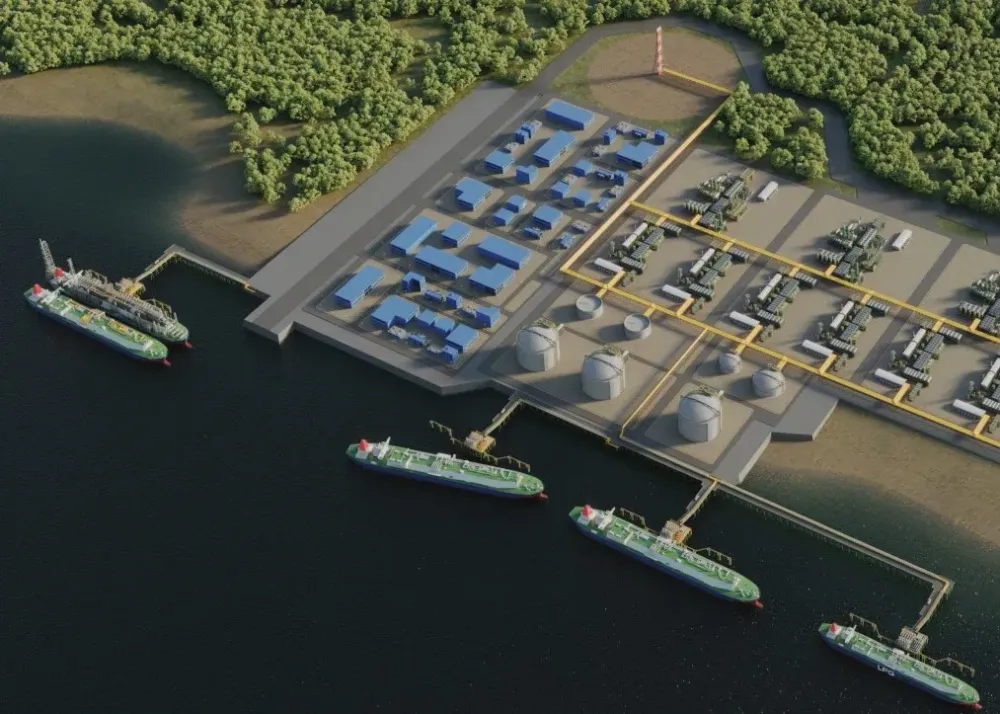
Its design includes rich gas production in Neuquén, dedicated transport infrastructure, processing plants, liquid fractionation trains, and two floating liquefaction (FLNG) units with a combined capacity of 12 MTPA. These units will operate off the coast of Río Negro, in the San Matías Gulf.
Horacio Marín, president and CEO of YPF, stated, "Adherence to RIGI is a fundamental step to advance with a project that will open a new stage for Argentina as a global energy exporter. We are talking about a growth platform that will generate employment, technological development, local suppliers, and unprecedented international integration for our country."
The project is estimated to generate export revenues close to USD 10 billion annually for two decades.
The investment plan contemplates an estimated total outlay of USD 51 billion throughout the entire project. By 2031, the scheduled date for the commissioning of the two floating liquefaction (FLNG) units, an investment level close to USD 29 billion is estimated.
Of that amount, approximately USD 24 billion will be allocated to the development of strategic infrastructure, including industrial complexes, dedicated pipelines, port facilities, and the two FLNG units, while around USD 5 billion will be invested in upstream development and the drilling of the necessary wells to reach the production level that will allow both liquefaction units to operate at full capacity.
During the project's construction phase, a substantial part of the investment will be financed under a Project Finance scheme, obtained from international markets, one of the most widely used solutions worldwide for large energy infrastructure projects. This financing will be backed by long-term export contracts with international "investment grade" buyers.