• 2 min de lectura
• 2 min de lectura
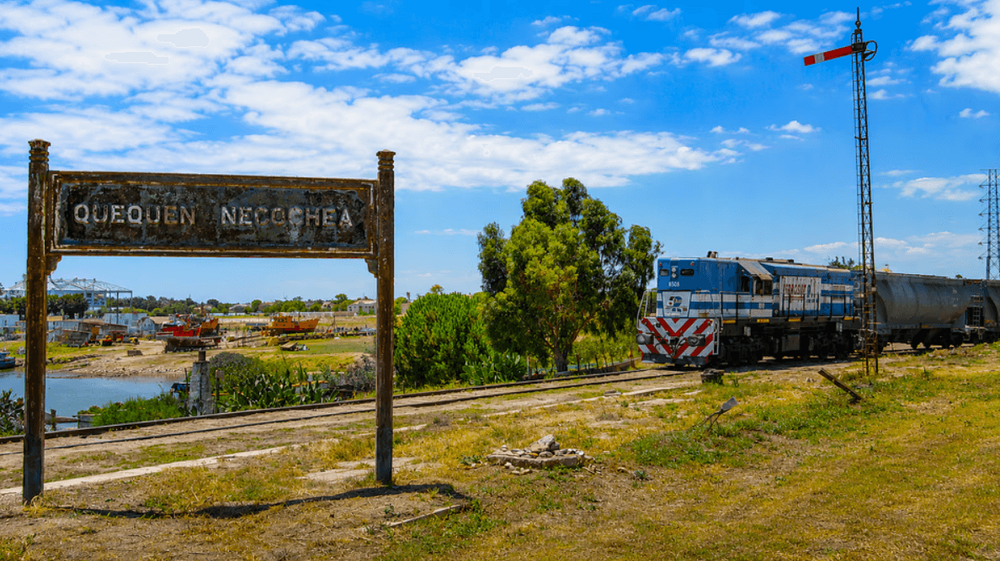
Mayors from southeastern Buenos Aires are pushing for the reactivation of the historic Ayacucho–Tandil–Lobería–Balcarce–Quequén–Necochea freight railway branch, a route that has been inactive since 1998 and which they consider strategic for strengthening regional production and logistics.
The proposal was presented to the Argentine Government's Secretary of Transport, Mariano Plencovich, within the framework of defining the new concession scheme for the freight railway network. The municipalities requested that the corridor be included in future bidding documents to enable its recovery.
The initiative is promoted by mayors Miguel Lunghi (Tandil), Esteban Reino (Balcarce), Pablo Barrena (Lobería), and Emiliano Cordonnier (Ayacucho), who argue that the return of the train would improve the competitiveness of one of the main productive regions of the Province of Buenos Aires.
The branch ceased operations in 1998, and since then, production destined for Puerto Quequén has been transported almost exclusively by truck. The municipal leaders believe that the recovery of the service would allow for the diversification of the logistics matrix and reduce costs for the transport of large volumes.
Puerto Quequén mobilized around 9 million tons during 2025, a record for the port terminal. However, practically all of that cargo arrived by road, a situation that the municipalities seek to reverse with the return of the railway as a complementary alternative.
The proposal also includes carrying out, together with the Railway Infrastructure Administration (Adif), a comprehensive survey of the condition of the tracks, bridges, and stations to determine the necessary investments before an eventual rehabilitation of the corridor.
Furthermore, the municipalities requested an evaluation of incorporating an open access regime if the future concessionaire does not prioritize the recovery of the branch and to analyze its potential for transporting grains and other cargo related to agro-industrial activity.
The regional demand began to consolidate in 2022, and the following year it received the support of 13 mayors from southeastern Buenos Aires. The initiative gained new momentum due to the expiration of the extension of the Ferrosur Roca concession, scheduled for September 2026.
The mayors consider that the new concession process represents an opportunity to reincorporate a railway corridor that has been inactive for almost three decades and could reconnect the interior of Buenos Aires with Puerto Quequén, one of the country's main grain exporting ports.