

• 3 min de lectura
• 3 min de lectura
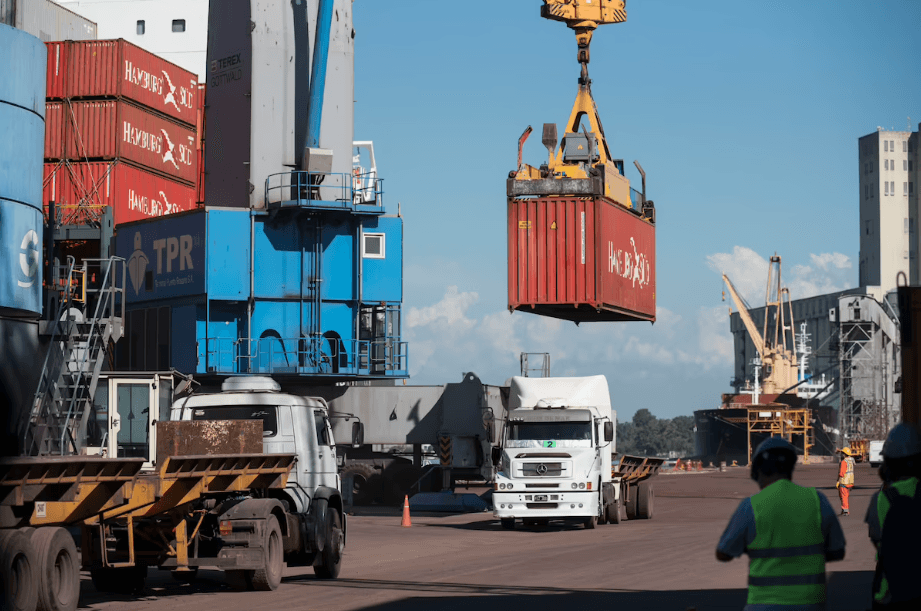
The Government of the Province of Santa Fe has advanced in the consolidation of Stop 5.0, the system that allows for the ordering and coordination of truck entry to the ports of Greater Rosario. Additionally, it presented to representatives of the productive sector the next steps for the Unified Logistics and Operational Monitoring Platform (Pulso), a tool designed to expand this experience to all cargo logistics in the province.
The meeting allowed for a joint evaluation of the tool's implementation during the agricultural campaign and progress on a common agenda to strengthen the competitiveness of the country's main agro-export hub.
The Secretary of Cooperation, Cristian Cunha, highlighted that "we came to show the results of Stop 5.0, which came into effect on May 15. We are proud of what has happened thanks to the commitment of all involved sectors. We began to synchronize the arrival of trucks and, during the peak harvest, significantly reduced congestion. This generated better acceptance from both transporters and residents of the port towns."
The official explained that "we presented Pulso, which will be the next step. The idea is to progressively incorporate all cargo circulating through the province and continue strengthening public-private articulation to arrive next year with a more efficient system prepared to accompany production growth."
For her part, the Secretary of Transport and Logistics, Mónica Alvarado, remarked that "we are promoting a paradigm shift. It's not just about constructing infrastructure, but also about managing demand and optimizing circulation flows. This allows us to reduce concentration peaks and make better use of existing infrastructure."
The secretary stated that "we need to leave improvisation behind and plan with data. Knowing where the cargo is, how it moves, and what the main productive corridors are allows us to make better decisions and manage public resources more efficiently."
Likewise, Alvarado emphasized that "the challenge is to reduce operational costs, generate predictability, and provide better conditions for those who produce, transport, and invest in Santa Fe."
The Secretary of the Provincial Road Safety Agency, Carlos Torres, valued that "the system's effectiveness surprised us. In many places where it was historically necessary to implement checkpoints to regulate heavy traffic and avoid complications in towns near the ports, this time intervention was not needed. This allowed for resource optimization and improved coexistence between logistics activity and the daily lives of residents."
"Argentina has growth expectations in its agro-industrial production, and this demands increasingly efficient transport systems. That is why port access works and coordination tools that allow for ordering logistical flows are so important," highlighted the Executive Director of the Rosario Stock Exchange, Javier Cervio.