• 2 min de lectura
• 2 min de lectura
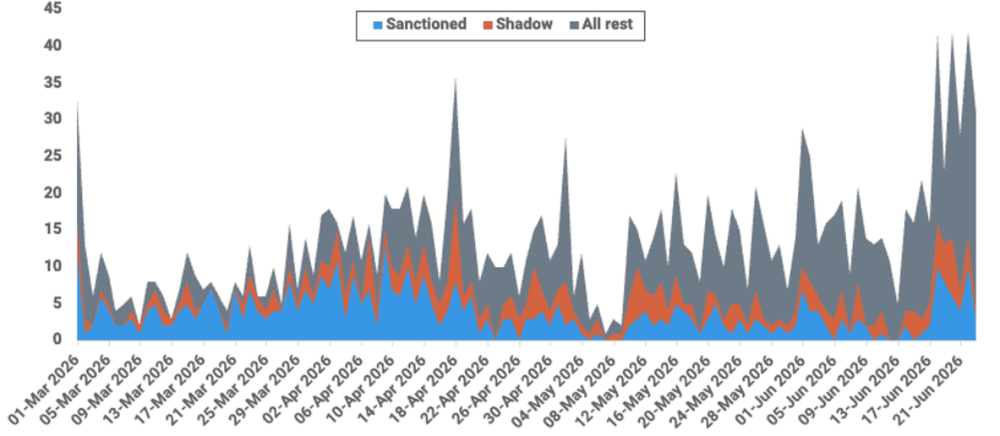
Table of physical attacks on vessels as of June 24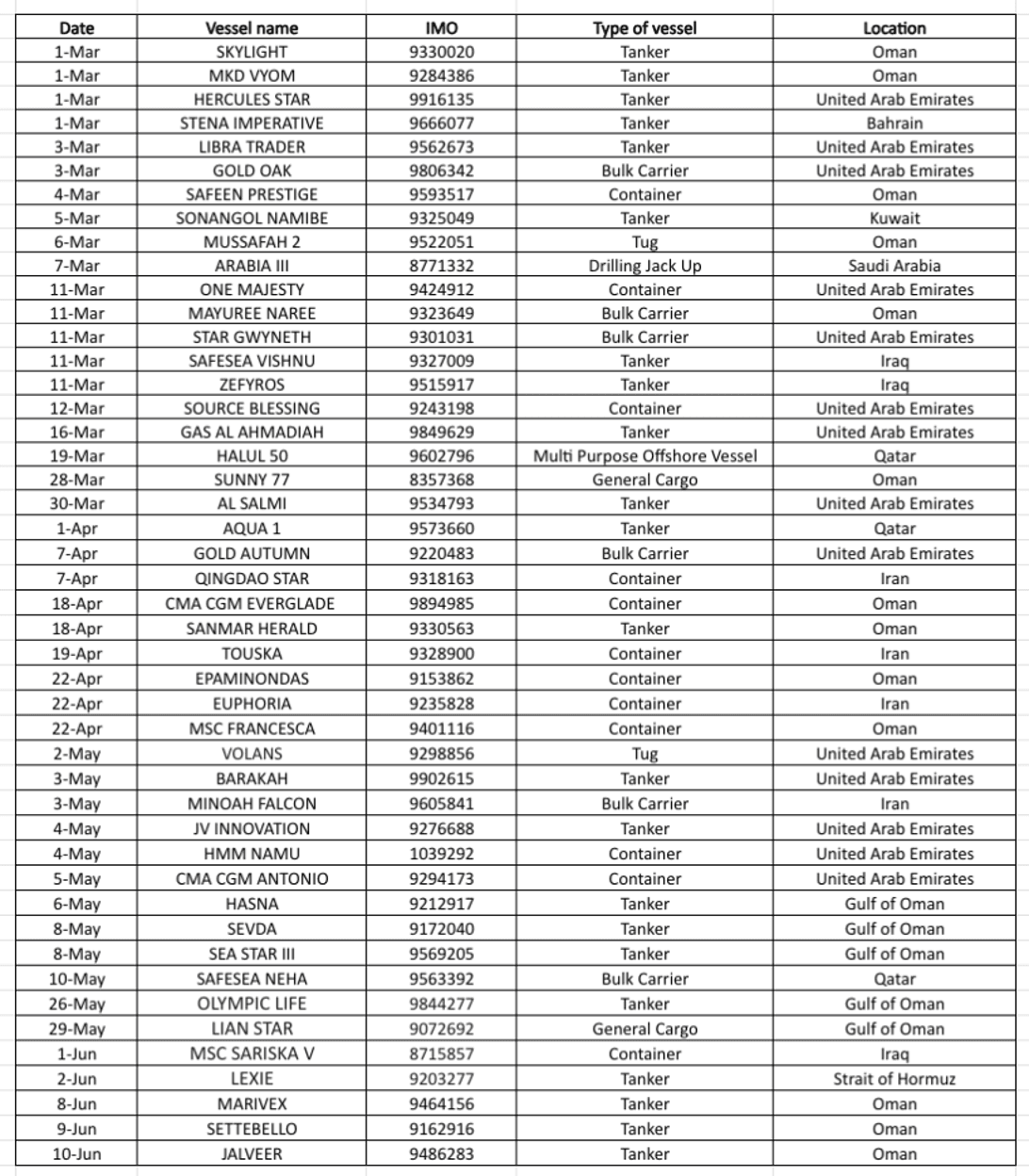
Source: Kpler Risk and Compliance, IMO
Vessels crossed SOH by risk level as of June 23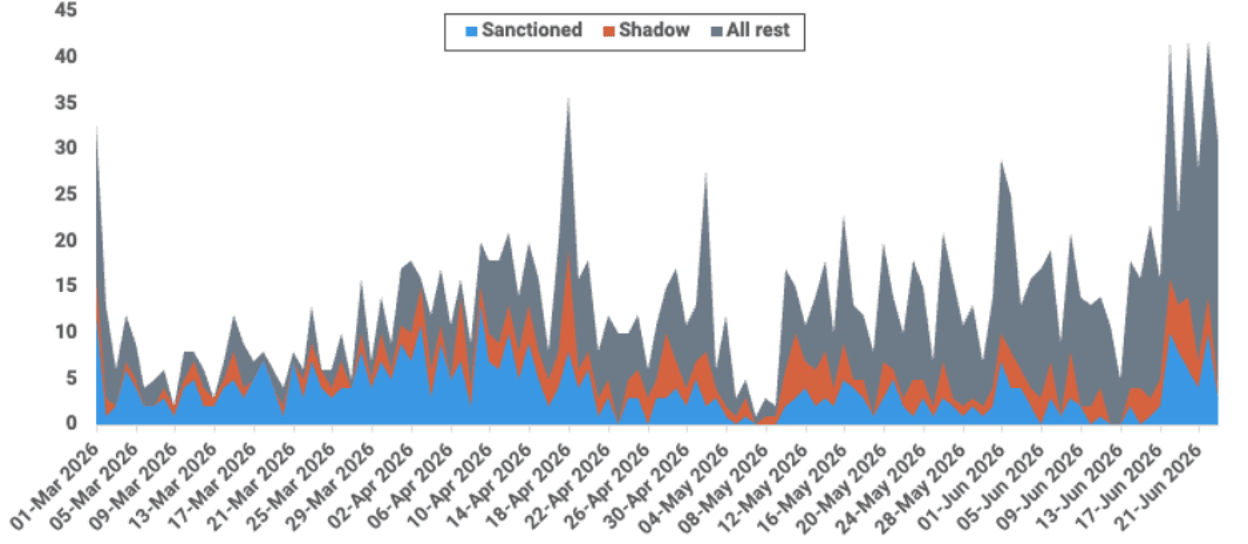
Source: Kpler Risk and Compliance; full traffic data is available including non-commercial vessel tracking from MarineTraffic
Vessels crossed SOH by direction of crossing as of June 23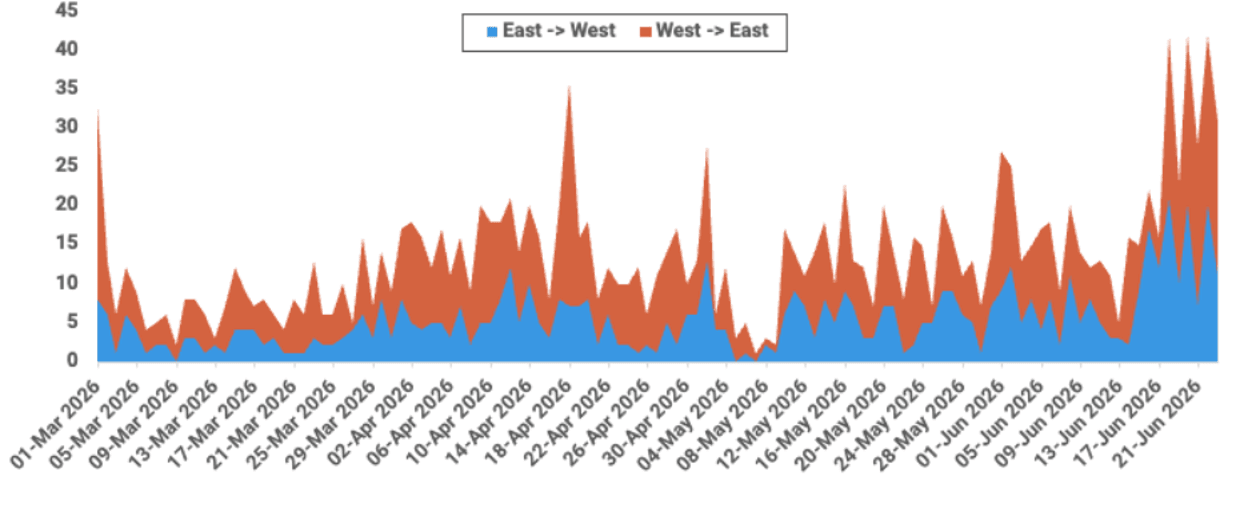
Source: Kpler Risk and Compliance
Confirmed Strait of Hormuz crossings remained active on 23 June, with 31 verified transits recorded. The latest crossings included container, general cargo, tug, landing craft, bulk carrier, crude, oil/chemical, chemicals, fertilizer, minerals and special cargo movements. Traffic was weighted West to East, with 20 of the 31 crossings moving in that direction, compared with 11 East-to-West movements.
Of the 31 crossings, 10 followed the Iranian Route, 8 followed the Omani Route, 6 followed the IMO Route and 7 were classified as Dark/Unknown Route. This shows that vessels are using multiple recognised passage patterns through the Strait, while the Dark/Unknown share means route transparency remains incomplete for part of the latest traffic set.
Three sanctioned vessels were recorded: VELON 1 (IMO 9122473), a container ship moving East to West; SOBAR (IMO 9221970) and SARAK (IMO 9226968), both crude tankers moving East to West in ballast. Energy-linked movements remained visible, including crude, chemicals, oil/chemical, DPP and fertilizer-related cargoes. No additional physical attacks have been confirmed after 10 May, keeping the incident picture unchanged.
The 23 June crossings come as the US-Iran MOU enters its implementation phase, with ongoing discussions focused on keeping the Strait open, maintaining toll-free passage during the 60-day window, and using that period to negotiate wider issues including sanctions relief, nuclear inspections and maritime security. The high daily crossing count, use of Iranian, Omani and IMO routes, and continued energy-linked traffic are consistent with the Strait remaining operational. However, the continued Dark/Unknown Route share and unresolved questions around what happens after the 60-day period mean the traffic picture should still be read as cautiously improving rather than fully normalised.
Fuente: MarineTraffic Maritime News