• 2 min de lectura
• 2 min de lectura
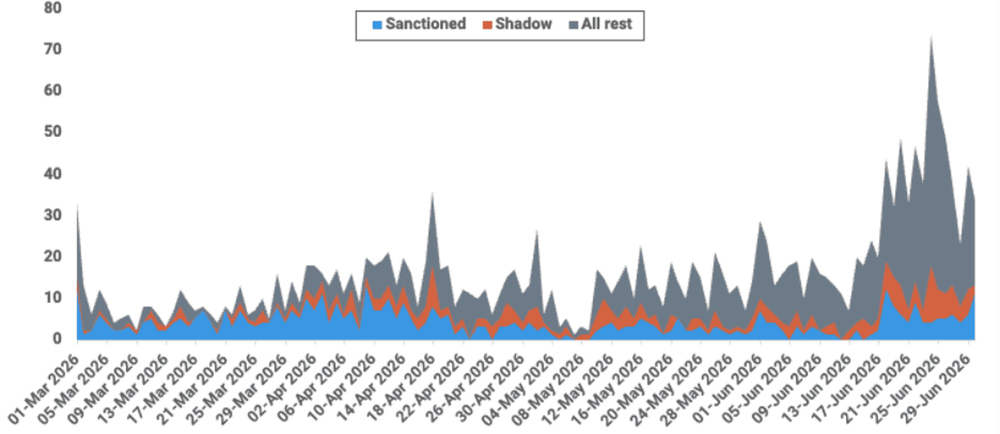
Table of physical attacks on vessels as of July 1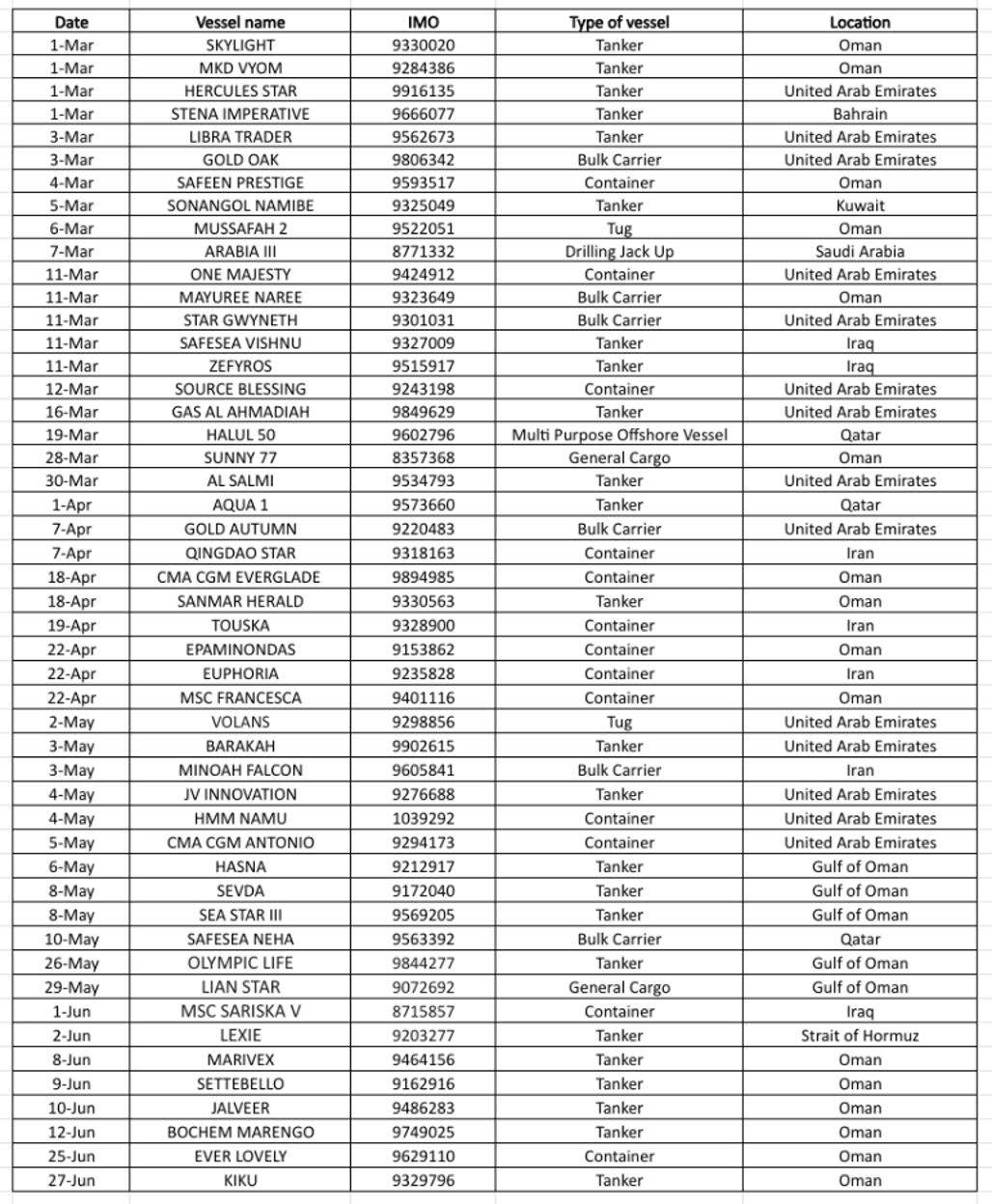
Source: Kpler Risk and Compliance, IMO
Vessels crossed SOH by risk level as of June 30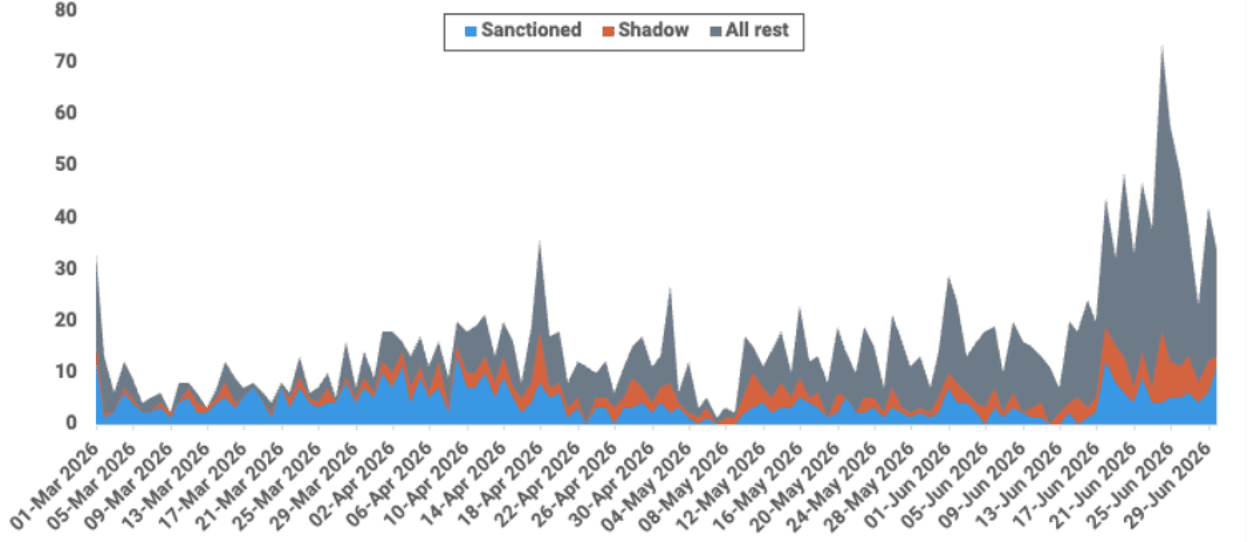
Source: Kpler Risk and Compliance; full traffic data is available including non-commercial vessel tracking from MarineTraffic
Vessels crossed SOH by direction of crossing as of June 30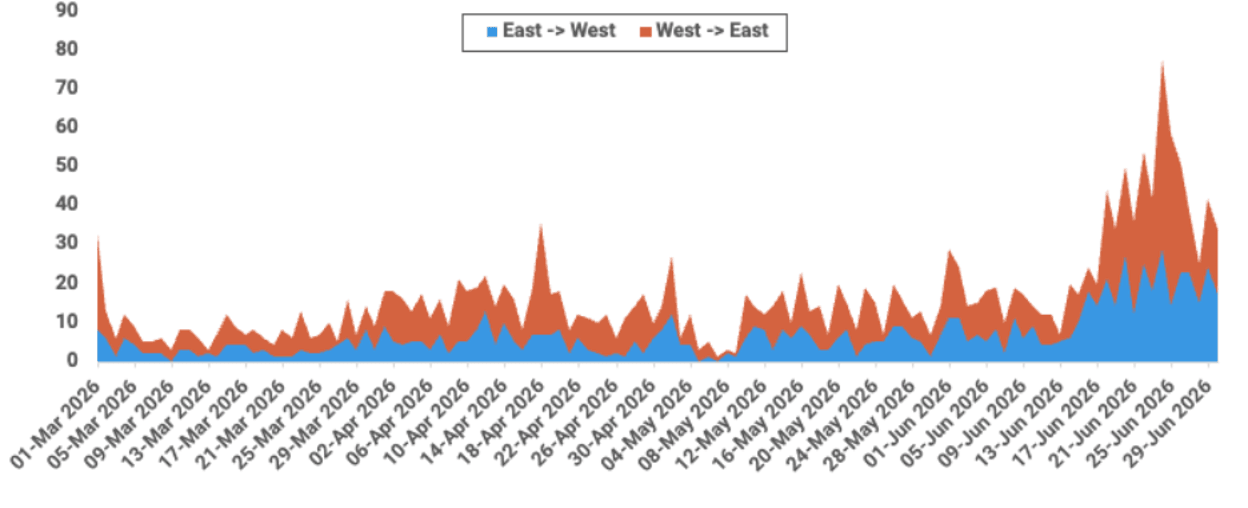
Source: Kpler Risk and Compliance
Confirmed Strait of Hormuz crossings remained active on 30 June, with 34 verified transits recorded. Traffic was evenly split by direction, with 17 crossings moving West to East and 17 moving East to West. The latest dataset included tug, yacht, landing craft, offshore vessel, bulk carrier, crude, LPG, LPG/chemical, oil products, oil/chemical, methanol, fertilizer, grains/oilseeds, iron ore, dry bulk and general cargo movements, showing continued commercial and support activity through the Strait.
Route visibility remained mixed, with 18 crossings following the Iranian Route, 7 following the Omani Route, 5 following the IMO Route and 4 classified as Dark/Unknown Route. The Omani Route remained in use for several commercial and energy-linked movements, but the stronger share of Iranian Route crossings and the continued Dark/Unknown component show that traffic is still distributed across multiple passage patterns rather than concentrated through one agreed corridor.
The security backdrop remains fragile. IMO's highlighted incident tracker now lists 49 confirmed incidents in the Strait of Hormuz and wider Middle East as of 30 June, including one additional confirmed physical attack: BOCHEM MARENGO (IMO 9749025) on 12 June, 6 NM east of Oman. IMO reports the vessel as damaged, with no pollution and no injuries. This follows the later IMO-confirmed attacks on EVER LOVELY on 25 June and KIKU on 27 June, and keeps physical risk central to the near-term operating picture. IMO has also paused its evacuation operation after the 25 June Gulf of Oman attack while it reconfirms safety guarantees for vessels in the region.
The 30 June crossing pattern should be read alongside the ongoing US-Iran discussions around the 60-day framework. The balanced directional split and continued use of the Omani, Iranian and IMO routes show that the Strait remained operational, but not yet settled into a clearly normalised routing pattern. The additional IMO-confirmed attack and the pause to the evacuation operation add pressure to the implementation of any maritime-security commitments, especially around safe passage, route confidence and freedom of navigation.