• 5 min de lectura
• 5 min de lectura
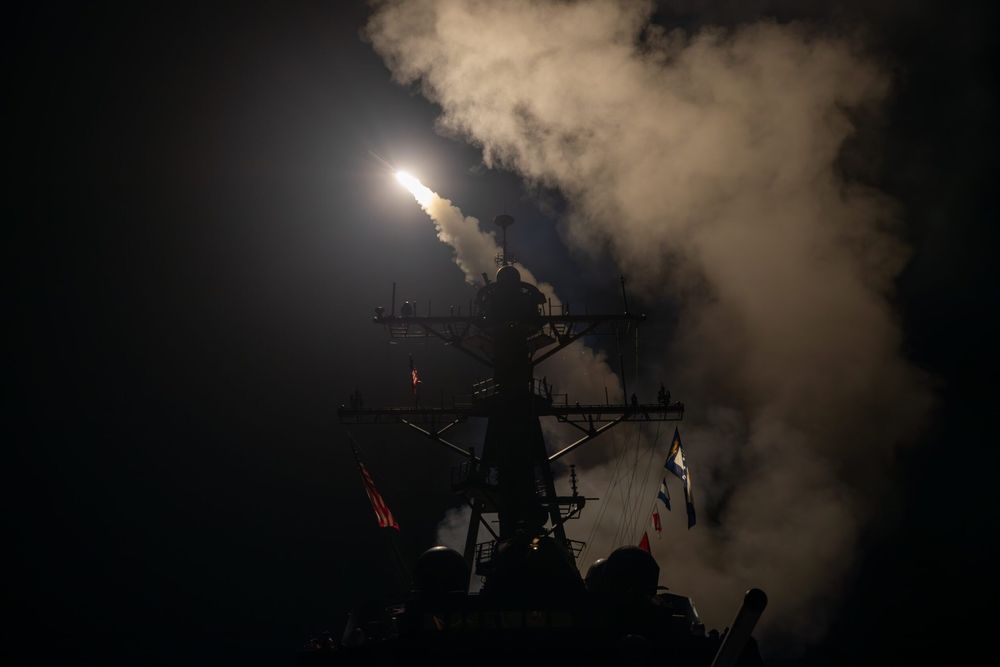
DUBAI, July 24 (Reuters) – U.S. missiles struck targets across Iran, reaching as far as its Caspian coast, on Friday after President Donald Trump vowed "major military punishment" for Tehran and its Houthi allies in Yemen for extending the Middle East war to a second major shipping chokepoint, the mouth of the Red Sea.
Two weeks after the collapse of an interim truce meant to end the war, the Iranian armed forces responded by firing at U.S. bases in neighboring Arab countries and warning people there that they may strike non-military buildings used by U.S. personnel.
The Houthis, who control northern and western Yemen, have announced a naval blockade on Saudi Arabia, which has diverted millions of barrels of oil each day by pipeline to the Red Sea to skirt Iran's near-total blockade of the Strait of Hormuz.
The entrance to the Gulf has so far been the focus of a war that has killed thousands in almost five months, stoked global inflation and fanned fears of an economic downturn.
The Houthi fighters struck two Saudi tankers on Thursday in the Red Sea's Bab el-Mandeb strait, boosting oil prices 7% to top $100 per barrel for the first time since May.
Although Brent futures LCOc1eased almost 3% to under $98 on Friday, the contract remained on course for an advance of over 10% this week.
The attacks forced several other tankers to turn around and head north through the Suez Canal, potentially using a much longer and more expensive route to reach Asia by sailing around Africa.
Shipping insurance costs through the southern Red Sea doubled for some companies on Thursday, sources said.
Still, half of the 18 ships exiting Bab el-Mandeb on Thursday were carrying crude oil, including two Chinese supertankers. The number of tankers crossing through the Strait of Hormuz fell to just one on Thursday, the lowest since May 7.
Trump wrote on social media that he would hold Iran accountable for any further attacks by Yemeni fighters, "and major military punishment will be inflicted upon Iran and, of course, the Houthis, themselves."
He told Axios he was considering re-launching major combat against Iran. "They haven't received enough pain yet," the U.S. news outlet quoted him as saying.
Iranian state media said missiles had struck Qeshm Island on the Strait of Hormuz.
In an example of how shipping disruptions from the war affect other nations, Coca-Cola has raised prices in India of Diet Coke — which is sold there mostly in aluminum cans — by more than 10% as the conflict chokes its supply chain, sources said.
The Iranian army said it had attacked U.S. military equipment depots at Al-Adiri, officially named Camp Buehring, in northern Kuwait, and the positions of U.S. troops at Camp Arifjan and at Camp Doha, near Kuwait City.
Iran's Revolutionary Guards said they had significantly damaged a surveillance tower used by the U.S. Fifth Fleet in Bahrain.
They also said they had attacked a U.S. barracks and fighter jets in Jordan, and a U.S. barracks and spy balloon as well as Patriot air defenses in Erbil in Iraq's Kurdish region, according to the semi-official Tasnim news agency.
Jordan's army said it had downed seven Iranian missiles and six drones, state TV reported, and that the attack had caused no material damage or casualties.
There was no immediate comment from U.S. Central Command (CENTCOM).
U.S. missiles struck a Revolutionary Guards Navy headquarters in the Ziba Kenar area of the Caspian Sea province of Gilan, according to a security official in Gilan quoted by Iranian media. Provincial authorities said U.S. projectiles had also struck the port city of Bandar Anzali, according to the ILNA news agency.
Four people were killed and five injured in a U.S. attack on the Iranian city of Ahvaz, the state broadcaster IRIB said.
In a statement carried by Iran's Fars news agency, the Revolutionary Guards warned the populations of Gulf countries of potential strikes against U.S. military personnel who may be using "buildings in cities as locations to direct their crimes."
It told people to "immediately move away from areas within a 500-meter radius of covert and hidden locations used by U.S. military personnel."
Since the U.S. and Israel began the war in February, Iran has demonstrated that it can hit U.S. targets in the region, despite Trump having said that the U.S. had wiped out its military capabilities.
Four people familiar with U.S. intelligence said Iranian strikes on CIA targets in the Gulf earlier in the war had prompted U.S. intelligence to investigate whether Russia was assisting Iran with targeting information or drone technology. The Kremlin on Thursday declined to comment on the report.
(Writing by Clarence Fernandez and Andrei Khalip; Editing by Kevin Liffey)
(c) Copyright Thomson Reuters 2026.
This article contains reporting from Reuters, published under license.