• 4 min de lectura
• 4 min de lectura
Researchers are testing a smart visual detection system aboard HX's Fram to improve whale detection in Arctic waters and protect marine mammals from increasing vessel traffic.
A smart visual detection system is being trialled aboard HX's Fram to improve whale detection in polar waters.
Researchers from Heriot-Watt University's Whales and Arctic Vessels project (WAVE) are collaborating with UK marine monitoring specialist Seiche and HX on the initiative.
The system began operating on Fram during its voyage from Dover, UK to Svalbard, Norway and will collect data around the Svalbard archipelago throughout the Arctic summer.
The system, supplied by Seiche, is designed to detect whales in real time, providing advance warnings for bridge crews and supplementing data collection for long-term ecological monitoring. The trial will evaluate continuous data collection potential onboard vessels and assess how imagery and detection data could contribute towards future AI-assisted marine mammal identification and real-time alerting capabilities.
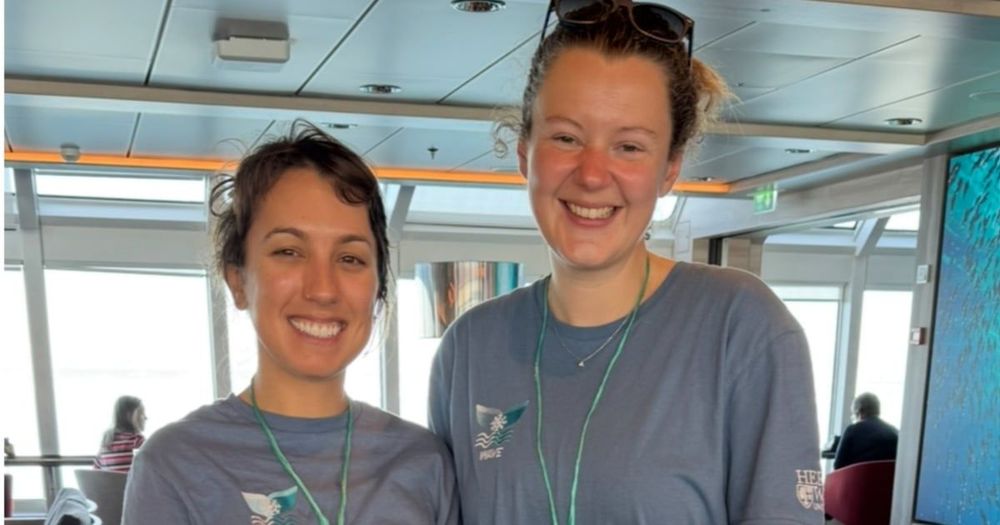
Dr Lauren McWhinnie and postgraduate researcher Alanna Frayne from Heriot-Watt University are aboard Fram overseeing the camera's operation and data collection.
McWhinnie said: "While thermal cameras and artificial intelligence are now being used to help mitigate shipping impacts in some of the world's busiest maritime areas, we want to explore how they can be used in polar environments. We're particularly concerned about the impacts increasing vessel traffic could have on species including narwhal, beluga and bowhead whales."
The research focuses on training software to detect Arctic-specific whale species. "Collecting data during WAVE surveys will allow us to train the software to detect these species and ultimately support an automated alert system," McWhinnie explained.
"Because these animals are polar specialists, their bodies are well insulated with thick blubber. We're hoping the smart visual detection system will identify their blows, the warm plumes of air emitted when whales surface to breathe."
McWhinnie added: "Narwhals, beluga and bowhead whales are unique to the Arctic Ocean and, as these waters are rapidly changing and becoming busier, we have a small window to be proactive in protecting them. Advance warning systems could help mitigate some of the threats posed by vessels in these sensitive marine environments."
Nicola Harris, business development director at Seiche, described the technical specifications: "The smart visual detection system is a compact, marinised unit mounted on the deck above the bridge, giving it a clear view of the water ahead. It pairs thermal imaging with high-definition video as the camera scans the sea in front of the ship, providing continuous, round-the-clock coverage throughout the Arctic summer."
The automated detection module processes thermal imagery, identifying temperature gradients such as whale blows against the cold Arctic background. Each detection is captured with time and position data for subsequent research analysis.
Harris said: "We are proud to support this important collaboration and contribute to the ongoing development of practical technologies for marine mammal observation, mitigation and conservation, particularly in key areas such as the Arctic."
Dr Verena Meraldi, HX's chief scientist, highlighted the collaboration's broader benefits: "This is the third consecutive Arctic season we have welcomed Heriot-Watt researchers onboard our vessels as guest scientists and it continues to be a fantastic collaboration for HX.
"Our passengers are always genuinely fascinated to hear directly from researchers like Dr McWhinnie and to better understand both the science and the technology helping us study these incredible animals in such remote environments."
The trial provides operational and educational value, from increasing situational awareness for bridge teams to creating new opportunities for passenger engagement through recorded wildlife encounters and hands-on science activities.
Meraldi added: "Integrating real science into the passenger experience is a core part of HX's industry-leading science and education programme and very much part of who we are."
Over the coming years, McWhinnie and WAVE project researchers will continue working with HX and Seiche to advance research protecting vulnerable whale species from increasing vessel activities in the Arctic.
Fuente: sea-trade cruise