• 3 min de lectura
• 3 min de lectura
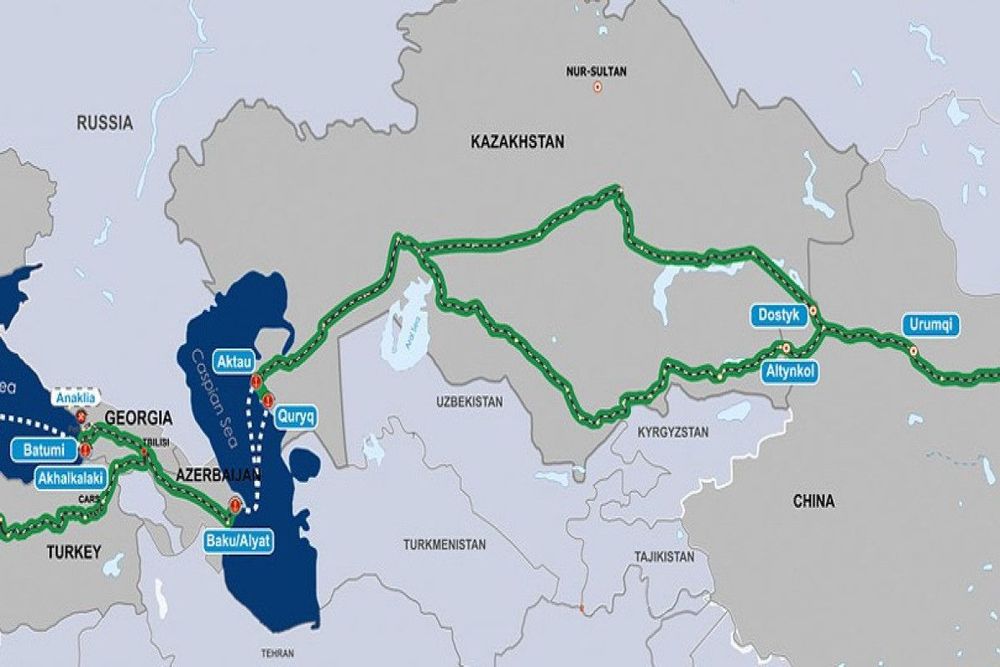
The European Union launched a new "Connectivity Agenda Platform" in Brussels aimed at accelerating transport, energy, and digital infrastructure projects along the Middle Corridor or Trans-Caspian International Transport Route (TITR).
The initiative seeks to bring together governments, international financial institutions, and private investors to coordinate development along this trans-Caspian trade route, which has gained strategic importance following disruptions to northern and southern trade corridors in recent years.
EU Commissioner for Enlargement, Marta Kos, stated that the platform is designed to "connect initiatives, identify gaps, and build a shared investment portfolio" along the corridor, which extends from China through Kazakhstan, the South Caucasus, and Turkey to Europe.
Kos affirmed that trade flows along the Middle Corridor have already increased significantly since 2022 and could multiply further in the coming decades; she also highlighted that EU-backed analyses project a potential fivefold increase by 2040.
She added that the corridor could reduce transport times between Asia and Europe from about 45 days to approximately 15 days, thanks to improved infrastructure and coordination.
The EU also announced that over 80 million euros (91 million dollars) in funding will be mobilized to support projects valued at more than 2 billion euros in participating regions, which include countries like Ukraine and Moldova.
Authorities explained that the platform is based on the existing coordination framework for the Trans-Caspian Transport Corridor and aims to strengthen long-term cooperation with partners in Central Asia and the South Caucasus.
Turkey, a key transit node in the corridor, reiterated its strategic role in the initiative.
Turkey's Minister of Transport and Infrastructure, Abdulkadir Uraloglu, noted that disruptions in the global supply chain have underscored the need for "reliable, resilient, and high-capacity land corridors."
He emphasized that the Middle Corridor is no longer just a regional opportunity but a strategic economic link for both Europe and Asia, adding that investments in railways, ports, and logistics infrastructure in Turkey are fundamental to ensuring seamless East-West connectivity.
Uraloglu also called for streamlining border procedures and improving cross-border coordination to maximize the corridor's efficiency, stressing that future success should not be measured solely by cargo volumes but also by the economic value generated along the route.
"Turkey is playing a key role in this agenda," Kos also told reporters before the meeting, noting the importance of linking routes through Nakhchivan and strengthening coordination with Azerbaijan and Turkey.
Kos stated that the EU is willing to support the opening of two border crossings with Turkey and one with Azerbaijan, calling them "crucial" to ensure smooth trade flows once volumes increase further.
Source: Portal Portuario