• 3 min de lectura
• 3 min de lectura
Four ships changed course in the Red Sea on Wednesday, July 22, two of which set the Suez Canal as their new destination. This followed warnings from Yemen's Houthi militia for vessels to avoid sailing to Saudi ports, according to maritime tracking data.
The Houthis, aligned with Iran, declared a naval blockade against Saudi Arabia on Monday the 20th, opening a potential new front against the United States in its war with Iran and escalating the threat to maritime trade and global energy supply beyond the Gulf.
"The threat of hostile actions by the Houthis against Saudi Arabia has begun to have a general impact on tanker activity," maritime broker Clarksons noted.
"There are reports of several tankers that, after loading at the Saudi port of Yanbu in the Red Sea, have changed their course towards the Suez Canal instead of sailing south, towards the Bab el-Mandeb strait, while others maintain their positions awaiting further instructions," it added.
Vessels linked to Israel, the United States, or Saudi Arabia are at higher risk of attack by the Houthis, and are therefore advised to avoid sailing through the Red Sea and the Gulf of Aden until the threat level decreases, the European naval mission Aspides recently warned in a circular consulted by Reuters.
Any vessel that has recently called at, loaded, or unloaded goods in Saudi ports should "reduce its electronic footprint by minimizing AIS transmissions and limiting any publicly accessible digital information that could facilitate its targeting," the statement said.
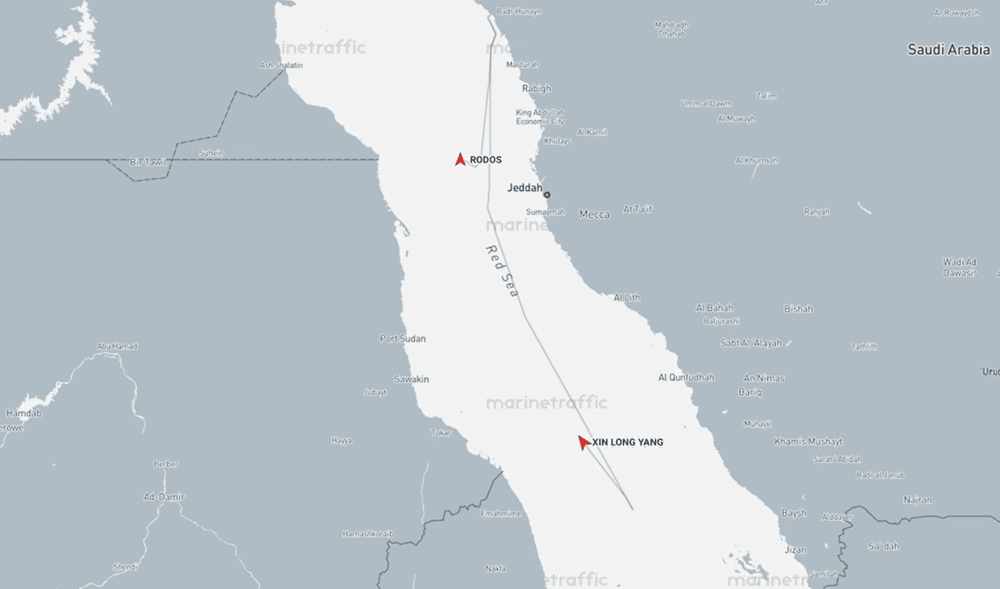
The four tankers changed course, and two of them set their destination as open waters in the Red Sea, according to tracking data from LSEG and MarineTraffic, as well as analysis from the British maritime risk management group Vanguard.
A fifth vessel, a vehicle carrier named Liu Jiang Kou, appeared to have turned around in the Gulf of Aden this Wednesday the 22nd after indicating the Saudi port of Jeddah, in the Red Sea, as its next destination, navigation data showed.
Three oil tankers loaded with Saudi crude destined for China and India turned around in the Red Sea on Tuesday the 22nd, heading towards the Suez Canal instead of braving the danger off the Yemeni coast. One of these tankers was the Xin Long Yang, managed by Cosco Shipping Lines.
The closure of the southern Red Sea passage would eliminate a critical alternative to the Strait of Hormuz for Saudi Arabia and increase fears of shortages.
"This (Houthi) embargo raises serious questions about the viability of eastbound routes from the Saudi port of Yanbu, the outlet for its east-west pipeline," maritime broker Braemar noted in another memo.
Several tankers remained visible near the Yanbu anchorage area on Wednesday the 22nd, maritime tracking data showed.
Traffic in the Red Sea has not fully recovered since Houthi attacks off the coast of Yemen began in November 2023, in what the group called an act of solidarity with Palestinians in the Gaza war. The group's attacks on merchant vessels only ceased after the Gaza ceasefire last October.
The Houthis warned shipping companies not to load or unload goods at Saudi ports or they could become targets of their attacks. Maritime security sources, meanwhile, claimed to have received recordings with independent Houthi warnings directed at vessels in the Red Sea since Monday.
"They are warning all vessels intending to head to Saudi ports that they will become open targets," said a maritime industry source receiving updates from a ship in the Red Sea.