• 2 min de lectura
• 2 min de lectura
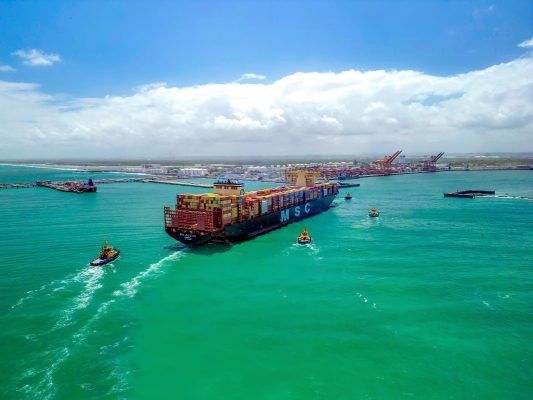
The Suape Industrial Port Complex closed the first half of 2026 with the mobilization of 13,726,969 tons of cargo, a volume 25.6% higher than that recorded between January and June 2025. The figures come from operational data submitted monthly to the National Waterway Transport Agency (Antaq).
Liquid bulk accounted for 66.6% of cargo movement in Suape, which grew 25.6% in the first half of 2026, followed by containerized cargo, with a 25.7% share. Solid bulk represented 5.8% and general loose cargo, 1.9%. Antaq is the body responsible for consolidating national port sector statistics, gathering information sent by organized ports and private terminals throughout the country.
Suape ranks fourth among Brazilian public ports in terms of cargo volume and is among the busiest in the Northeast. Between January and June, 832 berthings were registered, a number 14.3% higher than that observed in the same period of 2025.
"The performance in the first half highlights the diversity of Suape's operational profile and reinforces the complex's strategic role in serving the country's production chains. These indicators constitute an essential tool for monitoring port activity and support the planning of actions aimed at infrastructure and increasing operational efficiency," states the CEO of the Suape Complex, Armando Monteiro Bisneto.
The movement of liquid bulk, mainly composed of oil and derivatives processed by the Abreu e Lima Refinery, located in the industrial port complex, reached 9,142,864 tons, a growth of 40.1% compared to the first half of 2025. In container operations, 333,786 TEUs — a unit equivalent to a 20-foot container — were moved, a stable result compared to the same period of the previous year.
Solid bulk, a category that includes products such as wheat, clinker, and coke, totaled 799,510 tons, a 39% increase in the annual comparison. Vehicle movement, on the other hand, totaled 33,779 units, mostly from the Stellantis Automotive Hub, located in Goiana, in the Zona da Mata Norte of Pernambuco.
"The results demonstrate the performance of the main cargoes moved in Suape and reinforce the importance of permanent monitoring of operational indicators. This information guides the planning of port infrastructure and supports the definition of investments aimed at meeting logistical demand," highlights the Director of Port Development and Management, José Constantino.