• 3 min de lectura
• 3 min de lectura
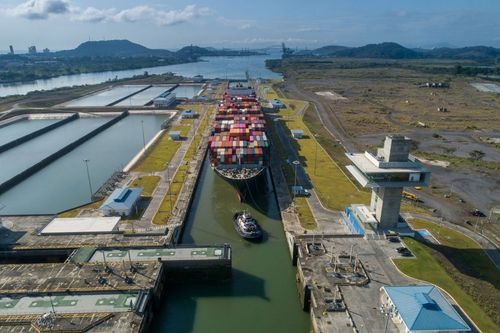
The Logistics Cabinet of the Government of Panama held its sixth ordinary session, under the direction of Panamanian President, José Raúl Mulino, where the path towards operational optimization and the modernization of the country's port infrastructure was defined.
During the meeting, authorities from the public institutions that make up the Logistics Cabinet shared the administration's vision with the directors and managers of the country's ports, and with presidents of maritime sector associations.
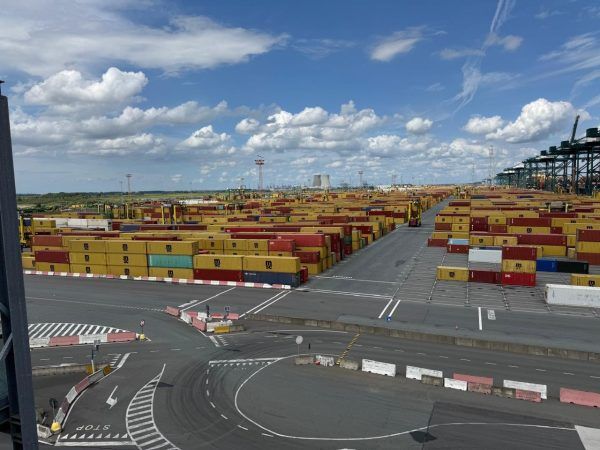
At the session, organized by the Secretariat of Economic Affairs and Competitiveness, the results of a working mission to the ports of Rotterdam, in the Netherlands, and Antwerp, in Belgium, were presented.
The mission, which aimed to learn best practices and adapt them to Panama, was made up of the Minister for Canal Affairs, José Ramón Icaza; the Administrator of the Panama Maritime Authority, Luis Roquebert; the Administrator of the Government Innovation Authority, Adolfo Fábrega; advisor Alberto Alemán Zubieta; and Hedmond Ríos, representing the Secretariat of Economic Affairs and Competitiveness, the entity that coordinates these efforts through the Logistics Cabinet.
As a result, the Panama Maritime Authority signed a cooperation agreement with the Port of Antwerp to train Panamanian officials and receive advice on the development of a Port Community System, a digital platform that will connect all actors involved in the transit of cargo through the ports, in order to streamline procedures and reduce costs.
"I thank Belgium and the Netherlands for their willingness to collaborate, and I ask their ambassadors to convey my message," said President Mulino, who expressed his satisfaction with the agreement, given that it will be very useful for harmonizing the national port network.
"The ports of Rotterdam and Antwerp are in different countries, but they function as if they were a single port, which is a great lesson for us," Mulino emphasized.
Meanwhile, the Director of the National Customs Authority, Soraya Valdivieso, presented the progress of the Export Declaration, a new tool that will come into operation on August 10 and will allow tracking of merchandise transiting through the country, strengthening transparency and control.
The Re-export Declaration is the document that registers with the National Customs Authority the departure abroad of merchandise entered under a special customs regime and not nationalized. This allows identifying, controlling, and tracing re-export operations, ensuring compliance with current customs regulations.
With this, Panama will be able to prevent illicit activities such as money laundering, protect its international reputation, and avoid being included in "gray lists."
The tool was developed together with several state institutions and users of the Colón Free Zone, and nearly fifteen hundred people have already been trained to use it.
The Minister of Public Works, José Luis Andrade, reported on the progress of the Randolph Avenue reconstruction project, an axis considered a key route to connect the ports with the main commercial activity areas of the city.