• 2 min de lectura
• 2 min de lectura
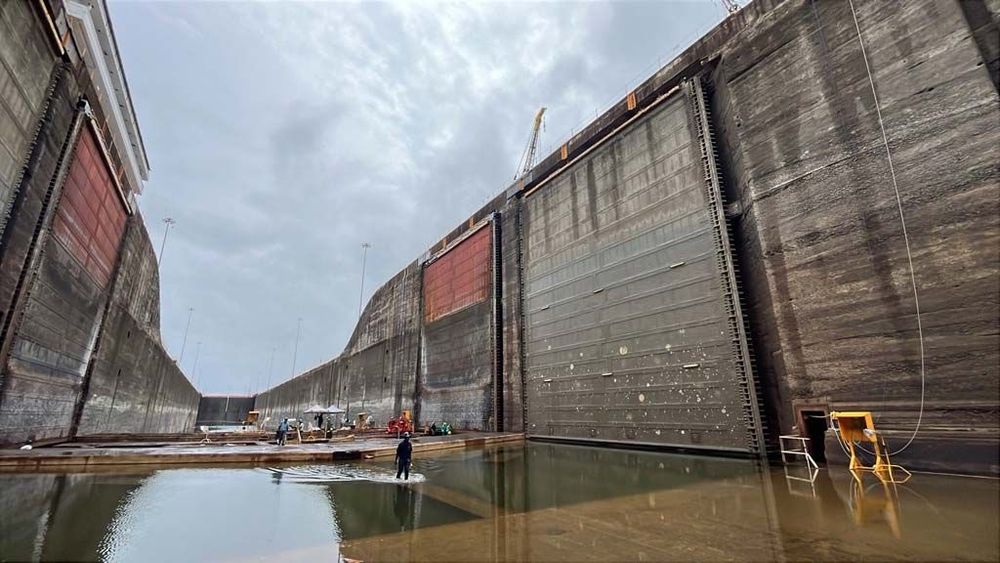
The Panama Canal is carrying out reconditioning and inspection work in one of the Gatun Locks chambers using the procedure known as a dry chamber, as part of its continuous asset and infrastructure maintenance program.
A dry chamber involves the temporary emptying of a lock chamber to allow safe access to structures and components that normally remain underwater. This process provides an opportunity for detailed inspections, technical evaluations, and maintenance work that contribute to preserving the reliability, safety, and efficiency of the interoceanic waterway.
The work is carried out under a plan that ensures the continuity of operations and the uninterrupted transit of vessels through the waterway.
The Gatun dry chamber maintenance is scheduled for nine days, taking place from June 8 to 17 on gates 33 and 34 of the upper chamber of the east lane. A fundamental part of this work focuses on detecting and correcting leaks, reducing water loss, and ensuring the optimal functioning of the systems that regulate water flow within the locks.
Additionally, these tasks allow for the inspection, evaluation, and preservation of specialized corrosion protection systems, which are essential for the reliability and lifespan of equipment operating permanently in freshwater, brackish, and marine environments.
Maintenance is one of the Canal's main operational strengths. Each year, the organization invests over B/. 500 million in the care and reconditioning of its infrastructure, equipment, fleet, and facilities, with the aim of ensuring the continuity, safety, and reliability of the service it offers to the global maritime industry.
The Canal's ability to operate safely and efficiently for over a century has been closely linked to a comprehensive maintenance strategy that prioritizes constant inspection, technical planning, and the timely execution of infrastructure improvements without affecting vessel transit. These actions are part of a long-term master maintenance plan, which includes the planning and scheduling of interventions for the next ten years.
The dry chamber is one of the most important tools in this continuous effort, allowing for the verification of the condition of essential components and ensuring that the locks continue to operate with the highest standards of quality, safety, and reliability.
Source: Panama Canal