• 3 min de lectura
• 3 min de lectura
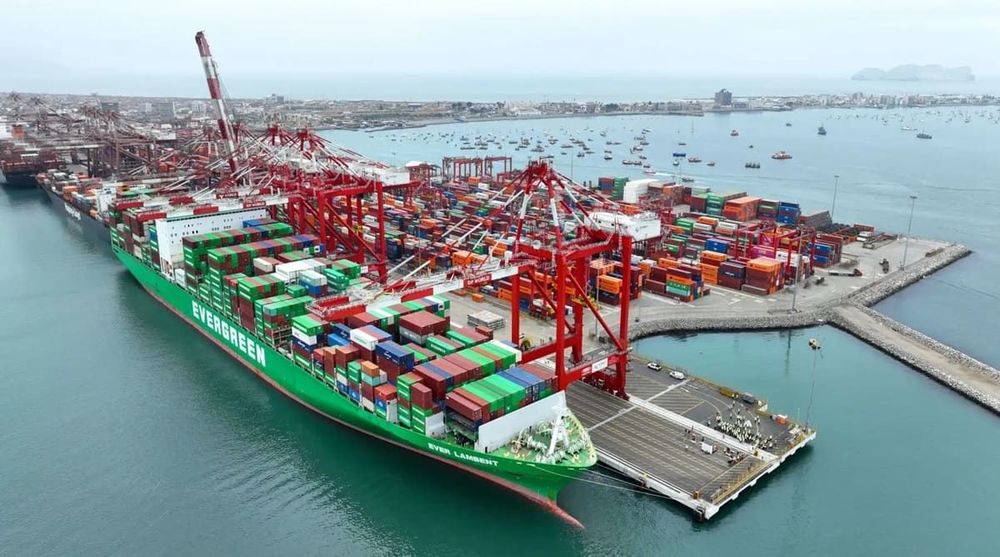
Peruvian exports are mainly sent through the Port of Callao, Jorge Chávez International Airport, and the Port of Matarani, as stated by the Ministry of Foreign Trade and Tourism (Mincetur).
In the first five months of the year, Peruvian exports were primarily conducted through the Port of Callao, totaling US$14,371 million with a growth of 22.1%, followed by Jorge Chávez International Airport with US$12,159 million and an expansion of 63.9%, and the Port of Matarani with US$5,758 million and a growth of 40.9%.
Furthermore, exports via the Chancay multipurpose port terminal continue to consolidate, reaching US$322 million (181.8%), according to Mincetur.
The Ministry of Foreign Trade and Tourism reported that from January to May 2026, exports of goods from Peru's inland regions reached US$38,977 million, growing 40.6% compared to the same period in 2025.
Exports from the country's inland regions represented 86.6% of the total exported. Thus, the figures demonstrate the growing participation of the regions in the country's export performance, Mincetur affirmed.
During the first five months of the year, 19 regions of the country increased their exports, with Huánuco achieving the highest growth, reaching US$196 million.
Notable regions included Huancavelica, Cajamarca, Madre de Dios, Arequipa, Puno, Áncash, Junín, La Libertad, Apurímac, Lambayeque, Ica, Piura, Moquegua, Pasco, Ayacucho, Tumbes, Tacna, and Cusco.
In the northern macro-region, Áncash stood out (US$4,254 million with 72% growth due to copper), Cajamarca (US$1,854 million with 48% growth due to gold and coffee), and La Libertad (US$3,255 million with 47.3% growth); also due to gold, silver concentrates, and blueberries. In Piura, US$1,512 million were exported with a 6.9% expansion, explained by shipments of ethanol, gold, and mango.
In the central region, Huánuco stood out (US$196 million with 675.8% growth due to zinc), Junín (US$2,762 million with 61% growth) due to copper, gold, lead, and zinc, and Ica (US$4,283 million with 52.9% growth) due to minerals; in addition to fruits such as blueberries, grapes, and avocados.
In the case of the southern regions, growth was driven by higher mineral prices. Arequipa stood out (US$4,961 million with 60.7% growth) due to copper, gold, and lead; Puno (US$4,537 million with 66% growth) due to gold and quinoa; Moquegua (US$2,710 million with 36.5% growth); Apurímac (US$1,847 million with 11.7% growth), and Tacna (US$1,141 million with 13.3% growth).
In the eastern region, Madre de Dios's performance stood out (US$145 million with 50.3% growth) due to gold and Amazonian Brazil nuts.