• 4 min de lectura
• 4 min de lectura
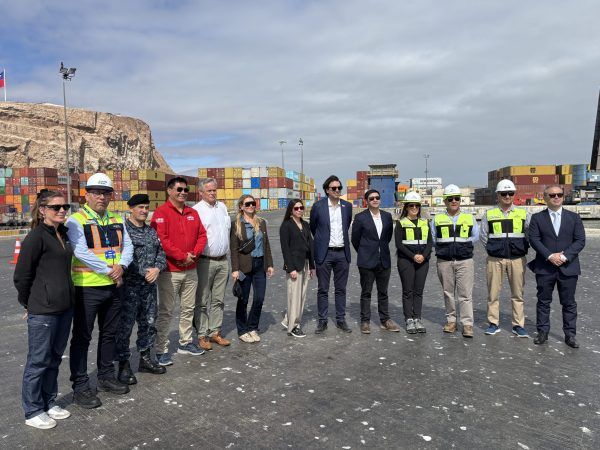
Members of the Senate Commission on Extreme Zones visited the Port of Arica to analyze its strategic importance for the economic development of the Arica and Parinacota Region and its contribution to international trade. The visit aimed to understand the operational reality, challenges, and growth opportunities of the maritime terminal firsthand.
The commission included Senators Enrique Lee and Vlado Mirosevic, representatives of the Arica and Parinacota Region; Miguel Ángel Calisto, for the Aysén Region; and Carlos Kuschel, for the Los Lagos Region. They toured the port facilities alongside Pablo Véliz, Operations Manager of Terminal Puerto Arica (TPA), and Javier Rivera, Concession and Logistics Manager of Empresa Portuaria Arica (EPA).
During the activity, emphasis was placed on the operational capabilities, available infrastructure, and projects aimed at strengthening the terminal's competitiveness, also addressing the main challenges the port faces in a context of growing logistical and commercial activity in the northern macro-zone.
Senator Enrique Lee highlighted the visit of the members of the Commission on Extreme Zones to the Port of Arica, noting the importance for parliamentarians from different regions to see firsthand the strategic role this infrastructure plays in the country's development. He also praised the terminal's efficiency, its particular conditions derived from international treaties, and its potential participation in future projects such as the Bi-oceanic Corridor.
He indicated that the commission would continue to address port-related issues in future sessions and emphasized that security is one of the main priorities for further strengthening its development and competitiveness. Additionally, the parliamentarians learned firsthand about the terminal's operations and its contribution to the region's economic development, highlighting the need to continue strengthening the country's logistical and port infrastructure.
Senator for the Aysén Region, Miguel Ángel Calisto, commented that "the Port of Arica plays a fundamental geopolitical and economic role for Chile and for relations with our neighboring countries. It is a strategic infrastructure that drives productive activity in various sectors and has enormous potential to consolidate itself as a key platform towards Asian markets. Therefore, the development of ports and bi-oceanic corridors must be a priority for the country."
During the day, challenges facing the national port system in terms of competitiveness, regional integration, and security were also analyzed, considering the growing commercial exchange with South American and Asian markets.
Senator Vlado Mirosevic highlighted the historical and strategic value of the Port of Arica for the region's development, emphasizing the importance of promoting initiatives that strengthen its competitiveness and ensure its participation in future logistical and commercial integration projects.
Finally, the managers of EPA and TPA highlighted the relevance of this opportunity to inform the members of the Commission on Extreme Zones about the strategic role the Port of Arica plays in the development of the northern macro-zone, southern Peru, and Bolivia.
In this regard, the executives noted that this visit allowed them to demonstrate firsthand the importance of the Port of Arica for regional integration and international trade. They also valued the opportunity to present the operational capabilities, infrastructure, and growth projects being promoted at the terminal, along with the challenges associated with its development, emphasizing that it is fundamental for authorities to understand both the strengths and challenges the port faces to continue growing sustainably.
Véliz and Rivera agreed that the port facility is a key infrastructure for regional integration, foreign trade, and the strengthening of initiatives such as bi-oceanic corridors, highlighting that the Port of Arica will be a fundamental actor in boosting Chile's competitiveness and connection with the markets of South America and Asia-Pacific.
The visit of the Commission on Extreme Zones created a space for dialogue regarding the role of the Port of Arica as a logistical platform for the foreign trade of Chile, Bolivia, and southern Peru, as well as its potential participation in regional integration initiatives such as bi-oceanic corridors.