• 3 min de lectura
• 3 min de lectura
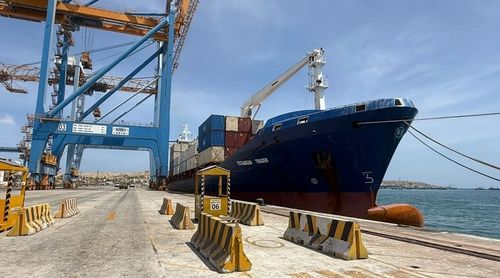
The National Superintendence of Customs and Tax Administration (Sunat) has put into operation two high-tech container scanners at the Chancay Multipurpose Port Terminal. These units, donated by the United States Embassy, will streamline foreign trade and enhance cargo security.
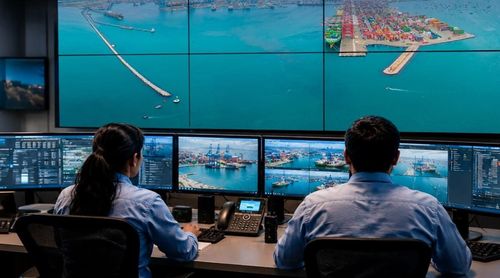
The entity stated that the new equipment is part of its modernization process and strengthening of customs control, aimed at facilitating legitimate trade and improving the security of the logistics chain.
The scanners will allow goods to be inspected without physically opening the containers, which will help reduce inspection times and logistical costs for foreign trade operators.
The Minister of Transport and Communications, Aldo Prieto; the head of Sunat, Javier Franco Castillo; and the United States Ambassador to Peru, Bernie Navarro, participated in the commissioning ceremony.
The equipment consists of high-energy X-ray scanners designed for real-time cargo inspection. This technology allows for the identification of densities, structures, and possible irregularities within containers, facilitating the detection of illicit or incorrectly declared goods without the need for physical intervention.
Sunat indicated that the incorporation of this equipment complements the technological infrastructure installed at other strategic points in the country, such as the port terminals of Callao and Paita, as well as the land border of Tacna.
During the event, Franco highlighted that the implementation of non-intrusive inspection scanners constitutes an advance in the modernization process of customs administration.
"It will allow us to improve our control capacity and increase efficiency in goods inspection without affecting the fluidity of foreign trade," he affirmed.
Since the beginning of its operations, the Chancay Multipurpose Port Terminal has mobilized 425,427 containers. The transshipment regime accounts for 47% of the total, equivalent to 200,046 containers, followed by imports with 137,647 containers (32%) and exports with 87,743 containers (21%).
The accumulated value of imports reaches 2,323 million dollars. The products with the largest share are vehicles (27%), machinery (17%), cereals (8%), and electrical equipment (8%). China accounts for 75% of imported goods, followed by Argentina (10%) and the United States (4%).
In the case of exports, the total value amounts to 1,343 million dollars. The main exported products are avocados (37%), metallic minerals (29%), gunpowder and explosives (6%), palm oil (5%), and grapes (3.6%). The main destinations are China, the Netherlands, Spain, and Chile.
Regarding transshipment, the main routes involve goods from China, Chile, Mexico, and Ecuador, destined mainly for Chile, China, and Japan. Among the most mobilized products are salmon (14%), pine wood (8%), and metals (8%).
Additionally, 3.5 million tons of loose cargo have been moved through the port of Chancay. Of this total, 71% corresponds to imports for consumption, mainly corn, cement, and other products. This type of cargo represents 27.5% of the terminal's total movement.
Sunat reported that imports made through the port of Chancay generated a collection of 1,037 million soles in 2025. Between January and May 2026, the accumulated collection amounted to 603 million soles.