• 2 min de lectura
• 2 min de lectura
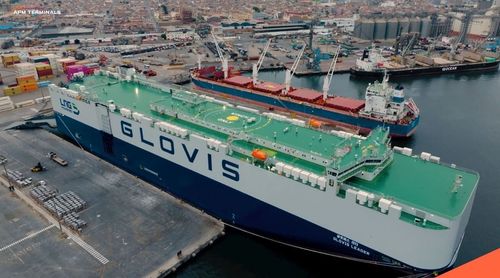
The start of the works will significantly expand the operational capacity of Peru's first multipurpose terminal.
APM Terminals Callao announced that on June 26, work began on phase 3B of the modernization of the North Pier in Callao, which will represent an approximate investment of US$570 million to significantly expand the operational capacity of Peru's first multipurpose terminal.
"The works will be divided into two phases, each lasting two years, to absorb impacts and avoid affecting the continuity of operations or service to users," explained José Carlos Maia, Project Director of APM Terminals Callao.
The first phase will focus on container infrastructure between 2026 and 2028, with the construction of a new Pier 5C that will allow for the handling of Ultra Large Container Vessels (ULCVs), the installation of 3 state-of-the-art and largest MalaccaMax cranes on the market. Additionally, auxiliary equipment for container handling. Finally, it includes the implementation of a new gate for general cargo, which will double to 16 lanes to enhance cargo flow.
"The works will conclude in 2030, and we estimate that the terminal's annual capacity will increase from 1.3 million to 1.75 million containers and, for general cargo, from 13.5 million to 18 million tons per year," added the Project Director of APM Terminals Callao.
The second phase (2028-2030) will focus on expanding capabilities for general cargo handling, including the construction of 3 new piers, and will begin at the close of the first phase.
The modernization will allow the North Terminal to receive vessels of greater draft and dimension, an increasingly relevant trend in international maritime trade as it generates logistical efficiencies by reducing transport costs, which will be distributed among more users, benefiting importers, exporters, and the final consumer.
Phase 3B is part of the commitments undertaken by the concessionaire as a strategic partner of the Peruvian State to continue modernizing national port infrastructure and respond to growing market demand.