• 2 min de lectura
• 2 min de lectura
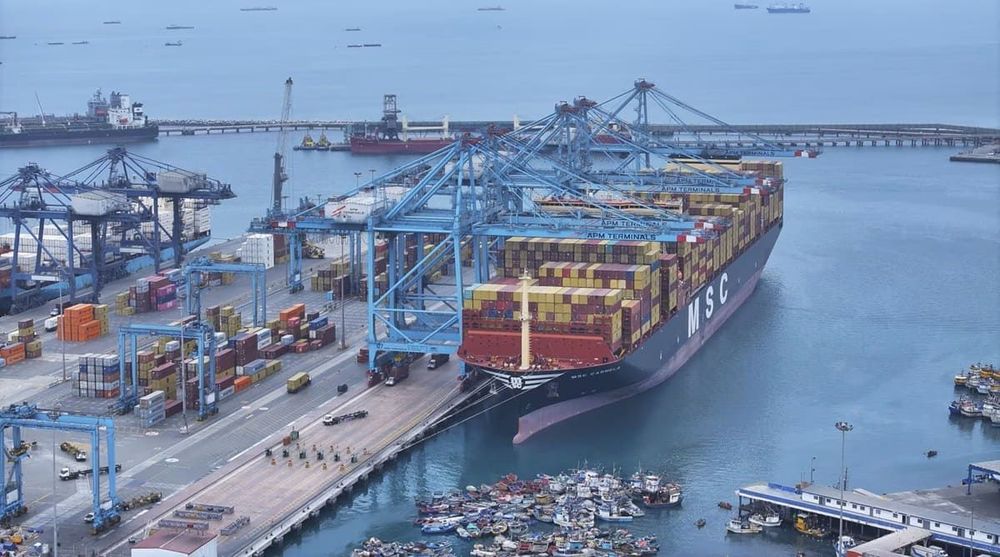
Eiffage, through its subsidiary Eiffage Génie Civil Marine, in consortium with the Belgian company Jan De Nul, has been awarded the design and construction contract for the expansion of the North Dock of the Port of Callao, Peru. The project includes the demolition of docks 4 and 5C of APM Terminals Callao, as well as the construction of a new one on the latter.
"The contract awarded by APM Terminals Callao (jointly owned by APM Terminals of the A.P. Moller Maersk Group and the MSC Group entity Terminal Investment Limited, two global leaders in logistics) involves the demolition of docks 4 and 5C, and the construction of a new dock 5C on piles. With 441 meters long and 44 meters wide, the new dock will be almost twice as large," Eiffage announced.
The French construction, concessions, and public services group reported that "the total duration of the contract is 21 months, including a five-month study phase. The works will be carried out throughout the different construction phases while the terminal continues to operate."
"This new contract consolidates the Group's position in complex, large-scale port projects, leveraging our extensive in-house expertise in engineering and methods, as well as our advanced experience in maritime civil engineering. Several projects are currently being executed in Africa, particularly in Benin, the Republic of Congo, and the Democratic Republic of Congo," it added.
It is worth mentioning that Eiffage Génie Civil Marine is the entity of the French Group dedicated to civil engineering and large maritime infrastructure projects. With its own engineering and methods teams, it specializes in the management and delivery of complex "turnkey" maritime projects.
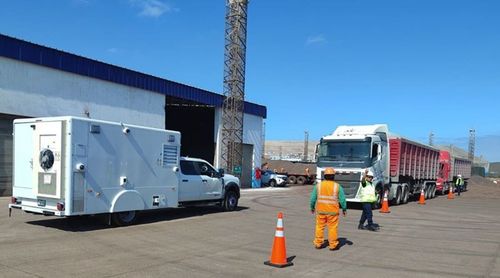
In parallel, APM Terminals Callao plans the demolition of the current warehouse of the National Superintendence of Customs and Tax Administration (Sunat) to expand the general cargo truck accesses in that space. This measure seeks to mitigate vehicular congestion outside the port area of Callao, doubling the service capacity by increasing from eight to 16 lanes.
Source: apam_nacionales