• 3 min de lectura
• 3 min de lectura
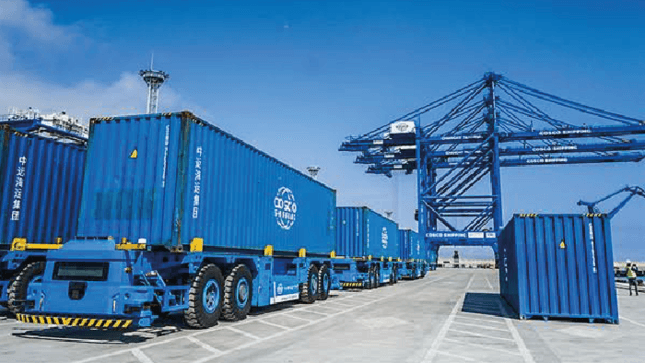
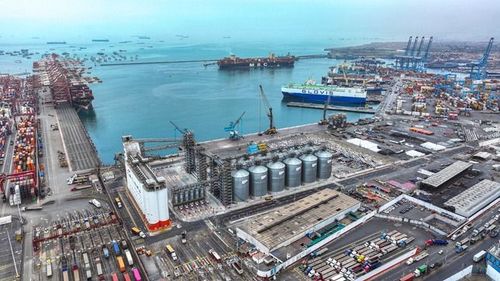
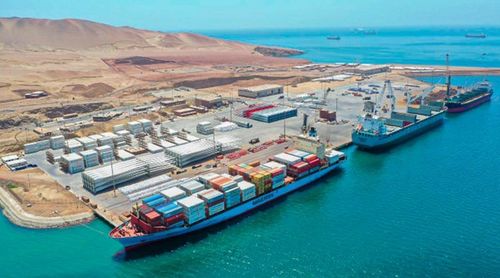
The president of the Supervisory Agency for Investment in Public Transport Infrastructure (Ositrán), Verónica Zambrano, stated that the ruling issued by the Second Constitutional Chamber of the Superior Court of Justice of Lima confirms that the agency exercises powers expressly established by law over the Chancay Multipurpose Port Terminal and regretted that Cosco Shipping has announced its intention to continue the process before the Constitutional Court.
"The ruling is correct because it recognizes Ositrán's authority as granted by law. The company has the right to continue through constitutional channels; however, this implies continuing to generate costs for the State to discuss obligations provided for in the current regulatory framework even before they made their USD 1.3 billion investment," she affirmed.
Zambrano rejected the company's legal defense's claims regarding an alleged change of rules. "The rules never changed. If there was a regulatory modification, it was to favor them. Law N.° 32048 expressly recognized exclusivity for certain port services they were already providing," she pointed out.
The head of Ositrán emphasized that the Port of Chancay is not an exclusive-use port, but rather a public-use infrastructure. "Exclusivity refers only to certain intermediate services, such as vessel attendance or tugging. But the port is obliged to handle the cargo of any user. It is precisely there that Ositrán intervenes to ensure that the rights of those who use the infrastructure are respected," she indicated.
She also recalled that the agency already supervises other privately owned and public-use ports, such as Logística Peruana del Oriente (LPO), making it inaccurate to claim that Ositrán only supervises concessioned infrastructures.
She clarified that Ositrán has never intended to exercise comprehensive supervision over the port or to audit service levels, as there is no contract in which these have been specified. "What we have always maintained is that we supervise what the law assigns us: tariffs, dispute resolution, regulatory contributions, and compliance with obligations towards users," she explained.
She added that the regulatory body will continue to supervise compliance with service provision conditions, the tariff regime, the handling of eventual disputes between users and the operator, and will propose a new analysis to determine whether or not there is a competitive scenario with the Port of Callao.
Finally, Zambrano reported that Ositrán will continue to exercise the functions assigned to it by law and that, if the port operator persists in non-compliance with information requirements, the agency will initiate the corresponding sanctioning procedures.