• 2 min de lectura
• 2 min de lectura

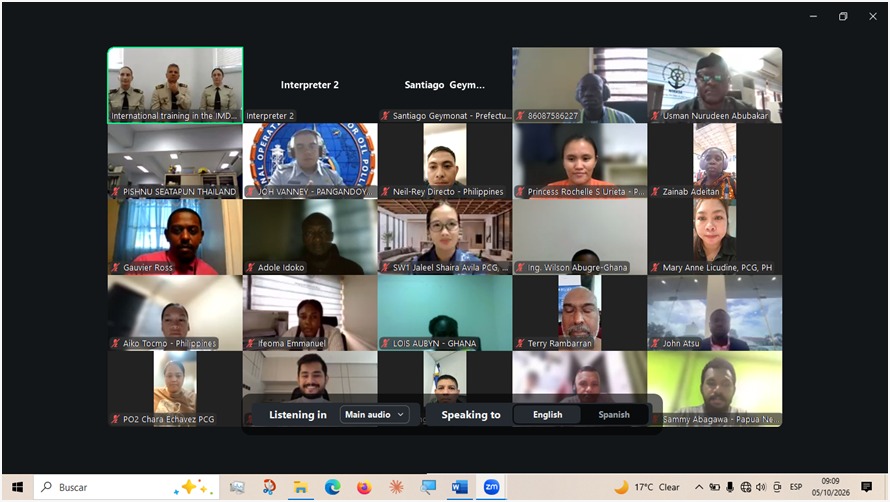
The activity involves 131 officials and professionals from Maritime Administrations of 28 nationalities. Among the countries represented are Cameroon, Azerbaijan, Guyana, Kuwait, Ghana, Comoros, Ivory Coast, Togo, Philippines, Indonesia, Liberia, Myanmar, Turkmenistan, Timor-Leste, Antigua and Barbuda, and Bahamas, among other States from different regions of the world.
This training is part of the six international courses that the Prefectura presented to the International Maritime Organization (IMO), with the aim of strengthening technical cooperation and sharing with officials from Maritime Administrations of different Member States the knowledge, capabilities, and experiences developed by the Institution in maritime safety.
The IMDG Code is a fundamental instrument to ensure safety in the maritime transport of packaged dangerous goods. Its correct application allows for establishing criteria and procedures aimed at preventing accidents, protecting human life at sea, avoiding damage to the marine environment, and ensuring that these substances are handled, stowed, and transported safely on board vessels.
In this context, the training seeks to provide participants with knowledge and tools that contribute to the proper implementation and application of the Code. To this end, aspects related to the classification of dangerous goods, the identification and designation of substances, packaging, marking, labeling, and documentation will be addressed, in addition to the criteria applicable to their handling, stowage, and maritime transport.
Throughout the four weeks, participants will access theoretical content and practical activities aimed at deepening their knowledge of the Code's provisions and fostering the exchange of experiences and perspectives among professionals from different regions.
The opening of the activity was led by members of the Environmental Protection Directorate of the Prefectura, responsible for the training, who gave welcoming remarks and presented the work methodology, content, and guidelines that will be developed during the course.
The participation of representatives from 28 nationalities reflects the international scope of the initiative and constitutes a new opportunity to strengthen institutional ties with Maritime Administrations from different regions and contribute to the development of professional capacities in a strategic area for the safety of international maritime transport.