• 3 min de lectura
• 3 min de lectura
The Port of Barcelona is one of the 11 driving ports behind the Busan Port Declaration 2026, an international declaration signed by the world's leading ports with the aim of advancing innovation, strengthening the resilience of global logistics chains, and accelerating the energy transition in the maritime transport and port infrastructure sector.
The agreement establishes commitments in areas such as data interoperability and digital collaboration among ports, the application of artificial intelligence to improve logistics chain management, the promotion of sustainable fuels and low-emission technologies, as well as the exchange of knowledge and best practices among ports worldwide. In this regard, specific mention is made of the International Association of Ports and Harbors (IAPH) and the International Maritime Organization (IMO) as key international platforms to promote this cooperation. Barcelona was one of the few European ports invited to the CEO meeting and shared a table with global leaders such as Rotterdam, Los Angeles, and Hamburg.
The President of the Port of Barcelona, José Alberto Carbonell, explained that "the Busan Declaration demonstrates that the main challenges of the maritime sector can only be addressed through international cooperation. Ports must work together to advance digitalization, strengthen the resilience of logistics chains, and accelerate decarbonization."
Carbonell participated in this meeting along with representatives from the ports of Busan, Rotterdam, Los Angeles, Hamburg, Antwerp-Bruges, Haropa, Singapore, Long Beach, Seattle, and Ningbo. During the meeting, port officials shared visions on the main challenges facing the maritime and logistics sector in a constantly evolving context marked by climate change, geopolitical uncertainty, increasing protectionism, and technological advancements, including AI, which are substantially reshaping global supply chains and transforming the role of ports.
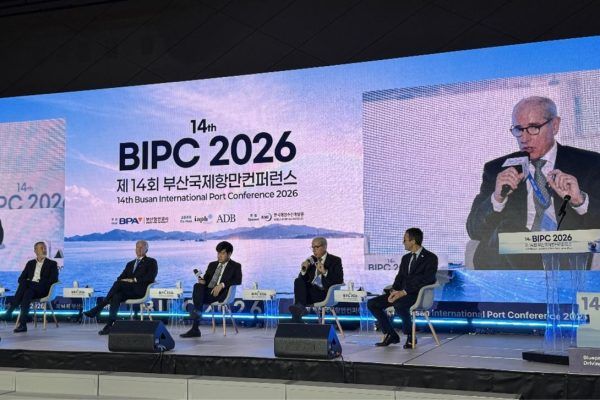
José Alberto Carbonell also spoke at the 14th edition of the Busan International Port Conference (BIPC), one of the main international gatherings of the Asian port sector, where he presented the Port of Barcelona's experience in deploying the quay electrification system (Onshore Power Supply), one of the key actions in the Catalan infrastructure's energy transition strategy.
During his speech, the president explained the methodology used by the Port of Barcelona to quantify greenhouse gas emissions and highlighted that berthed ships represent a significant portion of port emissions, making quay electrification one of the measures with the greatest potential to reduce environmental impact.
In this way, he explained the investments that the Port of Barcelona is developing through Nexigen, the quay electrification plan, to make this energy transformation possible. He also outlined the technical and economic challenges associated with the simultaneous connection of large ships at the same quay, which requires a high capacity for electrical supply.