• 3 min de lectura
• 3 min de lectura
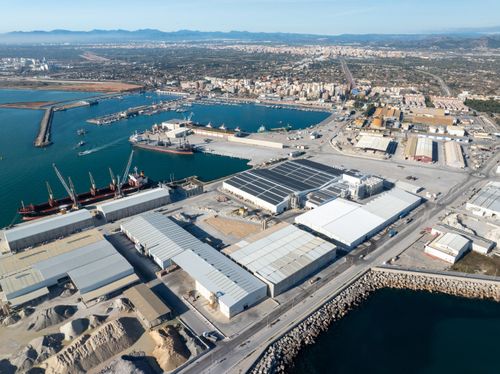
The president of the Port Authority of Gijón, Nieves Roqueñí, attended today in Brussels the Connecting Europe Days 2026, the event organized by the European Commission that brings together representatives of community institutions, public administrations, financial entities, industry, and agents linked to the transport sector.
This is an event where the main challenges and opportunities for the development of a competitive, resilient, safe, and sustainable transport system are addressed.
The program of the conference includes sessions dedicated to issues such as the competitiveness and resilience of the European transport system, global connectivity, infrastructure financing, and the capacity of supply chains to respond to a changing geopolitical scenario.
Today's session focused especially on European transport corridors and the European Maritime Space, with specific meetings on the Atlantic Corridor and other corridors of the Trans-European Transport Network (TEN-T). In this context, the 2026 Work Plan of the Atlantic Corridor coordinator, François Bausch, was presented. It refers to the preparation of the alternatives study for an intermodal terminal in Gijón, and mentions the connection project between Gijón and Nantes, among others, highlighting its contribution to the resilience of the global maritime transport system by providing alternative routes and connections.
It also highlights the potential of ports that, like Gijón, are increasingly positioning themselves as energy hubs, supporting the deployment of alternative marine fuels and supply chains linked to marine renewable energies.
Within the framework of the meeting, a joint presentation of the Motorway of the Sea project was made by the Port of Nantes Saint-Nazaire and the Port Authority of Gijón to the European coordinator of the Atlantic Corridor, François Bausch; the coordinator of the European Maritime Space, Gessine Meissner; and representatives of the governments of Spain and France.
Specifically, from the Spanish Ministry of Transport and Sustainable Mobility, the General Secretary of Planning, Trans-European Network and Logistics, María Corral; the Commissioner for the Atlantic Corridor, José Antonio Sebastián; and Antonio Góngora, from the Planning and Development department of Puertos del Estado, participated. From the French executive, the heads of European Affairs of the Ministry of Ecological Transition and Cohesion of Territories and of Maritime Affairs of the Ministry of Transport attended.
The meeting was also attended by the Minister of Mobility, Environment and Emergency Management of the Government of the Principality of Asturias, Alejandro Calvo, and the Deputy Minister of Infrastructure and Sustainable Mobility, Jorge García.
The representatives of both ports -Sophie Cochard, Director of Planning, Environment and Property of the Port of Nantes Saint-Nazaire, and the president of the Port Authority of Gijón- expressed their interest in reopening a Ro-Pax connection for accompanied cargo, semi-trailers, and passengers. This connection would remove trucks from the Atlantic Corridor and the Irún-Biriatou bottleneck, through which approximately 10,000 heavy vehicles circulate daily.
They indicated that, according to the existing feasibility study -prepared by a shipping company-, an occupancy of 70% is estimated, and profitability would be reached after a three-year start-up phase, using a proven efficient vessel to limit risk.
"From the ports of Nantes Saint-Nazaire and Gijón, we have requested support for the start-up phase of a cross-border Motorway of the Sea, with the objective of starting the service in the first half of 2028," declared the president of the Port Authority. "The benefit is European, not local: around 17,500 tons of CO₂ would be avoided, and 7.5 million euros per year in external costs would be saved by diverting 25,000 trucks; exactly the modal shift advocated by the Green Deal and the TEN-T policy."