• 2 min de lectura
• 2 min de lectura
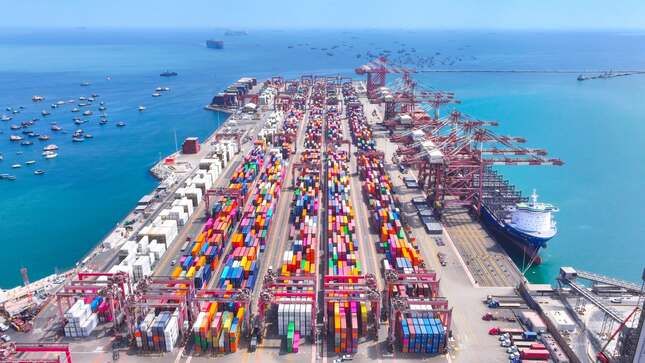
Public-use port infrastructure consolidated as a driver for national foreign trade. Between January and June of this year, the country's main port terminals mobilized a total of 35.1 million metric tons of goods, 6.5% more than in the same period of the previous year, according to the Ministry of Transport and Communications (MTC), through the National Port Authority (APN).
This semi-annual performance reflects a clear predominance of containerized trade and bulk shipments associated with strategic sectors for the national economy. In detail, containerized general cargo led port traffic, accounting for 53.6% of the total volume, equivalent to 18.8 million metric tons. This was followed by solid bulk, with a 17.8% share (6.2 million metric tons), and bulk minerals, which accounted for 17.3% of operations (6 million metric tons), consolidating as a key support for mining activity.
The operational dynamism of the period was driven by the main logistics hubs on the central and southern coast of the country. During the first half of the year, the South Zone Terminal of Callao, operated by DP World Callao, led the mobilized cargo with 11 million metric tons, followed by the Multipurpose Port Terminal of Callao, operated by APM Terminals Callao, with 9.4 million metric tons.
For its part, the Port Terminal of Matarani, managed by Tisur, established itself as the main exit point for southern Peru by registering 4 million metric tons. The list of relevance is completed by the Multipurpose Port Terminal of Chancay (Cosco Shipping) and the General San Martín Terminal (Port of Paracas), with an accumulated movement of 2.8 and 2.1 million metric tons, respectively; and the Port Terminal of Paita with 1.6 million metric tons.