• 6 min de lectura
• 6 min de lectura
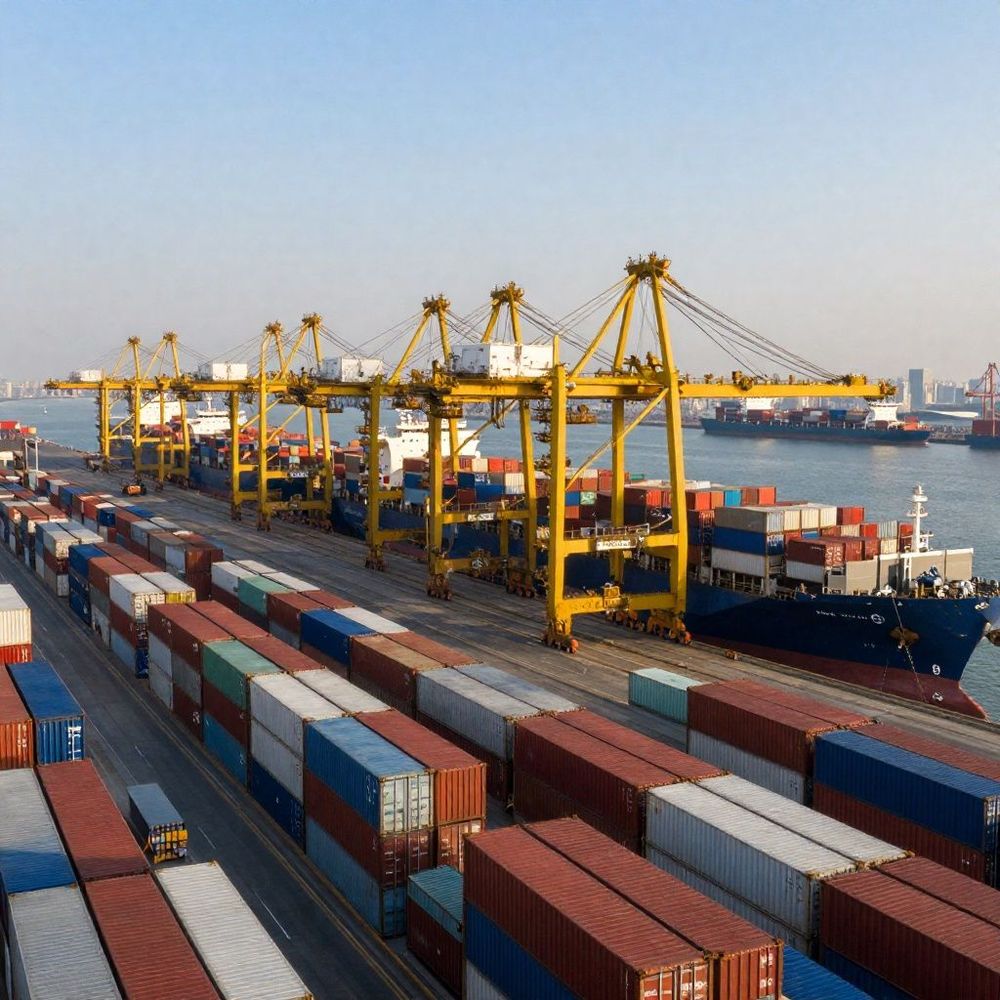
The fishing sector is one of the most important due to the jobs it generates, which is why it is crucial to have international certifications that attract the interest of different markets and consumers worldwide.
Eel is part of Peru's diverse marine export offering, and while it is not a well-known product in our country, it is in high demand in Asian markets, including Japan.
This year will mark a milestone for Peruvian exports of this marine product, as after a rigorous multi-year process, it achieved the prestigious international MSC (Marine Stewardship Council) certification. This certifies Peruvian eel fishing as a product obtained through responsible environmental management that allows for the conservation of marine resources. Furthermore, Peru is the first country in the world to achieve this certification for this product.
MSC is granted by an independent, highly reputable international organization based in London, United Kingdom, with regional offices in the United States and Australia.
This institution states that "MSC certification confirms that the fishery is well-managed and that it is safeguarding marine resources and livelihoods that depend on fishing for future generations."
Fishing is an important economic activity for Peru, generating thousands of direct and indirect jobs at both artisanal and industrial levels along the Peruvian coast and inland.
In 2025, Peruvian fishing exports reached 4.656 billion dollars, driven by squid, shrimp, tuna, and fishmeal, according to data from the Ministry of Production (Produce).
Meanwhile, in the frozen fish category, Peruvian exports in 2025 totaled 279.4 million dollars, comprising products such as flying fish, mahi-mahi, jack mackerel, trout, tuna, mackerel, silverside, hake, tilapia, and eel, with a 4.2% share, according to data from the commercial intelligence note of the Center for Research on Global Economy and Business (CIEN) of the Association of Exporters of Peru (Adex).
Eel in Peru is mainly caught off the coasts of Tumbes and Piura.
Recently, the Japanese embassy held a recognition ceremony for obtaining this MSC certificate for Peruvian eel.
"Japanese people really enjoy eating eel; it is a very traditional food for us. We import a lot of Peruvian eels into the Japanese market. So, this certification means that Peruvian eel fishing is done in a very environmentally friendly way, which will be an impetus for Japanese people to import more Peruvian eels," declared the Ambassador of Japan in Peru, Tsuyoshi Yamamoto, to Diario El Peruano.
"Eel is a much-loved and appreciated food; it is a bit luxurious. Japanese people greatly appreciate consuming Peruvian eels because they offer good quality and a very reasonable price," he added.
"Japanese eel fishing is declining due to a lack of resources, so we want to import many more eels from Peru that are caught, of course, in an environmentally friendly way, with this certification," emphasized the highest diplomatic representative of Japan in Peru.
For his part, the president of Perupez, Darío Alvites Diestra, who is also the president of the Peruvian Eel Producers Association (APPA), also highlighted the MSC certificate.
"The importance is that MSC is the highest standard in fisheries worldwide. For any marine species of fish, crustaceans, among others, achieving this certification is the global top. With this certification, there is no supermarket, no restaurant, that does not value it," he told Diario El Peruano.
"We are talking about Peruvian eel, but there is something more important: while we are proud of the eel, Peru is no longer seen as a country that has fishing resources, that has a lot of anchovy, that has squid, but rather it is being said that it has standards, that it has demands, that it has a first-world way of working," he said.
"We are talking about certificates that are in Norway, Japan, the United States, in the largest countries," he stressed.
He referred that to achieve this certification, two important areas are considered: fishing in general and, in this case, eel in particular.
"If general fishing does not have a high standard, little can be done with a particular species. So, this work has meant that with a small fishery, general issues are addressed throughout the sector, without having changed the Fishing Law as in Chile," he commented.
"With eel, we have a very high standard, which, although it is a smaller operation, is first-rate," he emphasized.
He mentioned that neighboring countries like Chile, Ecuador, and even distant ones like Japan, have some marine species certified with MSC, but not for eel.
"Peruvian eel is the first and only certified worldwide, because eel is difficult to certify," stressed Darío Alvites.
The president of the Peruvian Eel Producers Association (APPA) also indicated that after obtaining this certificate, they now aim to increase their exports to Europe, the United States, and other demanding markets such as luxury restaurants, which are discerning clients.
"There are supermarkets, restaurants that tell you: I only sell MSC-certified products, so, obviously, the invoice is different, the quality is different," he emphasized.
The head of APPA highlighted that the certification of Peruvian eel was possible because the Peruvian private sector initiated the process, jointly with the Japanese company Sakana, and articulated with science, authorities, and technical support.
Thus, in 2020, the pre-evaluation began, and in 2021, the fishery improvement project started. Subsequently, in 2025, the evaluation was carried out, and this year, the certification was achieved. He mentioned that MSC evaluates three principles: the first is the status of the marine resource population, to ensure that extraction does not affect its sustainability; the second refers to the ecosystem, to determine if the operation affects habitats, associated species, and the ecosystem; the third refers to effective management systems, with rules, monitoring, transparency, compliance, and continuous improvement.
To achieve this, it had the support of the Peruvian Sea Institute (Imarpe), the Ministry of Production (Produce), and the Redes-sostenibilidad pesquera organization.
Alvites stated that after obtaining the MSC certificate, eel exports will grow, and for this, the Ministry of Production is analyzing "the maximum sustainable yield" to increase shipments to other international markets without affecting their sustainability.
He also indicated that he hopes Peru will continue to diversify its certified marine products. "The idea is that in a while, hopefully in a few years, perhaps 5 to 7 years, Peru will have several certified marine species," he pointed out.
Between 2023 and 2025, Peruvian eel exports registered an average value of 12 million dollars, equivalent to nearly 2,000 tons, with an average growth of 3%, details the Commission for the Promotion of Peru for Exports and Tourism (Promperú).
In 2025, Peruvian eel exports totaled US$11.7 million, primarily to South Korea, Japan, and Vietnam, which were the largest buyers.
The Peruvian eel export chain is 100% formal, states the president of APPA.