• 4 min de lectura
• 4 min de lectura
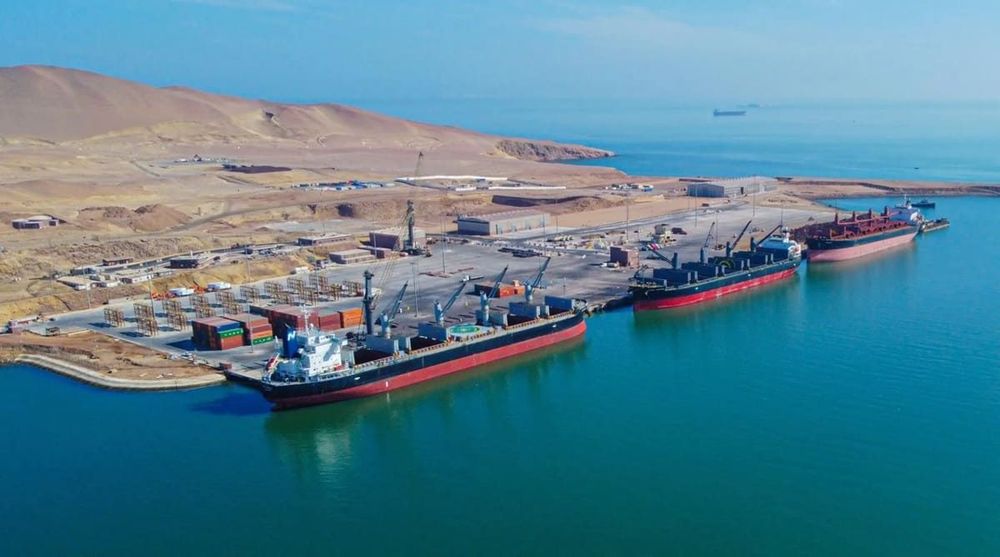
Now under the control of Terminal Investment Limited (TIL), linked to Mediterranean Shipping Company (MSC), the Port of Paracas (Ica) is set to undergo changes aimed at expanding its cargo handling capacity with an investment exceeding US$ 33 million.
Last February, the National Institute for the Defense of Competition and the Protection of Intellectual Property (Indecopi) and the Ministry of Transport and Communications (MTC) approved the change of control of the Port of Paracas. Until then, the terminal was operated by a consortium comprising the Spanish company Servinoga (35%) and the Brazilian companies Pattac and Tucumann (32.5% each), a partnership that obtained the port concession for 30 years in 2014. With the transaction, 100% of that stake passed into the hands of the Swiss giant Terminal Investment Limited (TIL), a global port infrastructure operator linked to Mediterranean Shipping Company (MSC). In this new context, what concrete changes will this new management bring to the terminal?
In detail, Terminal Portuario General San Martín - operator of the Port of Paracas - submitted a Sustaining Technical Report (ITS) to the National Service for Environmental Certification for Sustainable Investments (Senace), detailing the projected operational modifications for said infrastructure in Ica, with a view to expanding its containerized cargo handling capacity.
The contemplated investment amounts to US$ 9.6 million for the acquisition of RTG (Rubber Tyred Gantry) cranes and equipment for container movement in the yard; while the incorporation of STS (Ship to Shore) cranes —the quay cranes that operate directly on ships— will require an investment of US$ 23.7 million. In total, the modernization package exceeds US$ 33 million.
The initiative by Terminal Portuario General San Martín seeks to respond to the sustained growth in port demand, which could reach up to 143,574 TEUs per year, optimizing operation times and the use of available space on the quay. In this context, the ITS stated that the two new RTG cranes —mobile equipment used for stacking and moving containers— will allow for expanding the coverage of operational blocks and streamlining the terminal's internal logistics.
In parallel, the incorporation of two STS cranes —used to transfer containers between the vessel and the quay— aims to improve efficiency in vessel handling, reducing loading and unloading times. These cranes feature rail-mounted transfer systems, vertical lifting, and horizontal cargo movement, making them key pieces for port operation, the document added.
The project also includes the activation of three currently unused areas within the port for the storage of empty containers. This measure will allow, as explained by the ITS, better internal organization without requiring new infrastructure works or physical expansions of the terminal.
According to the document, all modifications will be developed within areas previously evaluated in the detailed Environmental Impact Study (EIA-d), so they do not imply a significant increase in environmental impacts. No increase in vehicular traffic or additional construction is foreseen either, as activities will be limited to the mechanical assembly of existing equipment.
During the implementation phase, the cranes will be assembled in a cold state, meaning without civil works or effluent generation. Waste derived from the process will be managed in accordance with the port's current environmental plans. In operation, the RTG cranes will function using diesel electric generators, while the STS cranes will use electrical energy from the internal network, the ITS added.
Furthermore, the document states that the project complies with the current legal framework, which allows for this type of modification without the need to update the main environmental instrument, provided that it is demonstrated that the impacts are minimal and controllable. Finally, a useful life of 30 years was projected for the set of improvements, with an implementation period of approximately 30 days.