• 3 min de lectura
• 3 min de lectura
Russia has apparently equipped one of its most strategically important liquefied natural gas (LNG) carriers with heavy machine guns, according to photographs taken by Estonia's border authorities, marking what analysts say is an unprecedented militarization of a civilian Russian energy vessel.
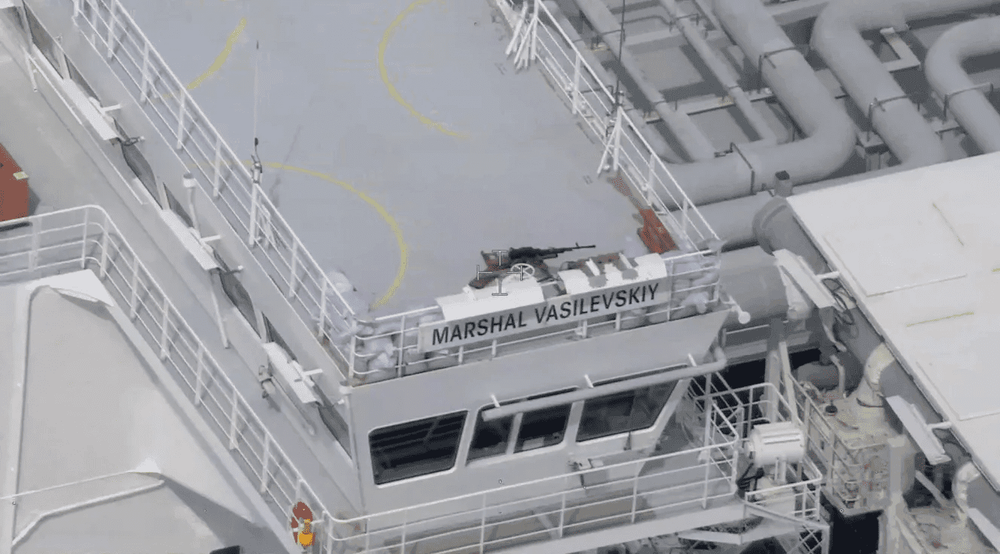
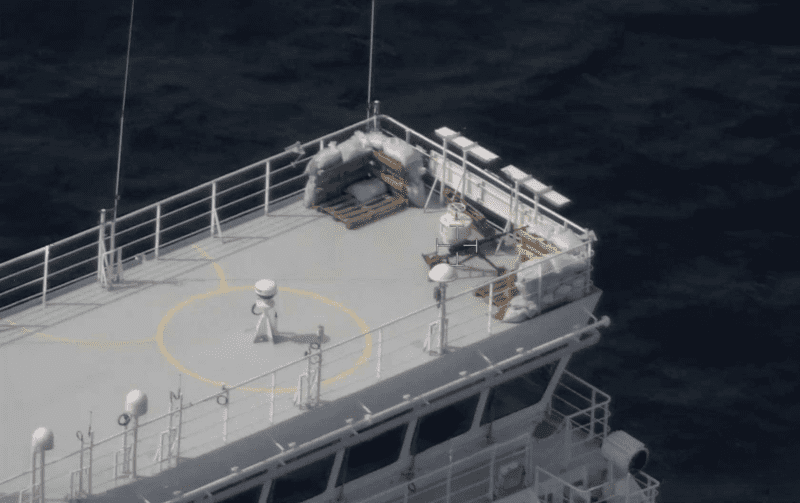
The images, first reported by a consortium of European media including Estonia's Delfi, show two heavy machine guns mounted on the bridge wings of Gazprom's Marshal Vasilevskiy while the ship was operating in the Gulf of Finland in May.
The photographs, taken from an Estonian Border Guard surveillance aircraft, also show what appear to be sandbagged firing positions and protective barriers surrounding the weapons.
Defense analysts quoted by several media outlets identified the weapons as likely Russian-made 12.7 mm Kord heavy machine guns, capable of engaging small surface craft and low-flying drones at distances of up to around two kilometers. Others suggested the weapons could be intended to deter helicopter boarding operations.
The Marshal Vasilevskiy occupies an unusual role in Russia's energy system. Originally built as a floating re-gasification vessel, it supplies LNG to the Russian exclave of Kaliningrad, providing Moscow with an alternative to pipeline gas delivered through Lithuania should transit ever be interrupted.
That strategic role has grown more important as relations between Russia and NATO have deteriorated and the Baltic Sea has become one of Europe's most militarized waterways.
The vessel is also increasingly involved in Russia's broader LNG trade, which has become an important source of foreign currency as sanctions have curtailed other parts of the country's energy exports.
Although Europe has sharply reduced imports of Russian pipeline gas since Moscow's invasion of Ukraine, Russian LNG exports from projects such as Yamal LNG have continued, while Moscow is seeking to expand exports from its Arctic LNG 2 project despite Western sanctions. Analysts say maintaining those exports is important for generating revenue that helps finance Russia's war effort.
 Aerial photograph of a machine gun aboard the Marshal Vasilevskiy. (Credit: PPA/Delfi Estonia)
The decision to visibly arm the vessel may also reflect growing concerns over attacks on Russian energy shipping.
In March, the Russian-flagged LNG carrier Arctic Metagaz, carrying cargo linked to Arctic LNG 2, was severely damaged by an explosion in the Mediterranean in what Moscow blamed on Ukrainian naval drones. Ukraine did not claim responsibility. The incident disrupted exports from the sanctioned Arctic project and underscored the vulnerability of Russia's LNG shipping network.
Russian oil shipping has also faced increasing pressure. Ukraine has repeatedly struck oil terminals, storage facilities and vessels supporting Russia's energy exports, while Western governments have stepped up sanctions enforcement against Russia's so-called shadow fleet of oil tankers. Earlier this year, Russia also alleged that magnetic mines had been discovered attached to the hull of a gas carrier arriving at the Baltic port of Ust-Luga, although those claims could not be independently verified.
The timing of the Marshal Vasilevskiy photographs is also notable because Sweden last week announced it would equip its civilian Coast Guard vessels with remotely operated weapon stations as security concerns in the Baltic continue to rise.
Military analysts said the machine guns are unlikely to transform the vessel into an effective combat platform but could complicate any future attempts to board or inspect Russian commercial ships.
The presence of visible military-style weapons on a civilian LNG carrier also sends a broader political message, signaling that Moscow increasingly views commercially important energy vessels as strategic assets requiring military protection as the conflict with Ukraine extends into the maritime domain.