• 4 min de lectura
• 4 min de lectura
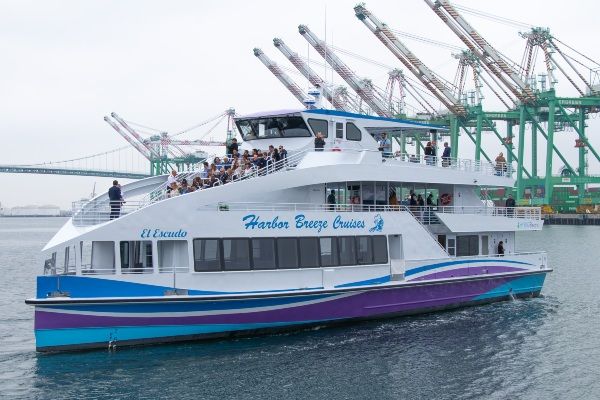
A new hybrid tourist vessel with a capacity for 350 passengers is now in operation at the Port of Los Angeles, a result of a collaboration with Harbor Breeze Cruises, the California Air Resources Board (CARB), and the Port of Long Beach.
El Escudo incorporates some of the market's newest technologies for emission reduction. On May 25, it made its inaugural voyage through the port's main channel and will now be docked at the Port of Los Angeles and serve the entire San Pedro Bay.
"Harbor Breeze Cruises is committed to contributing to the creation of a cleaner, healthier, and more sustainable port for everyone. This new hybrid passenger vessel is just the beginning of our efforts to help reduce our operational emissions in San Pedro Bay. We thank the California Air Resources Board and the Ports of Los Angeles and Long Beach for their collaboration and the tremendous support provided for this initiative," said Captain Dan Salas, founder and owner of Harbor Breeze Cruises.
"For generations, our port communities have driven the economy of this region, and we deserve to see investments in clean infrastructure that allows everyone to breathe cleaner air. The launch of El Escudo is an important step forward that demonstrates how new technologies can help reduce emissions and improve air quality in the neighborhoods surrounding the port. I am proud to see the Port of Los Angeles and Harbor Breeze Cruises leading innovation and environmental protection," stated Tim McOsker, Los Angeles City Councilmember, whose District 15 includes the port.
"This vessel is a great example of what can be achieved when we work together and invest in a zero-emission future. With its ability to operate for up to two hours on battery power alone and with zero emissions, El Escudo demonstrates that the future of clean transportation is not only possible but is already a reality," declared Gene Seroka, Executive Director of the Port of Los Angeles.
The vessel features a parallel hybrid propulsion system that allows it to operate in all-electric (zero-emission), diesel, or hybrid mode. It exceeds U.S. EPA Tier 4 emission standards and CARB standards for commercial harbor craft.
As part of its operational plan, the vessel will operate at least 30% of the time in zero-emission mode, with some voyages achieving 100% zero-emission operations, depending on the route and operating time requirements.
Development and testing were carried out under the Los Angeles Marine Emissions Reduction Project (LA MER), funded with a USD 31 million grant from CARB and USD 30 million in matching funds from project partners, to test and evaluate two different emission reduction technologies for harbor craft. The advanced zero-emission technology (ZEAT) vessels from Harbor Breeze Cruises and the high-speed ferry Catalina Channel Express, which operates on renewable diesel and Tier 4 engines, are expected to reduce over 60 tons of emissions annually.
CARB funds the grant through its Sustainable Heavy-Duty Initiatives for Future Technology (Shift) program, an incentive fund supported by California Climate Investments.
"This project highlights how strategic partnerships can accelerate the adoption of cleaner maritime technologies. The deployment of vessels like El Escudo contributes to improving air quality and public health by reducing emissions, and promotes solutions that can be replicated statewide," stated Peter Christensen, CARB Air Resources Supervisor.
Harbor Breeze Cruises invested USD 7.5 million in the vessel's development and is driving the construction of other low and zero-emission vessels. A second hybrid unit, under the LA MER project, with an additional USD 7.5 million contribution, and a third vessel, separately funded, are currently under development.
As part of the grant, the Port of Los Angeles and the Port of Long Beach each committed USD 250,000 to support a technology assessment study of vessels and port advancements. Additionally, both ports will fund at least 50 excursion trips each on the zero-emission capable vessels during the project's 12-month demonstration period.
In addition to the CARB grant, the Port of Los Angeles has committed USD 2.45 million and the Port of Long Beach USD 1.05 million through the Joint Technology Advancement Program to support the development of charging infrastructure for harbor craft and additional vessel technologies that were not available at the time of the original grant award.