• 2 min de lectura
• 2 min de lectura
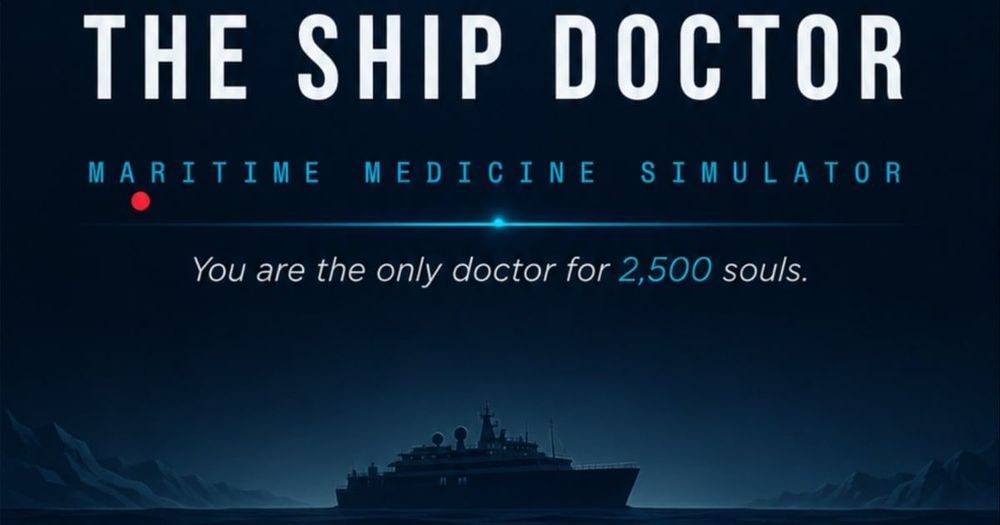
The offline medical simulation app supports maritime healthcare professionals working on cruise ships, including expedition vessels in remote regions.
Educational app 'Ship Doctor: Maritime ER Sim' launched, designed to address what its founder describes as "a huge gap between what we usually have in emergency medicine training and what we experience on board."
The application was established by Dr Ezekiel Osolika, an emergency physician who has worked across various maritime settings from 7,000-passenger cruise ships to 150-passenger expedition vessels, spending four years developing the application based on his firsthand experience at sea.
The Ship Doctor app presents evolving emergency scenarios where healthcare professionals must manage patients whilst coordinating with multiple parties including the bridge, telemedicine teams and coast guard services.
"If you have a patient having a heart attack at sea, you as the qualified physician, nurse, or paramedic will know how to diagnose, but diagnosing it is just the first step of managing it on board," Dr Osolika explained.
The app simulates the complex decision-making process that maritime medical professionals face, including resource management, weather considerations for evacuation and staffing limitations.
The application caters to doctors, nurses and paramedics working across different maritime environments, from large cruise lines with teams of multiple medical staff to expedition ships where a single healthcare professional operates.
The tool is especially useful in bridging the experience gap between seasoned maritime medical professionals and those newer to sea-based practice, explained Dr Osolika.
The app has achieved nearly 5,000 downloads on Google Play Store so far with a four-and-a-half star rating. While currently used by individual clinicians, Dr Osolika envisions institutional packages for cruise lines, potentially offering year-long training access and communication with The Ship Doctor team.
The app's offline capability addresses the connectivity limitations sometimes experienced aboard ships. Beyond emergency simulations, it includes electrocardiograms, drug calculations and handover tools.
Dr Osolika emphasised that the app is educational and not intended to replace clinical judgement, vessel procedures or certified medical training. However, "being offline and having all these reference tools" makes the app particularly valuable for remote clinicians, he explained, noting that it serves as "a drill to help clinicians be more confident."