• 3 min de lectura
• 3 min de lectura
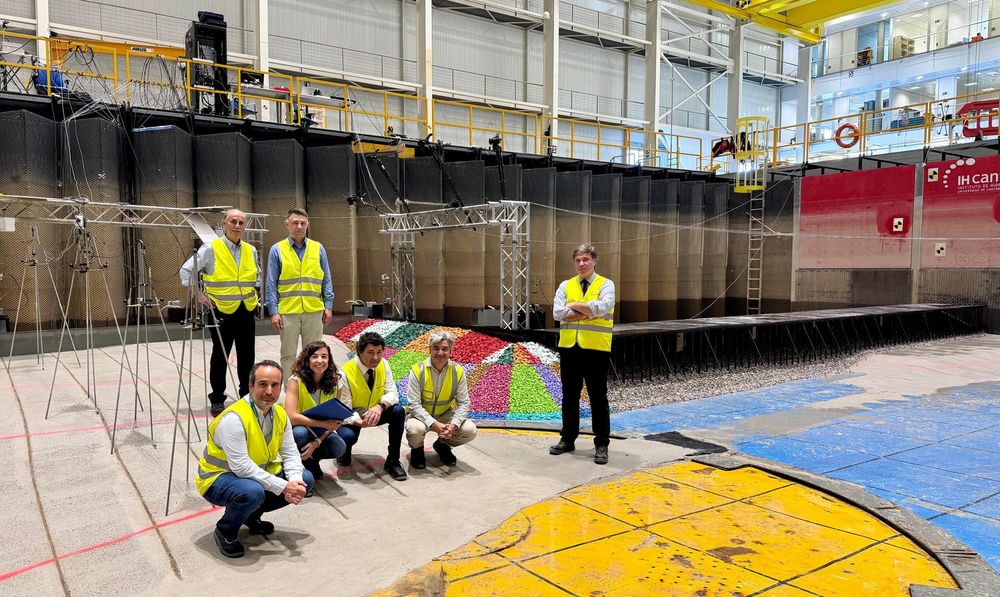
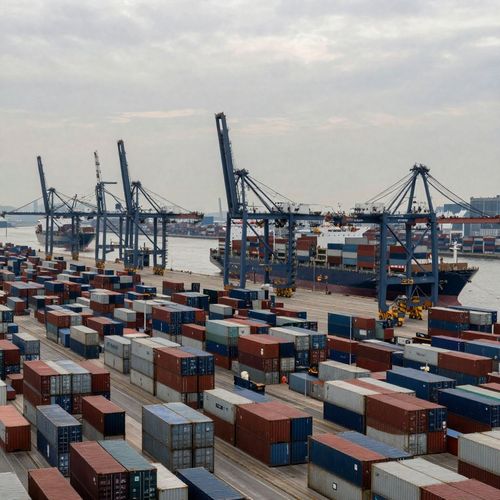
The Empresa Portuaria Valparaíso (EPV) is making progress in the development of the Costanera Site. As part of the pre-construction stages, a delegation from the state-owned company visited the facilities of IHCantabria in Spain, where physical tests were carried out to validate the design of the future infrastructure and its associated public spaces.
The purpose of the visit was to observe firsthand the progress of the two-dimensional (2D) and three-dimensional (3D) physical models, built to reproduce the future port facilities and their interaction with the maritime environment on a scale.
According to EPV, this constitutes "a fundamental stage to validate the engineering solutions before the start of the works, projected for 2030, and to strengthen confidence in future port development, in the context of the upcoming concession bidding process."
In this regard, the Chairman of the EPV Board, Gonzalo Le Dantec, highlighted that "Valparaíso's port expansion is advancing with the highest international standards. The physical validation we are carrying out in Spain allows us to optimize the design of future works before their construction, incorporating safety criteria, resilience to climate change, and adequate integration with the public spaces that are part of the project. This work provides us with greater certainty for the development of a strategic infrastructure for Valparaíso, the region, and Chilean foreign trade."
The 3D tests were conducted in the Large Tank of Maritime Engineering of Cantabria, while the 2D tests were carried out in the Wave-Current-Tsunami Channel. Together, both models allowed for the evaluation of the behavior of the marginal wharf, berthing areas, coastal protection structures, and city-port integration elements, such as the Mirador Promenade and the Malecón Promenade.
Among the phenomena analyzed were wave propagation, the interaction between waves and structures, water overtopping the works, and the stability of coastal protections, aspects that allowed for the verification and optimization of the engineering design in its detailed phase.
During the visit, IHCantabria researchers presented the preliminary results of these studies to the EPV delegation, which were jointly reviewed and analyzed by the technical teams of both institutions. "This information will provide a solid basis for decision-making in the next stages of defining the work, before the start of its construction," specified the Chilean state-owned port company.
"The completion of these studies constitutes a new milestone for the development of the future Costanera Site, an infrastructure that includes a 430-meter berthing front and capacity to receive vessels up to 367 meters in length," it added.
In line with what was communicated, its realization would strengthen Valparaíso's competitiveness, increase its capacity to serve new generations of vessels participating in international trade, and advance in a "port expansion conceived under international standards of safety, operational efficiency, and sustainability, also providing more efficient, safe, and adapted facilities to the operational and extreme conditions of the Valparaíso coast," EPV emphasized.
It should be noted that IHCantabria, an institution created by the University of Cantabria and the Government of Cantabria, was awarded the modeling study after a public bidding process developed by the state-owned port company, and is one of the main centers for applied research in hydraulic, coastal, and port engineering in Europe.
"For the Valparaíso project, high-level technological equipment is being used, including the Large Tank of Maritime Engineering and the Wave-Current/Tsunami Channel, specially designed for the evaluation of complex maritime works," EPV stated.