• 3 min de lectura
• 3 min de lectura
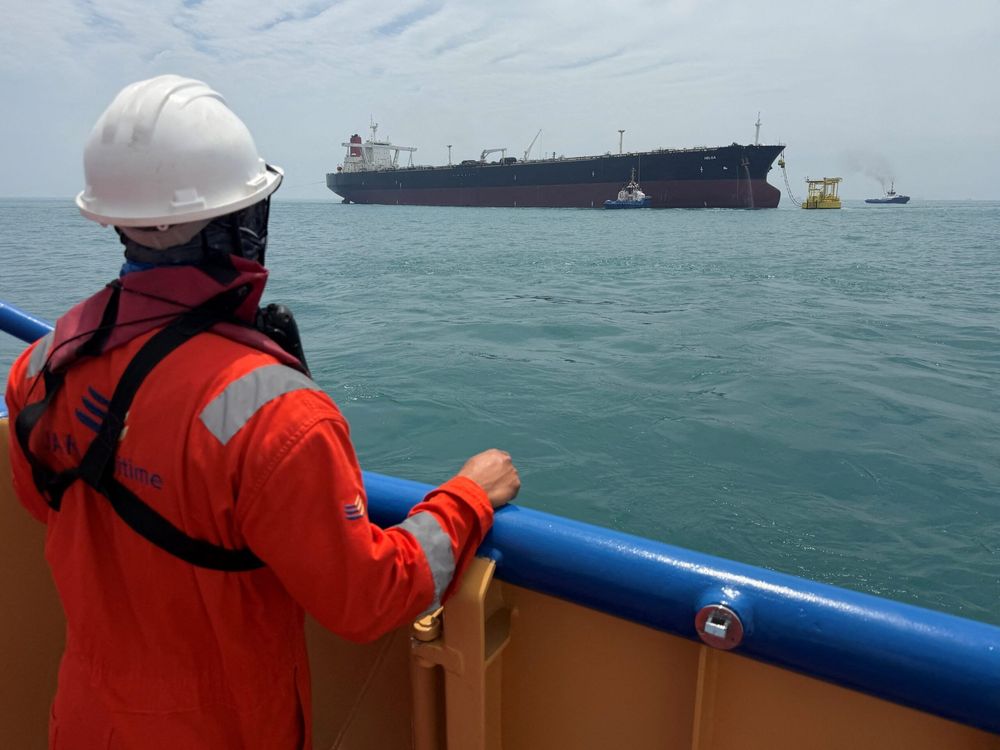
Iranian crude oil exports are showing signs of life again after a two-month naval blockade, with several Iranian-linked tankers reappearing on AIS and heading out through the Gulf of Oman just days after Washington and Tehran announced a framework agreement aimed at ending their conflict.
According to vessel tracking data from Kpler/MarineTraffic and TankerTrackers.com, at least four laden tankers that loaded crude at Iran's Kharg Island earlier this year reactivated their AIS signals on June 16 and began moving away from the Strait of Hormuz.
Among them are the National Iranian Tanker Company (NITC) VLCCs Hero II and Diona, each carrying roughly 2 million barrels of crude, according to Kpler. The ships were observed sailing southeast through the Gulf of Oman at speeds of about 9.5 to 11 knots and appear to have moved beyond what had effectively become the U.S. Navy blockade boundary.
Neither vessel has declared a destination.
The Suezmax tanker Sonia I followed a similar outbound route, while another laden VLCC, Amber, reactivated AIS near the eastern entrance to the Strait of Hormuz, although only limited movement data is available.
If confirmed, these would be Iran's first crude exports in roughly two months following the U.S.-led blockade imposed earlier this year during the conflict with Tehran.
The tanker movements come just days after President Donald Trump announced that the United States and Iran had agreed to a memorandum of understanding aimed at ending hostilities, lifting the blockade of Iranian ports and reopening the Strait of Hormuz. Specifics of the agreement still remain unclear despite media speculation.
Exactly how the agreement will be implemented also remains unclear. The legal status of the blockade has not been formally clarified, nor have details of any sanctions relief been publicly released. But the movements suggest that conditions on the water may already be changing.
The latest advisory from the Joint Maritime Information Center (JMIC) lowered the regional maritime threat level from Severe to Substantial, citing the announced U.S.-Iran memorandum as contributing to a more stable operating environment. At the same time, the organization warned that "an attack is a strong possibility" and said significant risks remain.
Commercial traffic through the Strait of Hormuz remains "significantly reduced," with most ships continuing to avoid the traditional Traffic Separation Scheme and instead transit south through Omani territorial waters, according to JMIC. The advisory also warns that mine risks remain in and around the TSS and that electronic navigation interference continues throughout the region.
JMIC's latest traffic figures underscore how far the region still is from normal operations. The Strait historically handled about 138 vessel transits per day. JMIC recorded no transits on June 14 and only seven on June 15.
For now, the first visible signs of recovery appear to be coming from Iranian oil exports rather than the broader commercial shipping industry. While crude is beginning to move again, most shipowners remain cautious as they wait to see whether the diplomatic breakthrough translates into lasting security and a genuine reopening of one of the world's most important maritime chokepoints.
Fuente: GCAPTAIN_NEWS